Health Care Industry
Industry: Email Alert RSS FeedChinese traditional herbal medicine
Encyclopedia of Medicine by Rebecca J. Frey
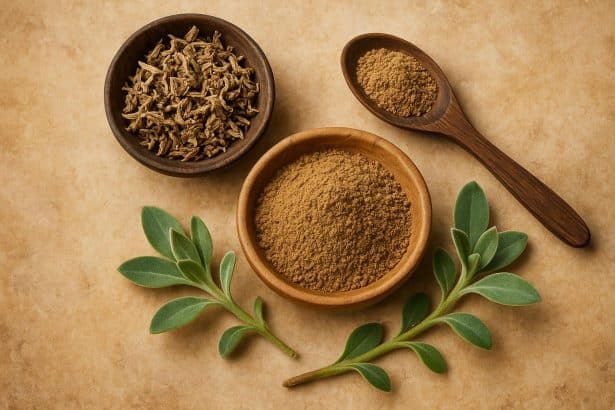
Chinese traditional herbal medicine is an alternative system of treatment arising from a holistic philosophy of life. It emphasizes the interconnection of the mental, emotional, and physical components within each person, and the importance of harmony between individuals and their social groups, as well as between humanity as a whole and nature. Although Chinese medicine is neither the oldest system recorded by historians, nor the only form of herbal therapy practiced today, it is the oldest continuous surviving tradition of herbal medicine. The only other alternative system of treatment that can be traced as far back as Chinese medicine is the Ayurvedic system of India. It should be noted that traditional Chinese herbal medicine did not develop in complete isolation. As early as the second century B.C., Chinese merchants in India came into contact with Ayurvedic medicine. In the sixteenth and seventeenth centuries A.D., Chinese trade with the West -- especially with the Dutch -- led to exchanges of information and observations about the use of herbs in medical treatment.
Most RecentHealth Care Articles
The Chinese attributed their traditional medicine to three legendary emperors: Fu Si (2852 B.C.), who was credited with authorship of the I Ching or Book of Changes, the source of the yin/yang distinction; Shen Nong (3494 B.C.), who compiled the first treatise on herbal medicine, or Shen Nong's Herbal Classic; and Huang Di (2697 B.C.), the Yellow Emperor, regarded as the author of the Yellow Emperor's Inner Classic. This third book is the earliest summary of ancient Chinese medical theories. In their present form, these books were probably written down around the third or fourth centuries B.C. The first Chinese medical school was founded by the first emperor of the Tang dynasty in 629 A.D. Its foundation was followed by standardization of medical books and a set of formal examinations for doctors. In the centuries that followed, other medical schools were established, the curriculum was expanded, and the examination and licensing process became more comprehensive. Shen Nong's original list of 365 herbal remedies was expanded by Li Shizhen (1590) to 1892 medicines, and by Zhao Xue Min (1765) to 2500.
In 1970 the Chinese Academy of Medical Science published a collection of traditional herbal remedies in common use. It lists 796 prescriptions made from combinations of 248 plant or animal ingredients. A group of American pharmacologists evaluated these prescriptions in 1974 and estimated that 44.7% are useful, measured by present western methods of chemical analysis.
The purpose of Chinese traditional herbal medicine is the restoration of health through correction of imbalances within the patient's body or between the patient and the larger social and natural order. Chinese medicine regards the human body as a small-scale reflection of the cosmos. The principles of treatment are derived from Taoism, a philosophy or religion that emphasizes following the right path, or Tao, in order to find one's place within the larger universe of being. Taoism's holistic emphasis was reflected in the close correlation between Chinese herbal medicine and daily dietary habits. Foods were eaten with regard to their therapeutic qualities and adjusted to changes in the body. Traditional herbal medicine in China included preventive treatment. It was a customary part of people's lives, not necessarily reserved for acute illness or emergencies.
The specific teachings of Taoism that have had the most profound effect on Chinese medicine are the concept of duality, and the belief in a primordial form of universal energy called qi. The terms yin and yang are applied to the two primal opposites that continually interact and produce constant change in the universe. Yang is associated with heat, dryness, brightness, upward or outward movement, forceful action, lightness, and speed. Yin represents the corresponding qualities of cold, moisture, dimness, downward or inward movement, quietness, heaviness, and slowness. These opposites are regarded as interdependent rather than mutually destructive or antagonistic. Humans participate in qi, or the universal life force, which circulates throughout the body and determines the person's basic level of vitality.
Over a period of centuries, Chinese doctors worked out elaborate systems of correlation between yin and yang and the so-called five elements (wood, fire, earth, metal, and water); the ten major internal organs of the body; and meridians, or invisible three-dimensional pathways that circulate qi and blood throughout the body. The meridians regulate the yin/yang balance in the body, provide connections between the individual human being and cosmic forces or influences, and protect the body against external sources of disease. There are certain points along the meridians where qi is thought to collect or concentrate. These points are used in Chinese medicine for acupuncture treatment as well as diagnosis. Prescriptions for herbal medicines are formulated to correct excesses of yin or yang, blockages or incorrect direction in the flow of qi, disorders located in a specific organ, and the emotional problems that accompany physical illness. Chinese herbal medicine does not distinguish between psychiatric and general medical conditions in the manner of western medicine.
Brought to you by CBS MoneyWatch.com
- 10 Best Places to Retire
- Companies with the Best 401(k) Plans
- Most Important Document for Your Heirs? It's Not Your Will
- Video: Should You Expect to Retire Rich?
- Over 50? Here's How to Get (and Keep) a Great Job
Most Recent Health Articles
Most Recent Health Publications
Most Popular Health Articles
- Detox in 7 days: a detoux diet can help you shed up to 10 pounds and leave you feeling terrific. Our weeklong plan shows you how to lose the weight and keep it off - Cover story
- All about nightshades: explore the hidden hazards of your favorite food with macrobiotic nutritionist Lino Stanchich
- La anemia falciforme - causas y tratamiento
- The sour truth about apple cider vinegar - evaluation of therapeutic use
- Treat sinusitis naturally: breath easy and relieve sinus pressure with these remedies - Quick Fixes and Long-Term Solutions