Health Care Industry
Industry: Email Alert RSS FeedPatau's syndrome
Encyclopedia of Medicine, Apr 06, 2001 by Julia Barrett
Patau's syndrome, also called trisomy 13, occurs when a child is born with three copies of chromosome 13. Normally, two copies of the chromosome are inherited, one from each parent. The extra chromosome causes numerous physical and mental abnormalities. Owing mostly to heart defects, the lifespan of trisomy 13 babies is usually measured in days. Survivors have profound mental retardation.


Individuals normally inherit 23 chromosomes from each parent, for a total of 46 chromosomes. However, genetic errors can occur before or after conception. In the case of Patau's syndrome, an embryo develops which has three copies of chromosome 13, rather than the normal two copies.
Most RecentHealth Care Articles
- New Mexico Information Exchange Shows Potential of Obama HIT Campaign
- House Health-Care Reform Bill Deserves Public Support
- Caremark Dilutes CVS' Financial Appeal
- Healthcare Roundup: Tenet Loses $3M, AAFP-Coke Deal Draws Protests, Device...
- Individual Mandates in Reform Bills Have Serious Flaws
- More »
Trisomy 13 occurs in approximately 1 in 12,000 live births. In many cases, spontaneous abortion (miscarriage) occurs and the fetus does not survive. The risks of trisomy 13 seem to increase with the mother's age, particularly if she is older than her early 30s. Male and female children are equally affected, and the syndrome occurs in all races.
Patau's syndrome is caused by the presence of three copies of chromosome 13. The presence of these three copies--rather then the normal two--is a random error and cannot be attributed to anything the parents did or did not do.
Newborns with trisomy 13 have numerous internal and external abnormalities. Commonly, the front of the brain fails to divide into lobes or hemispheres, and the entire brain is unusually small. Children who survive infancy have profound mental retardation.
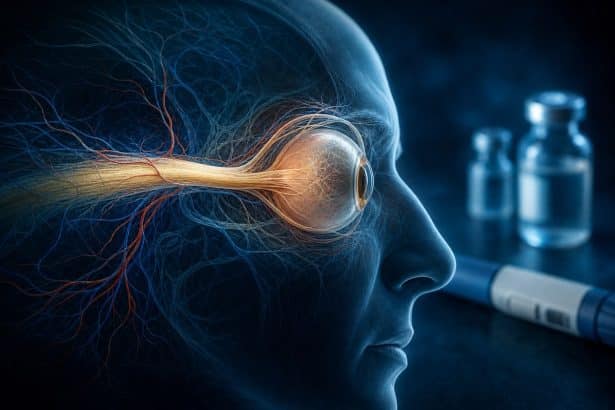
Incomplete development of the optic (sight) and olfactory (smell) nerves often accompanies the brain defects, and the child may also be deaf. Frequently, a child with trisomy 13 has cleft lip, cleft palate, or both. Facial features are flattened and ears are malformed and lowset. Extra fingers or toes (polydactyly) may be present in addition to other hand and foot malformations.
In nearly all cases, trisomy 13 babies have respiratory difficulties and heart defects, including atrial and ventricular septal defects, patent ductus arteriosus, and defects of the pulmonary and aortic valves. Other organ systems may also be affected. The organ defects are frequently severe and life-threatening.
A newborn's numerous malformations indicate a possible chromosomal abnormality. Trisomy 13 is confirmed by examining the infant's chromosomal pattern through karyotyping or another procedure. Trisomy 13 is detectable during pregnancy through the use of ultrasonography, amniocentesis, and chorionic villus sampling.
Patau's syndrome cannot be cured. Some structural abnormalities can be treated through surgery, but malformations are often numerous and severe. Decisions regarding measures to prolong life are best made on an individual basis by the parents and the doctors. Medical treatment may simply focus on making the infant comfortable, rather than prolonging life.
Children who survive infancy require medical treatment to correct structural abnormalities and associated complications. Physical therapy, speech therapy, and other types of developmental therapy will help the child reach his or her potential.
Approximately 82% of trisomy 13 babies die within their first month of life; only 5-10% survive to one year. Survival to adulthood is very rare. Only one adult is known to have survived to age 33.
Survivors have profound mental and physical disabilities; however, trisomy 13 children do have some capacity for learning. Older children may be able to walk with or without a walker. They may also be able to understand words and phrases, follow simple commands, use a few words or signs, and recognize and interact with others.
Patau's syndrome--trisomy 13--is not preventable.
- Books
- Gardner, R.J. McKinlay, and Grant R. Sutherland. Chromosome Abnormalities and Genetic Counseling. New York: Oxford University Press, 1996.
- Jones, Kenneth Lyons. Smith's Recognizable Patterns of Human Malformation. 5th ed. Philadelphia: W.B. Saunders Company, 1997. Periodicals
- Baty, Bonnie J., Brent L. Blackburn, and John C. Carey. "Natural History of Trisomy 18 and Trisomy 13: I. Growth, Physical Assessment, Medical Histories, Survival, and Recurrence Risk." American Journal of Medical Genetic 49 (1994): 175-187.
- Baty, Bonnie J., et al. "Natural History of Trisomy 18 and Trisomy 13: II. Psychomotor Development." American Journal of Medical Genetics 49 (1994): 189-194. Organizations
- Support Organization for Trisomy 18, 13, and Related Disorders (SOFT). 2982 South Union Street, Rochester, NY 14624. (800) 716-SOFT. http://www.trisomy.org/. >
BNET TalkbackShare your ideas and expertise on this topic
Subscribe to this discussion via Email or RSS
-
1
Trisomy 13 Support
RE: Patau's syndrome
Living with Trisomy 13 - Photos and Videos of Children living
with Patau Syndrome.
Over 200 family stories, prenatal, children now living with
trisomy 13 and treasured memory album pages.
Trisomy 13 - photos, videos, support, resources and links.
www.livingwithtrisomy13.org
- How to choose the right insurance carrier for your business
- Real Estate: Prepare your properties to weather what lies ahead
- Technology: Be prepared if part of your global supply chain goes missing
Most Recent Health Articles
Most Recent Health Publications
Most Popular Health Articles
- 50 home remedies that work: these safe, fast, and effective fixes will relieve what ails you - Cover Story
- Detox in 7 days: a detoux diet can help you shed up to 10 pounds and leave you feeling terrific. Our weeklong plan shows you how to lose the weight and keep it off - Cover story
- All about nightshades: explore the hidden hazards of your favorite food with macrobiotic nutritionist Lino Stanchich
- Treat sinusitis naturally: breath easy and relieve sinus pressure with these remedies - Quick Fixes and Long-Term Solutions
- La anemia falciforme - causas y tratamiento