Marijuana

Encyclopedia of Alternative Medicine, Apr 06, 2001 by Clare Hanrahan

Marijuana (marihuana) Cannabis sativa L., also known as Indian hemp, is a member of the Cannabaceae or hemp family, thought to have originated in the mountainous districts of India, north of the Himalayan mountains. The herb was referred to as "hempe" in A.D. 1000 and listed in a dictionary under that English name. Supporters of the notorious Pancho Villa first used the name marijuana in 1895 in Sonora, Mexico. They called the mood-altering herb they smoked marijuana. The term hashish, is derived from the name for the Saracen soldiers, called hashashins, who ingested the highly potent cannabis resin before being sent out to assassinate enemies.

Two related species of cannabis are C. ruderalis, and C. indica, a variety known as Indian hemp. Indian hemp grows to a height of about 4 ft (1.2 m) and the seed coats have a marbled appearance.

The species C. sativa L. has many variations, depending on the soil, temperature, and light conditions, and the origin of the parent seed. These factors also affect the relative amounts of THC (tetra-hydrocannabinol) and cannabidiol, the chemicals present in varying amounts in cannabis that determine if the plant is primarily a fiber type or an intoxicant. Generally the species grown at higher elevations and in hotter climates exudes more of the resin and is more medicinally potent.

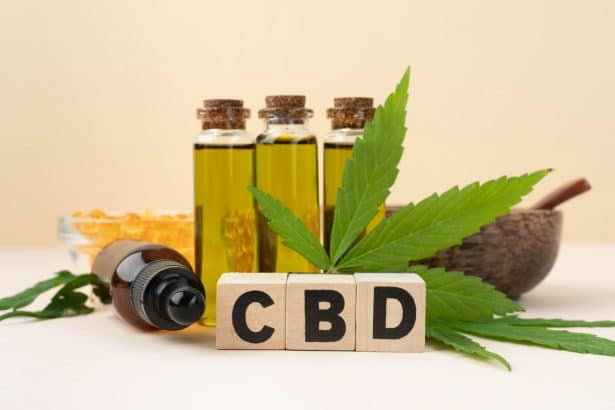
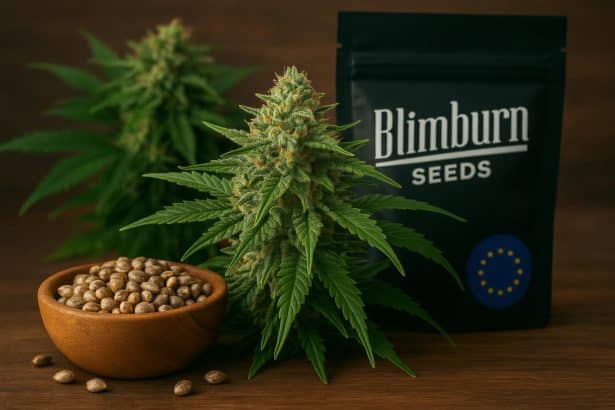
Marijuana is a somewhat weedy plant and may grow as high as 18 ft (5.4 m). The hairy leaves are arranged opposite one another on the erect and branching stem. Leaves are palmate and compound, deeply divided into five to seven narrow, toothed and pointed leaflets. Male and female flowers are small and greenish in color and grow on separate plants. Male flowers grow in the leaf axils in elongated clusters. The female flowers grow in spike-like clusters. The resinous blossoms have five sepals and five petals. The male and female blossoms can be distinguished at maturity. The male plant matures first, shedding its pollen and dying after flowering. Female plants die after dropping the mature seeds. Marijuana produces an abundance of quickly germinating seeds. This hardy annual is wind pollinated and has escaped from cultivation to grow wild along roadsides, trails, stream banks, and in wayside places throughout the world. The plant matures within three to five months after the seed has been sown.


Marijuana has been cultivated for thousands of years. Cannabis was first described for its therapeutic use in the first known Chinese pharmacopoeia, the Pen Ts'ao. (A pharmacopoeia is a book containing a list of medicinal drugs, and their descriptions of preparation and use.) Cannabis was called a "superior" herb by the Emperor Shen-Nung (2737-2697 B.C.), who is believed to have authored the work. Cannabis was recommended as a treatment for numerous common ailments. Around that same period in Egypt, cannabis was used as a treatment for sore eyes. The herb was used in India in cultural and religious ceremonies, and recorded in Sanskrit scriptural texts around 1,400 B.C. Cannabis was considered a holy herb and was characterized as the "soother of grief," "the sky flyer," and "the poor man's heaven." Centuries later, around 700 B.C., the Assyrian people used the herb they called Qunnabu, for incense. The ancient Greeks used cannabis as a remedy to treat inflammation, earache, and edema (swelling of a body part due to collection of fluids). Shortly after 500 B.C. the historian and geographer Herodotus recorded that the peoples known as Scythians used cannabis to produce fine linens. They called the herb kannabis and inhaled the "intoxicating vapor" that resulted when it was burned. By the year 100 B.C. the Chinese were using cannabis to make paper.

Cannabis use and cultivation migrated with the movement of various traders and travelers, and knowledge of the herb's value spread throughout the Middle East, Eastern Europe, and Africa. Around 100, Dioscorides, a surgeon in the Roman Legions under the Emperor Nero, named the herb Cannabis sativa and recorded numerous medicinal uses. In the second century, the Chinese physician Hoa-Tho, used cannabis in surgical procedures, relying on its analgesic properties. In ancient India, around 600, Sanskrit writers recorded a recipe for "pills of gaiety," a combination of hemp and sugar. By 1150, Moslems were using cannabis fiber in Europe's first paper production. This use of cannabis as a durable and renewable source of paper fiber continued for the next 750 years.

By the 1300s, government and religious authorities, concerned about the psychoactive effects on citizens consuming the herb, were placing harsh restrictions on its use. The Emir Soudon Sheikhouni of Joneima outlawed cannabis use among the poor. He destroyed the crops and ordered that offenders' teeth be pulled out. In 1484, Pope Innocent VIII outlawed the use of hashish, a concentrated form of cannabis. Cannabis cultivation continued, however, because of its economic value. A little more than a century later, the English Queen Elizabeth I issued a decree commanding that landowners holding sixty acres or more must grow hemp or pay a fine. Commerce in hemp, which was primarily valued for the strength and versatility of its fibers, was profitable and thriving. Hemp ropes and sails were crossing the sea to North America with the explorers. By 1621, the British were growing cannabis in Virginia where cultivation of hemp was mandatory. In 1776, the Declaration of Independence was drafted on hemp paper. Both President George Washington and President Thomas Jefferson were advocates of hemp as a valuable cash crop. Jefferson urged farmers to grow the crop in lieu of tobacco. By the 1850s, hemp had become the third largest agricultural crop grown in North America. The U. S. Census of that year recorded 8,327 hemp plantations, each with 2,000 or more acres in cultivation. But the invention of the cotton gin was already bringing many changes, and cotton was becoming a prime and profitable textile fiber. More change came with the introduction of the sulfite and chlorine processes used to turn trees into paper. Restrictions on the personal use of cannabis as a mood-altering, psychoactive herb, were soon to come.


BNET TalkbackShare your ideas and expertise on this topic

Please add your comment:

  1. You are currently: a Guest |
  2.  

Basic HTML tags that work in comments are: bold (<b></b>), italic (<i></i>), underline (<u></u>), and hyperlink (<a href></a)

advertisement
advertisement
  • Click Here
  • Click Here
  • Click Here
  • Click Here
advertisement

Content provided in partnership with Thompson Gale