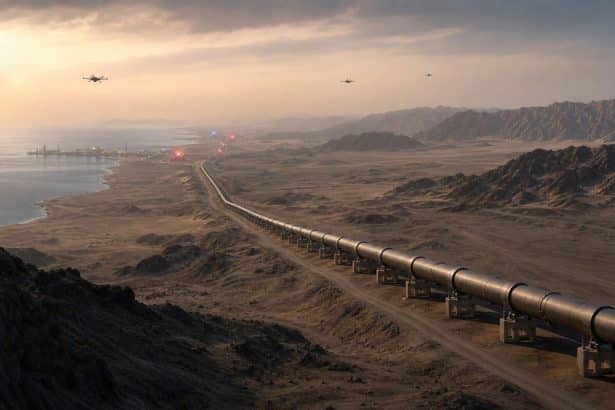
East meets west in the Canadian oil sands
American Review of Canadian Studies, Summer, 2007 by Mark J. Kasoff
Introduction
The U.S. economy consumes large amounts of imported oil. In 2006, U.S. oil consumption was about 20 million barrels per day (mbd), with domestic production a little over 8mbd. This gap of 12mbd (which has been growing since the 1970s) is 60 percent of U.S. consumption, with rising levels of imports making up the difference. Increased demand from countries like China and India has been associated with world oil prices rising to unprecedented levels. This has led to increased investment and production from higher-cost sources such as Canada's oil sands. With conventional oil production peaking or declining in many countries, the vast potential of oil extraction from tar sand becomes commercially viable. Political instability in the Persian Gulf and Nigeria makes security of the oil supply chain an increasingly significant concern for the U.S. Since oil is priced in U.S. dollars, Canadian exports of oil sand petroleum will not be affected by the strong Canadian dollar (which is approaching parity with the U.S. dollar for the first time in decades). In the short run, gasoline demand is not very responsive to price changes, so the underlying demand conditions should remain consistent. Only a severe U.S. and worldwide recession (an unlikely prospect) would cause a sharp drop in oil prices. Therefore, conditions remain favorable for the continued development of the Canadian oil sands.
This essay reviews the increased significance of oil extracted from the Athabasca tar sands, located primarily in Alberta. As production ramped up from this nonconventional source, the "tar sands" became the "oil sands." This narrative will proceed as follows: first, a review of current levels of production and proven reserves; second, the importance of Canadian oil exports to the United States; third, the increased presence of Asian nations, especially China, in Canadian oil sand production; fourth, the possible impact of Canada-Asia oil business on Canada-U.S. relations; fifth, recognition of the environmental challenges associated with oil sand development; and sixth, some conclusions about the long-term impacts of these developments.
Oil Sands
A recent article in the New York Times stated that "Iraq's proven oil reserves stand at about 115 billion barrels, the world's third largest after Saudi Arabia and Iran" (Sept. 10, 2006). While this statement may be correct when counting conventional sources of oil, Canadian reserves should be ranked second, bumping down Iran and Iraq, when the oil sands are included. Since 2003, the Canadian oil sands have generally been included in total proven Canadian oil reserves. Overnight, this increased Canada's proven reserves from 5 billion to 180 billion barrels (Chastko 2004, xiii). As noted above, this places Canada second in the world to Saudi Arabia. Oil sand estimates, conservatively based on recoverable reserves using current technology, represent only 11 percent of the estimated 1.6 trillion barrels of tar sand oil in Alberta. In terms of actual production--what was recovered rather than what was recoverable--Canada was the eighth largest oil producer in the world in 2004 (Energy Information Administration [EIA] 2005). As improved technology allows for increased recovery rates, it is only a matter of time before Canadian reserves become the largest in the world. Oil sand production is expected to rise from current levels of 1 million barrels a day (mbd) to over 3mbd by 2015. While most output will be shipped to the U.S., some will be sold to China and other Asian nations.
Oil exports have become increasingly important to Canada. Canada continues to enjoy an overall balance of trade surplus, especially with the United States, but has a deficit with most Asian countries, including China. While Canadian exports to the U.S. finally reached year 2000 levels once more in 2004, after a reduction following the tragedy of 9/11, these aggregate numbers hide the fact that foreign sales were flat or down in most categories--e.g., machinery and equipment, and automotive products. In terms of value and volume, sales of oil and natural gas have seen big gains. Canada exports oil from the West and imports petroleum to Eastern Canada, with total oil exports greater than imports.
Importance of Canadian Oil to the U.S.
Since 1999, Canada has been the number-one supplier of crude oil and petroleum products to the United States. The U.S. has become more dependent on Western Hemisphere oil (Dukert 2000), with Canada, Mexico, and Venezuela accounting for 40 percent of imports in 2005 (EIA 2007). Canada will be a net exporter of oil in the years to come, while the U.S. will continue to be a large net importer, with a growing energy gap. In 2006, the Canadian share of U.S. oil imports exceeded those from the Persian Gulf for the first time (Wall Street Journal, July 12, 2006). That trend is expected to continue: fewer oil-producing nations around the world will have supplies to export, while Canada's will continue to increase.
Most Recent Reference Articles
- ARAB EUROPEAN RELATIONS - Dec 22 - Russia Denies Selling Missile System To Iran
- EGYPT - Dec 29 - Opposition Says Mubarak Blessed Israeli Attacks
- ARAB AFFAIRS - Dec 22 - Syria Will Eventually Move To Direct Talks With Israel
- ARAB AFFAIRS - Dec 30 - GCC Denounces Massacre
- ARAB ISRAELI RELATIONS - Israel Issues An Appeal To Palestinians In Gaza
Most Recent Reference Publications
Most Popular Reference Articles
- The Greek chorus, Jimmy the Greek got it wrong but so did his critics - Jimmy Snyder and his views on pro sports and race
- How Tyler Perry rose from homelessness to a $5 million mansion
- 9 questions to ask your new lover: what you were afraid to ask, but always wanted to know
- Vickie Winans: at home with the gospel star who lost 75 pounds and reenergized her career
- BEST HAIR SALONS in DALLAS, The