Manufacturing Industry
Strategic sourcing: a terrific analysis of "sourcing" was presented in a recent issue of Harvard Business Review
Coatings World, March, 2005 by Phil Phillips
As we work to keep up with management "best practices" techniques and determine how these "practices" will help our clients, we read about them, talk with those who author them, and, of course, evaluate a great deal.
The best coverage of the sourcing subject I have seen recently was in the February 2005 issue of the Harvard Business Review, written by Gottfredson, Puryear and Phillips (no relation). I'd like to share meaningful portions of this information with you.Following are some excerpts and comments (in italics):
* "It's no longer a company's ownership of capabilities that matters but rather its ability to control and make the most of critical capabilities, whether or not they reside on the company's balance sheet."
The sophistication of outsourcing today almost demands that one considers historically core functions such as engineering, R&D, manufacturing, and marketing as outsourcable functions. This attitude is, therefore, forcing the way firms think about all aspects of doing business--organization, value chain and their competitive positions.
* "The question is no longer whether to out source a capability or activity but rather how to source every single activity in the value chain. This is a new discipline of 'capability sourcing'."
Finding more-qualified partners which can provide critical functions usually allows companies to enhance the core capabilities that drive competitive advantage in their industries. However, despite the fact that enormous opportunities are available through capability sourcing, many executives remain unprepared for this transformation.
Bain, which completed a recent study of large- and medium-sized companies, concludes:
* "82% of large firms in Europe, Asia, and North America have outsourcing arrangements of. some kind, and 51% use offshore outsourcers. But almost half say their outsourcing programs fall short of their expectations, only 10% are highly satisfied with the costs they're saving, and a mere 6% are highly satisfied with their offshore outsourcing overall."
The basic reason outsourcing efforts fall short of management expectations is that most firms continue to make decisions of outsourcing on a piecemeal basis. They have been slow to develop a comprehensive sourcing strategy designed to keep them competitive in a global economy.
* "To realize the full potential of sourcing, companies must forget the old peripheral and tactical view and make it a core strategic function."
Chrysler was the first of the Big Three auto makers to understand how to use the Japanese keiretsu model of supplier partnerships to its advantage. One of the first elements of the model it had to deal with was procurement and the incentives associated with the function.
* "Chrysler had to refocus its entire procurement function so that it could manage the new, highly collaborative sourcing relationships. That required the company to train and promote a different kind of manager who was capable of understanding system economics, not just one who knew how to nickel-and-dime the supplier base."
* "American Express, in a prescient strategic move, spun off its transaction processing business in 1992. Then the company negotiated a long-term service contract with the new independent entity, First Data."
Amex executives considered transaction processing a strategic capability but realized it was difficult to make the monies it wanted maintaining a full staff to support the transactional function. As a spin off, however, First Data could aggregate Amex's volume with other companies. In this manner, Amex could gain additional scale advantages while ensuring long-term cost effectiveness. Amex was able to focus on the issuing side and enhance its core capabilities in marketing and risk management.
* "The decisions Chrysler and American Express made required them to challenge one of the basic tenets of business strategy: that you should always keep strategic capabilities within your walls."
* "So how do you make something that has always been tactical more strategic? You need to stop focusing on incremental cost improvement targets, step back and reevaluate your strategy and your capabilities. In working with clients, we've found that several steps can ensure that decisions are made objectively and are based on facts.

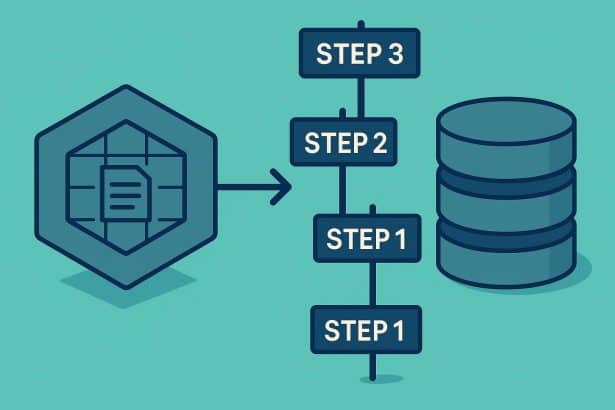
The first step is to identify the components of your business that represent the core of the core. These are the activities that your company performs better than its rivals. The second step is to determine what should you outsource? (see sourcing opportunities map). The third step is to determine how you should source them? (see capability assessment map.) The fourth step deals with geographical proximity and whether the functions can be carried out at a distance. "If you go through this several step analysis, your company should have the outline of a comprehensive capability sourcing strategy. You will know which capabilities you need to own and protect, which can be best performed by what kind of partners, and how to structure a productive relationship."


- 5 Rules for Immediate Annuities
- Death in the Family: 12 Things to Do Now
- Dumbest Things You Do With Your Money
- 6 Online Networking Mistakes to Avoid
- 401(k) Mistakes to Avoid
- 5 Economic Scenarios to Keep You Up at Night
- The Real ‘Best Places to Retire’
- Best Credit Cards for You
- 12 Tough Questions to Ask Your Parents
- The Real ‘Best Colleges’
- Home Buyer Tax Credit: How to Cash In
- Why You Shouldn't Bash Cash
- 8 Phony 'Bargains' and Better Alternatives
- Danger: 3 Debit Card Scams to Avoid
- 6 Myths About Gas Mileage
- 29 Fees We Hate Most
- Quick and Easy Ways to Boost Returns
- Best Stocks to Buy Now
- Lower Your Taxes: 10 Moves to Make Now
- New Jobs: 8 Lessons from Real-Life Career Switchers
- The New Job Market: Who Wins and Who Loses?
- Health Care Reform's Public Option: Everything You Need to Know
- Volunteer Work When Unemployed: Should You Work for Free?
- Whose Recovery Is This?
- Long-Term-Care Insurance: 4 Biggest Risks to Avoid
Content provided in partnership with
Most Recent Business Articles
- Samsung Mobile Highlights Mobile Innovation and Leadership at International CES 2010
- Qosmos Gains Momentum with Network Intelligence Technology
- Graphic.ly Debuts in Microsoft’s Keynote Address at Consumer Electronics Show
- Research and Markets: Construction Site Supplies Market in Russia: a Comprehensive Business Report
- Research and Markets: Overview of the Business & Enterprise Application Software and Services Market in Developed Asia-Pacific
Most Recent Business Publications
Most Popular Business Articles
- 7 tips for effective listening: productive listening does not occur naturally. It requires hard work and practice - Back To Basics - effective listening is a crucial skill for internal auditors
- Using object-oriented analysis and design over traditional structured analysis and design
- FAS 109: a primer for non-accountants - Financial Accounting Standards Board's "Statement 109: Accounting for Income Taxes"
- LIFO vs. FIFO: a return to the basics
- Design a commission plan that drives sales - Sales Commissions