Diary of a sad housewife

ArtForum, Summer, 1995 by Collier Schorr

Safe is what American Gigolo has become; Safe is where American Gigolo has gone. The hustler glamour of Paul Schrader's erotogenic Los Angeles is affected and then dismembered in Haynes' title sequence which bathes in appropriated gloss. Post- and preoutbreak respectively, Safe drags the images and conceits of Schrader's Gigolo into the current crisis, advancing its discussion of AIDS in metaphorical terms. Oddly and involuntarily, the two films bracket the AIDS crisis by implanting danger or susceptibility within the heterosexual orbit, without posing the "virus" as antagonist. Playing Haynes' straight act off Schrader's homosensual and phobic voyeurship might seem fanciful but consider their parallel exploration of banishment and loss of identity. In polar L.A.'s, both housewife and whore (Richard Gere) are edged out of worlds they occupied only as surrogates. The sexless sex and sleek suits, the spiritual and physical toxicity of excess, and the subsequent exodus into mainstream monogamy, lead us 15 years later to the insular world of Safe, where illness rather than intrigue unravels complacency.


In Poison, Haynes serenaded the archetypal gay male dystopian utopia: the Genet prison. Now he inverts this strategy, casting the heterosexual utopian locale - the suburban home - as a wife-killing entity.

I talked with Haynes this May on the heels of Safe's quiet triumph at the Sundance Film Festival as we looked toward the film's early summer release.

COLLIER SCHORR: Why open Safe with such a shamelessly gorgeous and seductive sequence?

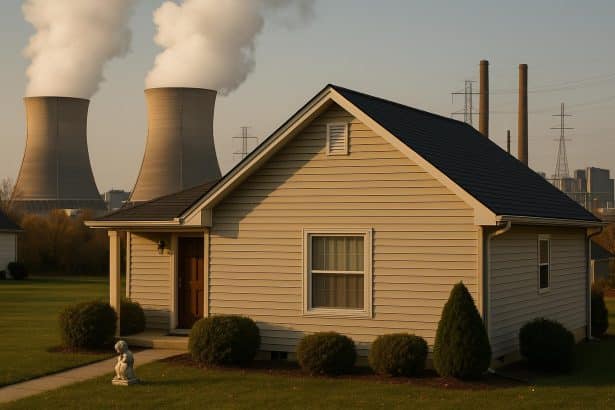
TODD HAYNES: I wanted the opening to be a glossy, slow entry into this world. The way it's described in the script is that the viewer is driving up a hill and watching houses go from small to large to larger, all more and more simulated in their architecture. I was thinking of Encino, where my parents just happen to live and where the architecture is at once stunning, frightening, and fascinating - fake Tudor, fake country manor, at night bathed in the iridescent blue-green glow of street lamps and landscape lighting, with that buzz of electricity in the air. Everything the film is about can be seen in those houses from outside at night. The music adds to it, as well as the credits, which appear to pulsate and then evaporate into fumes.

CS: Did you look at any particular L.A. films before filming Safe?

TH: I looked at 2001. I looked at films that took the notion of L.A. as a futuristic spaceland where every trace of nature has been completely superseded by man really far. L.A. is like an airport: you never breathe real air; you're never in any real place; you're in a transitional, carpeted hum zone - which is what I wanted to convey in Safe.

CS: The prison scenes in Poison were so full of visual pleasure. What was it like filming in the home of Carol White?

TH: The two films represent absolutely opposite approaches. I align Superstar with Safe. Poison is closer to Dottie Gets Spanked and an earlier film I made about Rimbaud called Assassins. The latter three are gay themed, and they are messier films because I was taking something I felt really passionate about and trying to describe artists, their lives, and their acts of transgression - all the while knowing and mistrusting the tendency to think that film can portray transgression and give it to an audience intact. It can't. You have to interrogate transgression or present it in pieces. With those projects I had to guard against my love of the material and how my own fantasies revolved around it. Safe is not my world, it's the construction of another world. Superstar and Safe were very conceptual projects about people in whom I didn't have an initial investment, but while I was constructing the films I found myself in them. I completely identified with Karen's anorexia, although I've never been anorexic, and I completely understand Carol's relationship to an identity she inherited and her need to be affirmed by a society that intellectually she knows sucks.

CS: Carol's world seems less a construction and more a reconstruction of the heterosexual environment you grew up in. It says a lot about mythologized inheritances that you feel closer to the prison locale of Poison.

TH: The textures, colors, and smells of that world did not feel like mine. I always saw it from the point of view of somebody who didn't really feel like a part of it.

CS: So is Carol you?

TH: Yeah, I think she is. In Safe, I'm putting this unborn version of myself deeply into that territory and then slowly scratching my way out.

CS: I thought about Natalie Wood in Splendor in the Grass when I watched Carol's ladylike collapse. Both are models of restraint - with the exception of Natalie's breakdown in the bathtub and Carol's seizure at the dry cleaners. In Safe, does chemical illness replace hysteria, which seems ever stuck on the feminine?

TH: Yes, of course. One thing about Splendor in the Grass is that Wood's character's sexual hunger is continually being tamed - by society and its rules of what a woman is supposed to be. Unfortunately Carol White doesn't have that hunger. The history of illness associated with women has been a continual interest in my films, from Superstar to Safe. I loved what seemed particularly inexplicable about environmental illness when I first read about it - how it was affecting housewives. It wasn't until men in the workplace started to come down with similar kinds of sensitivities that environmental illness became something the medical establishment would even begin to investigate. The ability to dismiss illness as feminine and the way illness completely undermines identity are what Safe explores.


BNET TalkbackShare your ideas and expertise on this topic

Please add your comment:

  1. You are currently: a Guest |
  2.  

Basic HTML tags that work in comments are: bold (<b></b>), italic (<i></i>), underline (<u></u>), and hyperlink (<a href></a)

advertisement
Click Here
advertisement
  • Click Here
  • Click Here
  • Click Here
advertisement

Content provided in partnership with Thompson Gale