Arts Publications
Topic: RSS FeedState of the union - use of the British flag by the country's popular music and fashion industries
ArtForum, May, 1997 by Jon Savage
I recently returned from the US to a British news media dominated by a by-election in the Northwest of England. The point about the Wirral contest was that 1) it was an ordinarily safe Conservative seat that seemed about to fall to Labour (which it did); and 2) it was the last by-election before the general election, which by law must fall at most five years after the last one (i.e., by this May). With the possibility that eighteen years of Conservative rule are ending, politics had suddenly become charged. I knew this when I looked at the Labour graphics on the telecasts, and there, right in the middle, was a Union Jack.
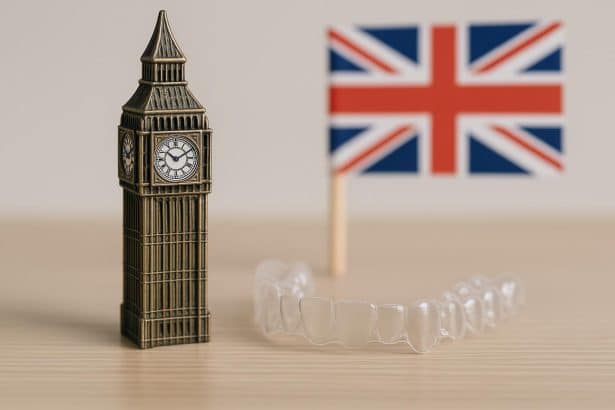
In America, where the flag is an object of reverence, this would be of no account. But to many Brits the Union Jack has been a loaded, ambiguous symbol. Many late-'70s leftists and punks remember that the fascist party of that time, the National Front, promoted its rhetoric and activities with Union Jack-emblazoned stickers and posters, making the flag, until recently, a no-go logo. So for the left-leaning Labour Party to feature the red white and blue so prominently was a real turnaround, the latest in a bewildering blur of Union Jacks across the media: what began as a half-serious polemic - to boost British pop in the face of grunge and techno - has become a political battleground.
Pop is again at the center of British life. Four years ago the UK media pronounced it "dead" - killed off, so the argument ran, by computer games and falling sales - but for the past eighteen months Britpop has been a self-propagating buzzword. First Oasis, now the Spice Girls, have been number-crunching sensations. The Spice Girls, whose first four records have gone to number one in the UK, are now a national issue, courted by politicians of both left and right, routinely offering political opinions. Their international success - number one in thirty-one countries - was recently emphasized by a picture of head-Spice Geri at the Brit Awards in red platforms, black undies, and a Union Jack minidress. Move on UP!


The Spice Girls' recent US number one, "Wannabe," has come at the end of a long line of pieces like Newsweek's canonization of London as "the coolest city on the planet" and Vanity Fair's twenty-five-page special, "London Swings! Again!" In our postmodern moment, even these puff pieces were self-consciously referential, with VF's David Kamp freely sourcing Piri Halasz's famous April 1966 Time cover feature on "London: The Swinging City." But the resurgence of Britain as a cross-media promotional package - containing art, music, fashion, cuisine, even literature - has also drawn on that last moment when London was considered hot in global media terms: the high modernism of 1966.
Many factors have come together to create this illusional reality, but let's trace a cartography through one symbol: the Union Jack, that same red white and blue that plastered the Time graphic in 1966 and now not only appears in VF, draped around actress Patsy Kensit and Oasis singer Liam Gallagher, but was also turned into a cashmere top by Clements Ribeiro and flaunted by Naomi Campbell at London's "Fashion Week" this February. The Union Jack is an ambiguous icon, however: although it may have symbolically united Scotland, England, and Northern Ireland (by fusing the crosses of their respective patron saints - Andrew, George, and Patrick), it is a permanent reminder that this is not an equal union. In a country where the resources are dominated by London and the richer Southeast, it is hardly surprising that the national symbol has in the past been hijacked by Conservatives and Little Englanders.
The Union Jack was first twinned with pop in the mid '60s, after the unprecedented international success of the Beatles alerted industry to the fact that national identity was salable; slogans like "I'm Backing Britain" followed. In 1965, Pete Townshend of the Who wore the first Union Jack jacket, an Op art coup so stunning that it features front center in the Time cover illustration. This combination of music, fashion, and attitude - "We stand for pop art clothes, pop art music, and pop art behavior," said Townshend in 1965, "We live pop art" - helped to make Britain a media-friendly concept: a country of total pop, where, as Piri Halasz noted in Time the following year, "in a once sedate world of faded splendor, everything new, uninhibited and kinky is blooming at the top of London life."
Halasz had also visited London in 1949, when it was in the depths of postwar austerity, and this gives her analysis some kick: the '60s were, after all, the moment when the UK started to shrug off World War II. "Britain has lost an empire and lightened a pound," she wrote. "In the process, it has also recovered a lightness of heart lost during the weighty centuries of world leadership." Bookended by contrasting photos of traditional and of trendy London, her copy celebrated casinos, nightclubs, writers, filmmakers, actors, designers, and pop stars, offering a handy map of metropolitan pleasure palaces like Tiles, The Scotch of St. James, and Granny Takes a Trip. It marked the high point of mod and British pop confidence, the summer when England won the World Cup and the Beatles released Revolver, that febrile time brilliantly caught by Antonioni in Blow-Up, filmed in London that season.
Most Recent Arts Articles
Most Recent Arts Publications
Most Popular Arts Articles
- Tyne Stecklein: a quick study with a strong work ethic, this commercial dancer has made strides in Los Angeles
- Being by numbers - interview with artists and philosopher Alain Badiou - Interview
- The Arnolfini double portrait: a simple solution
- Dance directory: schools, studios, colleges, universities, companies, teachers, dancers, choreographers, somatic practices, movement arts, dance medicine, yoga - Directory
- Imagine, if you practice … - music practice