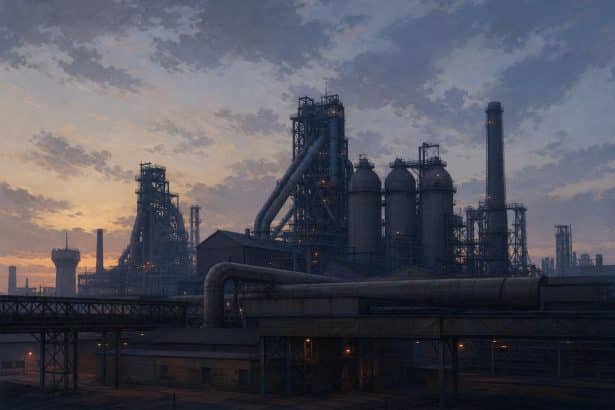
The untrammeled vision: Thomas Cole and the dream of the Artist - paintings entitled The Architect's Dream and Dream of Arcadia
Art Journal, Summer, 1993 by Randall C. Griffin
In 1838 the American painter Thomas Cole wrote a letter to his friend Asher B. Durand that included a description of a fictive dream. Cole used this as a humorous device to recount his experience of painting Dream of Arcadia. His letter reads:
I took a trip to Arcadia in a dream. At the start the atmosphere was clear, and the travelling delightful: but just as I got into the midst of that famous land, there came on a classic fog, and I got lost and bewildered. I scraped my shins in scrambling up a high mountain--rubbed my nose against a marble temple--got half suffocated by the smoke of an altar . . . |and~ was tossed and tumbled in a cataract.(1)
Cole's passage parodies both the well-known Romantic practice of recording one's dreams and the dream as popular literary device. Though Cole's painting The Architect's Dream lacks similar parodic content, it too alludes to contemporary literary and popular dream imagery. Commissioned by the prominent American architect Ithiel Town in 1839 and completed in 1840, it was subsequently rejected by Town, who then asked Cole to paint an entirely different scene.
Cole's attempt to reconcile his own taste and artistic interests with the anticipated needs of Town led him to produce an unresolved and ambiguous image. It is unclear exactly to whom the painting was addressed, what precisely Cole meant by the word Dream in the title, and who or what the reclining architect signified to him. Providing insight into the place of the Romantic artist in American society, the image also raises questions concerning early nineteenth-century American perceptions of artistic genius, the dream, and the architectural profession.
The Architect's Dream is a conflation of two artistic traditions: the reverie in the guise of a dreaming figure and the grand architectural vista. In The Architect's Dream and paintings such as The Course of Empire: The Consummation of Empire (1836; see fig. 7) Cole adopted the conventions of architectural landscapes by artists such as Piranesi, John Martin, and Turner. Even though Cole employed similar imagery, with rushing perspectives of limitless space populated by multitudes of figures and filled with monumental buildings encompassing long lagoons, The Architect's Dream differs from these and other architectural landscapes in that it illustrates an epic cycle of great civilizations, from Egyptian to Cole's own.(2) As Ellwood Parry has convincingly shown, many of the buildings represented derive from architectural pattern books given to Cole by Town, as partial payment for his commission.(3) Cole included, starting with the right background, Egyptian, Greek, and Roman architecture, a pseudo-Romanesque arch framing the image, and a Gothic or Gothic Revival church in the left foreground.(4) In shade and surrounded by evergreens, the church signifies a much more natural, spiritual, and monolithic culture than the brightly lit classical structures, which connote artificiality and rationality. It was probably included as both a personal symbol of Cole's own hope for a future American society in harmony with God and nature, and as an allusion to his patron's important historical position in the American Gothic Revival movement.(5)
In producing this scene Cole overlaid the conventions of the architectural vista with imagery present in certain literary and scientific dream descriptions. The dream was a pervasive interest among early nineteenth-century authors of fiction and poetry, who often revealed a fascination with it as a portal to the subconscious and as an essential tool for liberating the artistic imagination. It is reasonable to assume that Cole was familiar with the dream as a popular literary theme and Romantic accessory: he would have had ready access to the writings of Hawthorne, Coleridge, and Keats. The image strongly recalls dream descriptions found in late eighteenth- and early nineteenth-century literary works. These descriptions frequently include a stated interdependence between the waking and the dream states. In the case of The Architect's Dream, the architect is shown lounging upon an impressive pile of fantastically oversized architectural pattern books. While these clearly allude to Town's immense architectural library (one of the largest in the country), they were also intended to be viewed as a kind of catalyst inducing the architect's vision. William Cullen Bryant pointed this out during his funeral oration for Cole, describing the painting as "an assemblage of structures, Egyptian, Gothic, Grecian, Moorish, such as might present itself to the imagination of one who had fallen asleep after reading a work on the different styles of architecture."(6) Coleridge's "Kubla Khan" (ca. 1798) similarly describes a dream, this one involving a magnificent Oriental palace, that is initiated by the poet's reading from a seventeenth-century travel account.(7) Just as Coleridge's dream transforms and magnifies his initial textual source, the vision of Cole's architect inflates to unnaturally grand dimensions the architectural plates he had been studying.