On CHOW: Wii GAMING snacks!
Find Articles in:
all
Business
Reference
Technology
News
Sports
Health
Autos
Arts
Home & Garden
advertisement
Featured White Papers
advertisement

Content provided in partnership with
Thomson / Gale

Venture in: the stepping stones to franchising

American Fitness,  March-April, 2003  by Rich Kissane

The next time you watch a football game, take a moment to observe the sidelines. Coordinators wear headsets, their eyes glued to fastidiously detailed playsheets; assistant coaches huddle in semi-circles, drawing the rapt attention of players and the head coach processes the entire scene like a super-computer. What appears to be chaos is in reality a finely tuned symphony--each person with a specific role, working together to break the big play that could determine a game or even a season. Whether you franchise your own concept or buy into an existing one, it's not a stretch to say the same machinations are necessary to successfully enter the fitness club industry.

What's Your Motive?

If you yearn to invest in a franchise, make sure your motive is sound. "Years ago, a lot of people wanted to go into the travel business because they loved to travel. [However,] the travel business is all about handling other people's travel," says Howard Bassuk, founder and CEO of The Franchise Network Group or FranNet, the world's largest group of franchise consultants (www.frannet.com). "People have to keep in mind that just because you like doing something doesn't mean you'd be good at running [a business related to] it. I can love professional baseball--it doesn't make a me a pitcher."

A Sound Base

A good idea and great execution are necessary to make your dream a reality. If you want to become a franchisor, ensure your concept is easily replicated with a proven operating system. If you have a fitness center filled with millions of dollars of equipment, swimming pools, tennis courts, etc., the expense will most likely be too great to make it a franchisable concept. Unlike most fitness centers, little money is tied up in expensive fitness equipment at Velocity Sports Performance. Instead, most of the facility is dedicated to training space. The training area includes a synthetic turf field, 60-yard rubberized track, hard court surface and branded rubberized flooring for other areas. Therefore, Velocity Sports Performance centers are easy to construct and after the initial investment, a lot of money does not need to be poured into them. They're proven systems that fill a niche in the fitness industry and all the kinks have been worked out for the franchisee.

Last year, I co-founded Velocity Sports Performance Franchise Systems (www.velocitysp.com). Our centers offer training programs designed for all types of athletes, from our target audience of student athletes ages 8 to 20 to elite athletes, such as NFL player Shannon Sharpe and the U.S. Olympic bobsled team. We began franchising our concept in June, with the goal of selling 12 franchises by the year's end. In eight months, Velocity Sports Performance sold 40 centers in 14 states from Massachusetts to California. This year, we expect to sell an additional 50 to 75 franchises. Sales more than quadrupled expectations because we had two critical factors in place before deciding to franchise: 1) a unique, profitable and viable concept as well as 2) a proven operating system with ongoing support. It is important to demonstrate to franchisees that they can get a return on their investments. People don't buy a franchise because they want a job--they want a lifestyle change. They want to do something they love, but also make money doing it.

Potential franchisors or franchisees should consider a concept's uniqueness. Is it a cookie cutter idea or something truly novel that will fill a void in the fitness industry? Today, with a fitness center on every corner, you better have something unique. You can talk customer service all you want, but at the end of the day, people are doing the same thing at Bally's that they're doing at Gold's Gym[R]. Something different attracts customers.
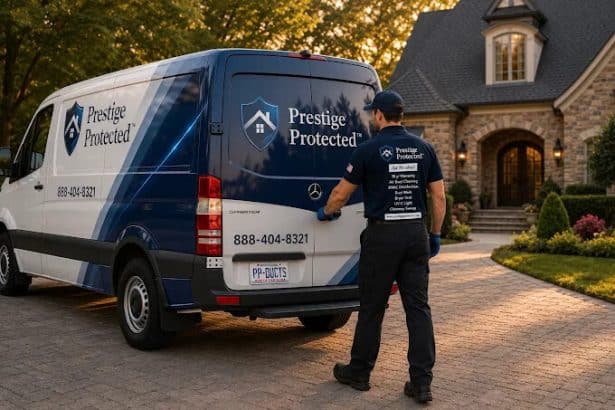

For example, Velocity Sports Performance stands out because our training centers aren't simply gyms filled with equipment. We are solely devoted to training athletes to improve speed, power, agility, coordination, strength and injury prevention. Our sports performance directors aren't only personal trainers. Ninety-five percent of them have master's degrees in exercise science and are all required to have college coaching experience.

Do Your Homework

Bassuk says investors should consider three factors when investigating a franchise opportunity:

1. Make sure it's an industry leader--this doesn't necessarily mean many locations, but it must lead in its particular niche, whether large or small.

2. Look for proven successes from other franchisees. Compare yourself to those doing well and those who aren't and ask yourself who you're most like.

3. Make sure there's availability in the market you're considering and the opportunity is a good fit.

A good fit doesn't mean you should go with the McDonald's or Blockbuster of the fitness industry. "The market leader could be someone very small, but the leader in their niche. When Mail Boxes Etc. started, there weren't a lot of other companies doing what they were doing. They were a leader even when they were small," Bassuk explains.