On MP3.com: Eye Views: 30-sec album reviews
Find Articles in:
all
Business
Reference
Technology
News
Sports
Health
Autos
Arts
Home & Garden
advertisement
Click Here

Brought to you by IBM

advertisement

Content provided in partnership with
Thomson / Gale

The use of billing data in quality improvement - patient care

Physician Executive,  Nov-Dec, 1991  by Stanley Mendenhall

Total quality management, continuous quality improvement, and related processes have been adopted as management edicts if not management religions in many hospitals. These approaches require management as well as employees to strive for constant improvement in all phases of patient care in order to exceed customer expectations. This philosophy, over the long run, will create loyal customers, increase market share, and yield higher profits for the organization. From physicians' experience as well as from the industrial model, it is well-known that good quality and good process are inextricably linked.

Process of Care--The Next Frontier

Public examination of patient outcomes over the past 5 years was accomplished for the most part through analyses of comparative mortality rates. Mortality was one measure that most practitioners could agree upon. Outcomes of care, and by extension quality, were measured by comparing mortality rates and expected mortality rates among hospitals. Subsequent attempts at outcome measurement have been patient satisfaction surveys, functional status measures, and other instruments aimed at determining what impact, if any, the health care system has had on the lives of the individuals it serves.

The method of collecting this information has been relatively expensive. For inpatients, obtaining uniform information on patient outcomes during the hospitalization requires some form of chart review. Charts may be reviewed for specific indicators, such as infections, complaints, or other disease-specific events. Charts are also the source of admission severity data for severity-of-illness indexes. For postdischarge information, letter or phone surveys are sometimes used to gather information about patients' conditions and satisfaction with hospital services.



The typical method of obtaining information about a specific inpatient is to review a chart and obtain several pieces of information. Typically, a hospital may repeat this process several times: for severity scoring, risk management, quality assurance, medical record coding, infection control, and the like. According to statistics compiled at the Commission on Professional and Hospital Activities (CPHA), the average amount of unique information obtained for its Professional Activity Study (PAS) is 3.5 ICD-9-CM diagnosis codes and 2.5 ICD-9-CM procedures codes per patient. If the average medical records department can code 6 charts per hour, this means that the productivity of this process is about 36 pieces of data per hour.

With this level of productivity, it is virtually impossible to obtain meaningful or complete information on the process of patient care. The specific drugs given, the order in which they are given, laboratory tests, even nursing supplies cannot be captured cost-effectively using this approach, because the number of people required to abstract the information would increase dramatically.

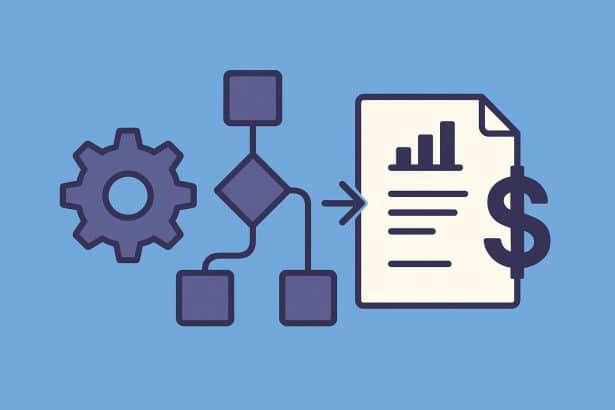
Figure 1, right, illustrates the inputs, files, and outputs of a typical hospital billing system. A billing system is transaction-driven, in that each service rendered to the patient generates data that are priced and summarized for billing purposes. All of the transactions are defined in the Charge Description Master File (CDM), which maintains the unique charge code, description, and price of all the services provided by the hospital. According to CPHA statistics, a typical bill will contain 150 transactions, which are collected as a by-product of charge collection and billing. These transactions become an electronic record of the services rendered, the specific process of care provided to the patient. It is this record that is most valuable in quality improvement initiatives for describing, monitoring, and improving the process.

This information is already used by hospitals for DRG reporting and for monitoring the relative costliness of the care provided by physicians. Many physicians are suspicious of the information generated from billing systems,] because bills are often inaccurate and do not represent the true costs of providing services: for example, aspirin is marked up several times and other services do not adequately recover costs. These are often justifiable criticisms, but it does not detract from the fact that the bills should reflect the process of care. In the cases that they are inaccurate, this usually reflects a systemwide problem within the hospital.

There are several specific steps that the physician manager can take in improving the accuracy of billing data that will benefit administration, the total quality management efforts of the hospital, and the individual practicing physician who desires feedback on his or her practice.

Improved Definitions of Services

The key to the bills is the Charge Description Master file. Figure 2, page 24, illustrates a sample section of a CDM. This particular CDM identifies specific drug name, doses, routes of administration, etc. Figure 3, page 24, illustrates a different type of CDM in which some of the information about drugs is missing, e.g., route of administration, dosage forms and strength. It is impossible to perform a drug utilization evaluation with billing data if individual drugs and their doses are not identified through the billing system. The physician manager should have some influence over the level of specificity in the hospital billing system if those data are to be used to monitor physician consumption of resources.