Study examines role of stereotypes in identifying criminal suspects - noteworthy News
Black Issues in Higher Education, Jan 30, 2003
UNIVERSITY PARK, PA.
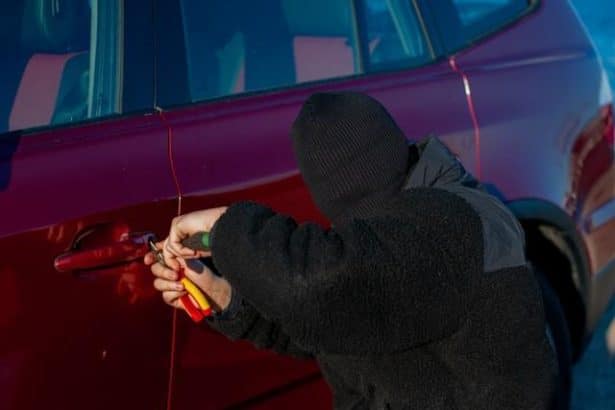
Research by a Penn State media studies expert reveals that memory of crime stories with the suspects' pictures reflects racial stereotypes, and African Americans are especially likely to be mistakenly identified for perpetrators of violent crimes, an issue being discussed nationally by community and law enforcement groups.
"When readers were asked to identify criminal suspects pictured in stories about violent crimes, they were more prone to misidentify African American than White suspects. The same readers, to a far lesser degree, tended to link White offenders more with nonviolent crime," says Dr. Mary Beth Oliver, associate professor of communications and co-director of the Media Effects Laboratory at Penn State University.

Oliver notes, "Essentially, people's `mismemories' of violent crime news seem to implicate all Black men rather than the specific individuals who are actually pictured."
The Penn State researcher and her co-author, Dana Fonash, assistant director of development with The Second Mile in State College, Pa., published their findings in the paper, "Race and Crime in the News: Whites' Identification and Misidentification of Violent and Nonviolent Criminal Suspects," which appeared recently in the journal Media Psychology.
In their study, the researchers asked a sample of White participants to examine a series of brief newspaper accounts of both violent and nonviolent crime, involving both Black and White male suspects. The newspaper briefs included an equal number of Black and White photographs as well as photos of Black and White people in non-crime news stories. Afterward, the researchers asked participants to examine a sequence of photographs and identify who had been highlighted in the news stories.


"In essence, our findings support the notion that stereotypes of Black men as violent criminals are reflected in what people recall from news reports," Oliver says. "This kind of `mismemory' has many implications ranging from issues related to law enforcement to issues related to everyday activities such as greater fear or distrust of others."
The study indicated also that self-reported racial attitudes, no matter how prejudiced or enlightened, had no impact on participants' ability to correctly identify the race of a criminal suspect. This suggests that Whites may not realize the degree to which deeply imbedded stereotypes tamper with their memories.
"The stereotyping of Blacks as dangerous or criminal is a bias that can result in tragic consequences," Oliver says. "Given the prevalence and consistency of this stereotype, there is little doubt that its existence is a reflection of a great number of social and political variables.
"However, Americans' reliance on news for information about crime points to the need for more extensive explorations of the role the media may play in creating or sustaining these negative attitudes."
Most Recent Reference Articles
- ARAB EUROPEAN RELATIONS - Dec 22 - Russia Denies Selling Missile System To Iran
- EGYPT - Dec 29 - Opposition Says Mubarak Blessed Israeli Attacks
- ARAB AFFAIRS - Dec 22 - Syria Will Eventually Move To Direct Talks With Israel
- ARAB AFFAIRS - Dec 30 - GCC Denounces Massacre
- ARAB ISRAELI RELATIONS - Israel Issues An Appeal To Palestinians In Gaza
Most Recent Reference Publications
Most Popular Reference Articles
- Credit card debt on college campuses: causes, consequences, and solutions
- The Greek chorus, Jimmy the Greek got it wrong but so did his critics - Jimmy Snyder and his views on pro sports and race
- 9 questions to ask your new lover: what you were afraid to ask, but always wanted to know
- How Tyler Perry rose from homelessness to a $5 million mansion
- Living by the word