Manufacturing Industry
McDonald's tests microturbines for peak shaving
Diesel Progress North American Edition, June, 1999 by Mike Osenga
Fast food giant evaluating microturbines as part of The Energy Efficient McDonald's program; AlliedSignal TurboGenerator at Illinois restaurant
The much discussed world of microturbines as a source of electrical power moved another step closer to reality recently with the installation of an AlliedSignal 75 kW TurboGenerator Power System at a McDonald's restaurant in Bensenville, Ill.
The system was installed in January by Unicom Distributed Energy (UDE), Westchester, Ill., the AlliedSignal TurboGenerator distributor for 12 Midwestern states. UDE is part of Unicom Corp., the parent company of Commonwealth Edison (ComEd), the Chicago, Ill., utility.
The system at Bensenville is one in a series of beta units to be installed by Unicom which are expected to lead to AlliedSignal's commercial production of the systems, possibly by the second half of 1999. UDE said other beta systems will be installed at a Citibank branch, a Heinemann's Bakery and 17 other customer facilities in the Midwest.
The AlliedSignal TurboGenerator is one of a new generation of electrical power systems designed in response to rapidly growing interest in distributed power, as utilities took for smaller output power generation systems and customers seek alternatives. Capstone Turbine, Elliott Energy and NREC have also announced microturbines for this (and other) markets.
McDonald's also said it plans on running a Capstone system at a restaurant in Atlanta, to be installed this summer, to evaluate that technology as well.
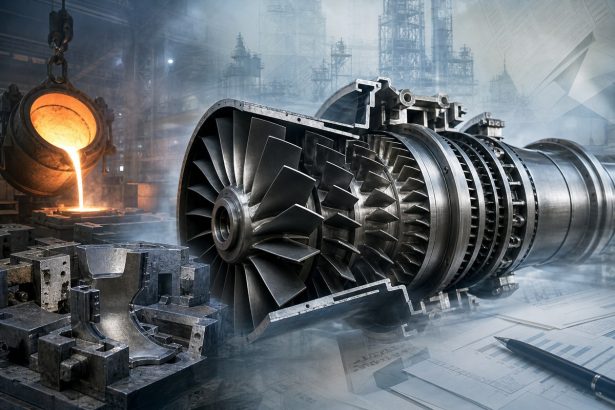
The AlliedSignal system uses a small combustion turbine with an integral high-speed generator and an inverter that allows frequency compatibility with the electric grid. The machine is rated 75 kW (ISO) at 65,000 rpm with heat rates of 12,540 BTU/kWh (HHV on diesel fuel) and 13,280 (natural gas).
The design uses a single moving part with the radial turbine, compressor and generator rotor all on a single shaft. The system also features air beatings, which do not require a lubrication system, and a nonrotating recuperator. In previous tests, the system had a noise level of 65 dB(A) at 10 meters.
The system in Illinois has been installed at The Energy Efficient McDonald's (T.E.E.M.), one of four in the world that essentially serve as test sites for the corporation and feature energy efficient lighting, cooling, kitchen ventilation, an energy management control system, and building monitoring.
"In the fast food restaurant business if you can eke out a 1 or 2 percent comparable sales increase a year, you're doing great," said Anthony Spata, building systems manager, McDonald's Corp. "Here's an opportunity to do maybe the equivalent of a 10 percent increase by slicing a portion of your energy costs off the profit and loss statement. So it really does help in terms of increasing the profitability of the individual restaurants."
Spata said that if such systems turn out to be successful in a McDonald's type of operation, the corporation would endorse the product as something their franchisees and company-owned restaurants could use and then supply the restaurant operators with the necessary information to purchase a system.
"They need to look at what their demand charges are, what their kilowatt hour charges are, what type of payback they're looking at, gas costs, etc., and then each restaurant, or group of restaurants would make their own purchasing decision."
The system at Bensenville is located, very unobtrusively, in a walled, open air enclosure at the back of the restaurant lot. With the gate to the enclosure shut, the system is nearly silent and generates little if any noticeable heat to the parking lot itself. The system operates as a peak shaving unit with the restaurant wired so that it can operate in parallel with the grid, as well as being operated independently.
Spata said a typical McDonald's consumes between 110 and 140 kW, thus the 75 kW AlliedSignal system can shave about 60 percent off the median consumption of the restaurant. With peak rates at this location about $14 to $15 a kilowatt. the potential savings are apparent.
The higher cost demand hours at this specific site are from 9 a.m. to 6 p.m. To start and stop the system, both manually and automatically, the system operates via a SCADA module built into the system by Visteon. The SCADA module also allows troubleshooting and monitoring to be done remotely.
In start-up mode, shortly before 9 a.m., the first of three natural gas fuel valves on the TurboGenerator opens which is followed by a one-minute purge that draws any residual gas out of the enclosure. Fifty seconds into the purge, a Campbell-Hausfeld gas compressor starts, which takes the 4 psi natural gas from the utility and compresses it to 70 to 80 psi.
The starting inverter of the line power unit (LPU) begins to turn the rotor, gradually increasing the speed of the unit from zero to 32,000 rpm. At 8000 rpm, the other two fuel valves open, the igniter lights and combustion begins. At 32,000 rpm, the start inverter turns off, the contactor opens and the combustion gas accelerates the unit to the 50,000 rpm idle speed.
- 5 Rules for Immediate Annuities
- Death in the Family: 12 Things to Do Now
- Dumbest Things You Do With Your Money
- 6 Online Networking Mistakes to Avoid
- 401(k) Mistakes to Avoid
- 5 Economic Scenarios to Keep You Up at Night
- The Real ‘Best Places to Retire’
- Best Credit Cards for You
- 12 Tough Questions to Ask Your Parents
- The Real ‘Best Colleges’
- Home Buyer Tax Credit: How to Cash In
- Why You Shouldn't Bash Cash
- 8 Phony 'Bargains' and Better Alternatives
- Danger: 3 Debit Card Scams to Avoid
- 6 Myths About Gas Mileage
- 29 Fees We Hate Most
- Quick and Easy Ways to Boost Returns
- Best Stocks to Buy Now
- Lower Your Taxes: 10 Moves to Make Now
- New Jobs: 8 Lessons from Real-Life Career Switchers
- The New Job Market: Who Wins and Who Loses?
- Health Care Reform's Public Option: Everything You Need to Know
- Volunteer Work When Unemployed: Should You Work for Free?
- Whose Recovery Is This?
- Long-Term-Care Insurance: 4 Biggest Risks to Avoid
Content provided in partnership with
Most Recent Business Articles
- Multiple criteria evaluation and optimization of transportation systems
- Multi-criteria analysis procedure for sustainable mobility evaluation in urban areas
- A two-leveled multi-objective symbiotic evolutionary algorithm for the hub and spoke location problem
- Multi-criteria analysis for evaluating the impacts of intelligent speed adaptation
- The development of Taiwan arterial traffic-adaptive signal control system and its field test: a Taiwan experience
Most Recent Business Publications
Most Popular Business Articles
- 7 tips for effective listening: productive listening does not occur naturally. It requires hard work and practice - Back To Basics - effective listening is a crucial skill for internal auditors
- LIFO vs. FIFO: a return to the basics
- FAS 109: a primer for non-accountants - Financial Accounting Standards Board's "Statement 109: Accounting for Income Taxes"
- Design a commission plan that drives sales - Sales Commissions
- Too Young to Rent a Car? - 25-years-old the minimum age for car renting - Brief Article