The world's most remote golf course: the tiny kingdom of Bhutan, wedged between India and China, struggles with a new world—and a new game

Golf Digest, Nov, 2003 by John Barton

FORTY YEARS AGO, DAWA PENJORE WAS BORN to a country with no roads, no electricity, no mail; not much of anything except a short, hard life amid a severe landscape of lost horizons. But Dawa was part of the first generation of ordinary Bhutanese to go away and get an education, come home and start a business and, for better and for worse, help to drag his tiny nation into the 21st century. Today, he has all the necessary accouterments of the modern world: a cell phone, a jeep, a thin-faced titanium driver.

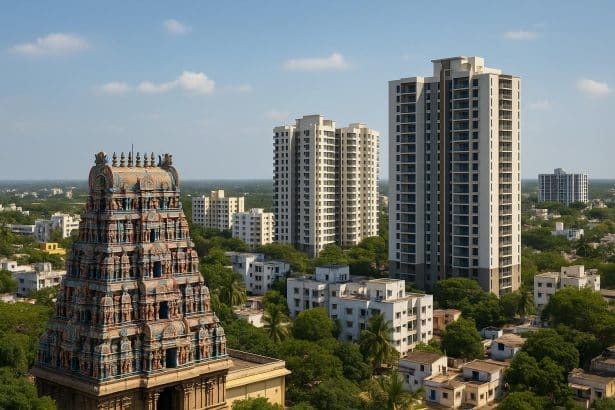
We are at Royal Thimphu, perhaps the most remote golf course in the world, tucked away in a gentle fold of the Himalayas, just outside what is often called the only world capital with no stoplights (one was installed a few years ago, but no one liked it). We're 22 hours of flying time from New York, having arrived via London, Bangkok and Calcutta, plus a wild two-hour drive on a one-lane road that consists almost entirely of hairpins.

Down the hill is the spectacular 17th-century Tashichhoe Dzong, the nation's palace, monastery, capitol and fortress all rolled into one. And beyond, past the clusters of prayer flags that cling to distant ridges, are the vivid, shocking edges of a high Himalaya covered in snow, the first of a crush of peaks that form the border with Tibet, including the sacred and spectacular Jhomolhari, and Gangkhar Puensum, the highest unclimbed summit in the world.

Right now, however, Dawa is much more interested in showing me the new Japanese 3-wood he picked up in Bangkok on his way home from a business trip (he owns a travel company). Bhutan has the world's two most populous nations for neighbors--1.3 billion Chinese live on one side, a billion Indians on the other--yet the country is smaller than West Virginia, with fewer residents than Detroit. Bhutan has no golf pros or teachers, nowhere even to buy balls and tees (diplomatic bags arrive from the Bhutanese embassy in New York stuffed with discount-store golf goodies). The members at Royal Thimphu have a motley collection of homemade swings cobbled together from watching hand-me-down videos and reading Western golf magazines that arrive months late. Golf tips and swing theories are traded feverishly, and a visiting 10-handicapper is made to feel like Arnold Palmer.

The golf course is a raggedy 2,700 yards, par 33, with thick rough and hardpan fairways. Four holes have new greenside ponds that look like oversized sunken bathtubs made of concrete. "Every year they try to make it a bit harder," sighs Dawa.

Yet despite its many imperfections, Royal Thimphu--like golf itself--is revered.

The day before, I had met Karma Lam, a wiry, scratch golfer who works for the Bhutan Olympic Committee and is a part-time basketball and tennis coach. He was supposed to be meeting some visiting Indian tennis dignitaries but had abandoned them in favor of getting in a quick nine. "I don't know what it's like in other countries," Karma had said, "but in Bhutan, golfers are completely addicted. We don't give much time to our families. Golf takes over everything."

With an annual membership fee of 6,000 ngultrum, roughly $130, Bhutan's golfers are mostly limited to the upper echelons of society--government officials and diplomats, plus a few stray Japanese tourists. (A junior program is now underway, however, thanks to Rick Lipsey, an American golf missionary who doubles as a sportswriter.) A handicap sheet taped to the clubhouse window shows about 100 members. At the top of the list is one whose number is 13.2. His name is displayed simply as "His Majesty."



A COUPLE OF DAYS BEFORE MY TRIP, IN AN atrocious breach of Bhutanese etiquette, I had sent a request asking if I could play a few holes with the nation's fourth monarch, 47-year-old King Jigme Singye Wangchuk, a man with four wives (all sisters), 10 children and a fondness for videotaped NBA games. I never found out if the request penetrated the palace walls, but the king, I was told, is a busy man. Instead, Dawa invited along the king's larger-than-life first cousin, Paljor Dorji, or Benji as he is known to all.

We tee off under leaden, blustery skies. Some course maintenance is being performed by a couple of old ladies with scythes. Stray dogs, whose barking fills the chill night air all over Bhutan, sleep in piles in the rough. An unimpressed-looking cow roams beside one of the fairways. Ragamuffin children with merlot-colored cheeks tumble over the hills and hollows.

Benji is a jolly fellow with a large, round Buddha face, a monkish buzz cut beneath his Panama hat--the national dress code, requiring all Bhutanese to wear a robelike costume in public, is relaxed for golf--and the bearlike build of warrior. He had a privileged education, including a stint at the Royal Military Academy in Sandhurst, England, alongside the Sultan of Brunei, then he spent his career in a variety of high-ranking government posts, including Bhutan's Chief Justice. Now retired and twice divorced, he's a full-time golf addict.

But not a very accomplished one. Benji helped bring golf to Bhutan in the late '60s--he and an Indian brigadier got permission from the then-king to lay out a few holes--but today he seems to be taking the game quite casually. For a stretch of several holes, he's on his cell phone, fixing up an evening game of mah-jongg. He plays half the second hole one-handed, chipping the ball along the fairway with his right hand while cradling the phone to his ear with his left.


BNET TalkbackShare your ideas and expertise on this topic

Please add your comment:

  1. You are currently: a Guest |
  2.  

Basic HTML tags that work in comments are: bold (<b></b>), italic (<i></i>), underline (<u></u>), and hyperlink (<a href></a)

advertisement
advertisement
  • Click Here
  • Click Here
  • Click Here
advertisement

Content provided in partnership with Thompson Gale