Down on the Server Farm - Industry Trend or Event

Industry Standard, The, Feb 19, 2001 by Elinor Abreu

With power costs soaring, no industry is more vulnerable than Web hosting.

IT'S A CHILLY LATE-WINTER MORNING AS Chris Hardin, global director of Operations at Exodus, proudly shows off the company's Santa Clara, Calif., data center. One of about a dozen in the state and 40 worldwide owned by the Web hosting leader, the facility is built to withstand almost anything short of a thermonuclear explosion: The unmarked two-story concrete structure has bulletproof glass, Kevlar-enforced walls, hand-scan access devices, 300 security cameras and a floating seismic floor that will survive an earthquake up to 8.0 on the Richter scale.

Impregnable as it seems, the facility is still vulnerable to California's power crisis.

Data centers, also known as server farms, require huge amounts of electricity to keep thousands of computers not only running, but also cooled to 68 degrees. Faced with soaring energy costs, some hosting companies are looking to relocate, while others are investing in their own power plants. And because energy represents 60 percent of a data center's costs, the energy crunch will likely affect the bottom line of Web hosting companies -- with the costs eventually passed on to their already beleaguered Internet customers.
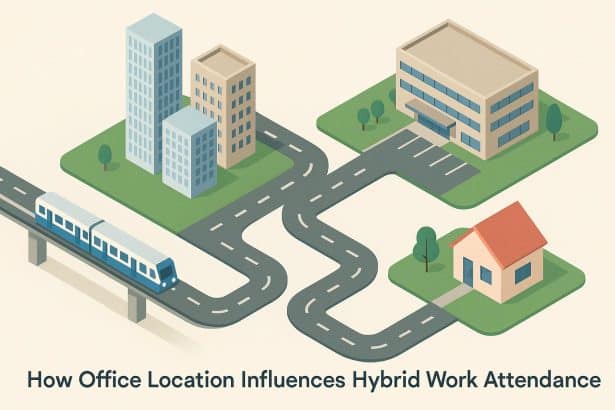
Data centers are clustered in Silicon Valley and the northern Virginia tech corridor near Washington, home of America Online. Once a matter of just leasing out server space, Web hosting has become more full-service, making it less vital that server farms be close to their customers. Thus, the business is migrating inland, freeing companies from high-cost locations on the coasts.

A typical server farm uses 10 to 20 megawatts of power per hour -- roughly the equivalent of 10,000 to 20,000 homes with every light and appliance turned on, according to Jeff Monroe, VP of design and construction for Metro-media Fiber Network. "On a watts-per-square-foot perspective, data centers are one of the highest energy users in any industry," Monroe adds. "Chip factories, automobile plants all have idle times."

Server farm companies say they can withstand outages because they have built redundant systems and added backup diesel generators. Exodus, for instance, guarantees its customers the standard 99.9 percent network availability. But that guarantee comes with potential hidden charges: Though typical Web hosting contracts run for one to three years, they allow the host to raise or lower prices as market conditions change.

The Santa Clara server farm's electricity comes from municipal utility Silicon Valley Power -- which gets only 5 percent of its electricity from the troubled Pacific Gas & Electric and has been spared the rate hikes that have crippled PG&E and Southern California Edison.

Nevertheless, Exodus is concerned enough that it's considering building its own natural-gas-run power plant near the Santa Clara facility.

Other companies are also looking for their own backups. U.S. DataPort is awaiting permits to build natural-gas-fired plants in Virginia, New York and San Jose, Calif. The Virginia server farm, scheduled to open in early 2002, will cost $1.4 billion to build, including $300 million for the generating plant.

And some companies will just go where the juice is cheap. "If there isn't the infrastructure there to support" data centers, says Monroe, "at some point you've got to put them in other cities."

There's always Utah: With its 40 percent excess generating capacity and the lowest power rates in the country, the Beehive State is starting to look mighty appealing.

COPYRIGHT 2001 Standard Media International
COPYRIGHT 2001 Gale Group
 

BNET TalkbackShare your ideas and expertise on this topic

Please add your comment:

  1. You are currently: a Guest |
  2.  

Basic HTML tags that work in comments are: bold (<b></b>), italic (<i></i>), underline (<u></u>), and hyperlink (<a href></a)

advertisement
advertisement
  • Click Here
  • Click Here
  • Click Here
advertisement
Click Here

Content provided in partnership with Thompson Gale