advertisement

Environmental concerns in China: problems, policies, and global implications

International Social Science Review, Spring-Summer, 2006 by Xiaofan Li

Introduction

China's recent rapid economic growth has come at a cost of environmental degradation. Various factors, including the conflict between economic development and environmental concerns, insufficient government regulation of China's environment, and lack of public awareness regarding environmental issues have hindered China's effort to find a proper balance between economic prosperity and its environmental health. This study identifies the major problems in China's ecological environment. It then examines China's efforts to promote environmental protection. Lastly, it studies the clash between China's environmental concerns and government policies that encourage economic development, and the international ramifications of that conflict. In so doing, this study uses China as a model for how developing countries might achieve a proper balance between demands for economic development and environmental protection.

Chinese Environmental Problems

China's current environmental problems can be divided into seven categories: land, industry, energy, water, the controversial "Three Gorges Dam" project, air, and population.

(1) LAND: Since the mid-1980s, China has experienced a significant reduction in arable land. In the late-1980s, China lost 2.1 million hectares of cultivated land.' Between 1996 and 2000, China lost another 10.5 hectares of cultivated land, lowering the amount of arable land area to 1.5 hectares per capita. During the latter period, irrigation problems contaminated 32.5 million hectares of cultivated land in China. (2)

Soil erosion, deforestation, desertification, and salinization of farm land have also contributed to the rapid deteriorating quality of China's ecological environment. As a consequence, over the last three decades most wildlife habitats, inland fisheries, and aquatic product bases in China have been destroyed. (3) According to Chaofei Yang, chief of the Natural Ecological Protection Division of the State Environmental Bureau, almost ninety percent of China's grasslands and forests are experiencing varying degrees of degradation. The pace of desertification increased from 2,100 square kilometers in the mid-1980s to 3,436 square kilometers by the late 1990s. Additionally, in recent years China has lost almost half of its wetlands. The upstream of the Huang River lost almost a quarter of its volume in the early 1990s, causing worsening flood problems in China. The flood in the Yangtze River in 1998, for example, cost China 134.5 billion yuan (US$ 16.8 billion) in economic losses. (4)


The loss of cultivated land resulting from soil erosion, salinization, water scarcity, and desertification has produced two conflicting trends--an increased demand for grain from an ever growing population and a diminishing capacity to meet that demand. (5) This raises concerns regarding how China will feed its 1.3 billion people and protect its environment simultaneously. (6)

(2) INDUSTRY: Given China's emphasis on developing heavy industries, pollution from manufacturing factories pose the most severe threat to its environment. Due to low energy costs, the power sector is more likely to produce energy waste. Each day, China's factories release large amounts of industrial wastes that have not been processed thoroughly to ensure the elimination of contaminated substances.

The structural and industrial pollution in Huang River provides a disturbing example of this problem. Eighty percent of industrial waste deposited into the river comes from mining industries, oil companies, textile factories, chemical plants, food, and paper. Ningxia and Gansu provinces, situated along the river, house a large number of these industries which discharge huge volumes of wastewater into the river. Industrial wastewater per ten thousand yuan from Ningxia province, for example, has reached 102.2 tons, almost double the nationwide average level of 51.7 tons. (7) So long as China's industries are reluctant to invest in new technology to combat pollution and local government agencies enforce environmental protection laws loosely, there is little chance of changing this situation.

(3) ENERGY: Regardless of its bountiful reserve of coal, oil, and water in aggregate terms, China is still viewed as a country lacking in resources relative to its size and population. China faces immense problems as it seeks to improve resource preservation and enhance environmental controls. Attempts have been made to diversify energy consumption and

reduce coal use, but China's thriving economy imposes great demands on energy and resource consumption. This only adds to the degradation of China's environment.

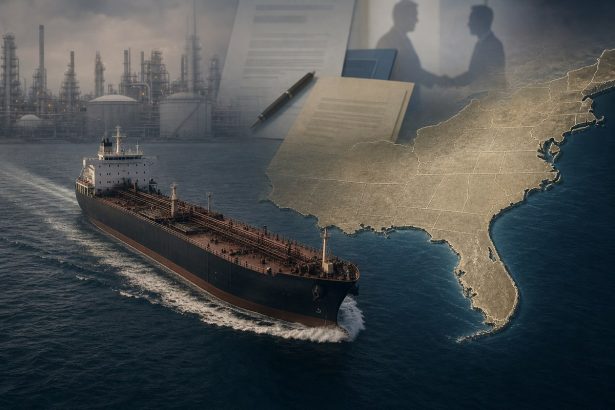
Unlike most developed countries, China still depends heavily upon coal as its primary source of energy. During the early 1990s, coal accounted for nearly three-quarters of China's total fuel consumption. (8) While China is the world's largest consumer of coal, it has also become the second largest consumer of crude oil and electricity. Over the last five years, China, home to approximately one-fifth of the world's population, consumed 7.4 percent of the world's oil supply. Given these circumstances, China cannot sustain its current level of economic development simply by exploiting its own resources. (9) China's rising energy consumption make it likely that it will rely greatly on oil imports to meet its energy needs in the near future. According to Zhang Guaoboa, vice chairman of the National Development and Reform Commission, China's oil production in 2005 amounted to 180 million tons, or 3.5 million barrels per day. This does not meet China's current demand for oil and helps to explain the recent failed effort of the China National Offshore Oil Corporation, the country's largest offshore oil and gas producer, to purchase the U.S.-based oil company, Unocal, America's ninth largest oil company. (10)


BNET TalkbackShare your ideas and expertise on this topic

Please add your comment:

  1. You are currently: a Guest |
  2.  

Basic HTML tags that work in comments are: bold (<b></b>), italic (<i></i>), underline (<u></u>), and hyperlink (<a href></a)

advertisement
advertisement
  • Click Here
  • Click Here
  • Click Here
advertisement

Content provided in partnership with Thompson Gale