Health Care Industry
Industry: Email Alert RSS FeedOCD & PANDAS
Townsend Letter for Doctors and Patients, Oct, 2004 by Jule Klotter
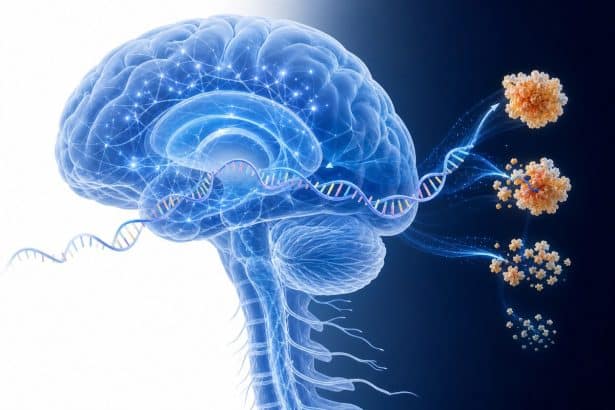
In an article published in Latitudes (Vol 6, Issue 2), Aristo Vojdani, PhD, MT, discusses the difference between nonautoimmune obsessive compulsive disorder (OCD) and PANDAS (pediatric autoimmune neuropsychiatric disorder associated with Group A streptococcal infection). Obsessive Compulsive Disorder involves an unintentional and uncontrollable replay of thoughts or actions. In an attempt to reduce the anxiety that arises when the obsession cannot be stopped, people with OCD develop a set of actions or rituals that involve washing and cleaning, checking (i.e., that the stove is off), symmetry, counting, repeating, redoing, and hoarding in order to hold their fear at bay. In many cases, OCD is preceded by a major stressor, such as a family member's illness or job loss. Children with OCD tendencies have linked hearing bad news about war or terrorism or seeing frightening movies to their developing "full-blown" OCD. The rituals that OCD patients use to calm their fears do not always have a noticeable link to the obsessive thought(s) plaguing them, and scientists do not understand why some have a compulsion to clean and others turn to hoarding--or why these symptoms may change. Scientists have discovered that adults with OCD have more activity in the caudate nucleus, orbital frontal regions of the brain, and basal ganglia. Basal ganglia, "the thought-filtering station," has many serotonin receptors. OCD patients respond to selective serotonin reuptake inhibitors and to behavior therapy, according to research by Dr. J. Schwartz and colleagues at UCLA.


Most RecentHealth Care Articles
About 25% to 30% of children with OCD may actually have PANDAS, a disorder in which the body's immune cells attack its own B-cells or the basal ganglia while fighting streptococcus. Chiildren who develop OCD, tic disorders, or anorexia nervosa after a streptococcal infection need to be checked for serum antibodies against streptococcal antigens and their cross-reactive epitopes on B-cells and nerve cells. (Immunosciences Lab, phone 310-657-1077 or 800-950-4686, offers a PANDAS panel.) In contrast to non-autoimmune OCD which may take years to develop, PANDAS symptoms appear quickly. Also, OCD symptoms increase and decrease sharply in PANDAS while changes in OCD symptoms among non-autoimmune OCD patients are more gradual. In addition to OCD, children with PANDAS may display numerous other symptoms that include tics, trembling, twitches, grimacing, clumsiness, loss of math skills, sensitivity to touch and clothing tags, poor attention span, distractibility, irritability, impulsivity, separation anxiety, and bedtime fears. Dr. Vojdani says that PANDAS treatments being investigated include plasmapheresis to remove autoantibodies reacting to B-cell receptors and basal ganglia cells, intravenous immunoglobulin, and daily doses of amoxicillin as a prophylactic measure.
Vojdani, Aristo, PhD, MT. Obsessive Compulsive Disorder and Differentiation between Non-Autoimmune OCD and the Autoimmune version of the disease called PANDAS. Latitudes, Vol. 6, Issue 2, 2003.
Brought to you by CBS MoneyWatch.com
- Best- and Worst-Paid College Degrees
- 6 Things You Should Never Do on Twitter or Facebook
- How Much Sleep Do You Really Need?
- 6 Big Myths about Gas Mileage
- 5 Rules for Immediate Annuities
- Death in the Family: 12 Things to Do Now
- Dumbest Things You Do With Your Money
- 6 Online Networking Mistakes to Avoid
- 401(k) Mistakes to Avoid
- 5 Economic Scenarios to Keep You Up at Night
- The Real ‘Best Places to Retire’
- Best Credit Cards for You
- 12 Tough Questions to Ask Your Parents
- The Real ‘Best Colleges’
- Home Buyer Tax Credit: How to Cash In
- Why You Shouldn't Bash Cash
- 8 Phony 'Bargains' and Better Alternatives
- Danger: 3 Debit Card Scams to Avoid
- 6 Myths About Gas Mileage
- 29 Fees We Hate Most
- Quick and Easy Ways to Boost Returns
- Best Stocks to Buy Now
- Lower Your Taxes: 10 Moves to Make Now
- New Jobs: 8 Lessons from Real-Life Career Switchers
- The New Job Market: Who Wins and Who Loses?
- Health Care Reform's Public Option: Everything You Need to Know
- Volunteer Work When Unemployed: Should You Work for Free?
- Whose Recovery Is This?
- Long-Term-Care Insurance: 4 Biggest Risks to Avoid
Content provided in partnership with
Most Recent Health Articles
Most Recent Health Publications
Most Popular Health Articles
- Make running easier: with this unique 'pose running' technique, you'll learn to actually enjoy your fat-burning sessions
- 50 home remedies that work: these safe, fast, and effective fixes will relieve what ails you - Cover Story
- Detox in 7 days: a detoux diet can help you shed up to 10 pounds and leave you feeling terrific. Our weeklong plan shows you how to lose the weight and keep it off - Cover story
- Treat sinusitis naturally: breath easy and relieve sinus pressure with these remedies - Quick Fixes and Long-Term Solutions
- All about nightshades: explore the hidden hazards of your favorite food with macrobiotic nutritionist Lino Stanchich