Health Care Industry
Industry: Email Alert RSS FeedLyme disease, potential plague of the 21st century detection problems resolved by imaging with the Bradford Variable Projection High Resolution Microscope
Townsend Letter for Doctors and Patients, Jan, 2005 by Robert W. Bradford, Henry W. Allen
Introduction
In the mid-14 century, Europe was swept by a horrific catastrophe, known variously as the Bubonic Plague, the Black Death or simply the Pestilence. It is estimated to have killed in excess of 20 million people, a third of the population of Europe at that time. It is believed that half of the inhabitants of Paris died as a result of the plague. Today we have learned to control the microorganism that caused the great plagues of Europe and elsewhere but now we are beset by another "plague" that is not as well known as that of 14th century Europe. The disease was first recognized in the United States in the small New England town of Lyme, Connecticut, and has since taken that name. Lyme disease was first studied in 1975 by Dr. Allen Steere, following a mysterious outbreak in that town of juvenile rheumatoid arthritis. The relationship between rheumatoid arthritis and a disease of another name may not at first be apparent but, as discussed more fully below, Lyme disease has the ability to mimic many other diseases, making diagnosis extremely difficult.
Most RecentHealth Care Articles
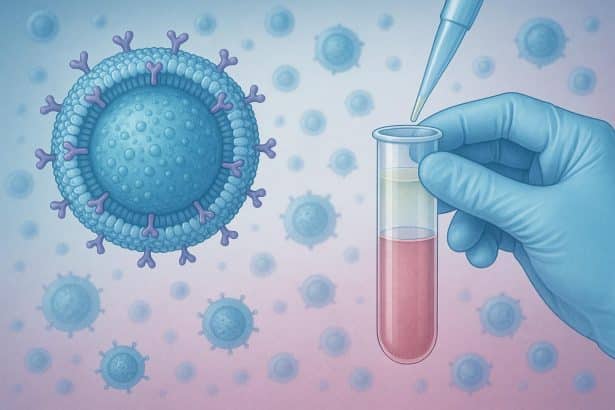
In 1982 the agent responsible for Lyme disease was discovered by Dr. Willy Burgdorfer, isolating spirochetes belonging to the genus Borrelia from the mid-guts of ticks infecting deer, other wild animals and dogs. Spirochetes are spiral-shaped bacteria of very early origin in the evolutionary scheme. The causative organism was named Borrelia burgdorferi (Bb), after its discoverer. Since then, the number of reports of Lyme disease have increased so dramatically that today, Lyme disease is the most prevalent tick-borne illness in the United States.
The Centers for Disease Control (CDC) in Atlanta, Georgia, reports that "there is considerable under-reporting" of Lyme disease, maintaining that the actual infection rate may be 1.8 million, 10 times higher than the 180,000 cases currently reported. Dan Kinderleher, MD, an expert on Lyme disease, stated that the number of cases may be 100 times higher (18 million in the United States alone) than reported by the CDC. It is estimated that Lyme disease may be a contributing factor in more than 50% of chronically ill people. (1)
According to an informal study conducted by the American Lyme Disease Alliance (ALDA), most patients diagnosed with Chronic Fatigue Syndrome (CFS) are actually suffering from Lyme disease. In a study of 31 patients diagnosed with CFS, 28 patients, or 90.3%, were found to be ill as a result of Lyme disease. (1)
[GRAPHIC OMITTED]
History of Lyme and Related Spirochetal Diseases
The discovery by Burgdorfer that Lyme disease was caused by a spirochete placed it in a category of other diseases known to be caused by spirochetes. An example of such a disease is syphilis, the scourge of Europe for hundreds of years. Arsenic and some of its compounds had been known for quite some time as a highly successful and popular means of fatally poisoning someone. Following the discovery of the Germ Theory of Disease by Louis Pasteur (1822-1895), it was theorized that if arsenic was toxic enough to kill, it may also be effective in killing the organisms that cause disease. In the early 1900s, the German chemist-physician Paul Ehrlich (1854-1915) developed a chemical treatment for syphilis. By using a "shotgun" approach of trying hundreds of compounds in an effort to find one that worked, Ehrlich discovered what became known as Salvarsan or "606" after 606 compounds had been tested. Salvarsan was an organic compound of arsenic and may be highly toxic if not properly used. For his monumental discovery, Ehrlich was awarded the Nobel Prize in 1908. Salvarsan may be considered the first man-made antibiotic. (2)
Arsenic belongs to that column in the periodic table of chemical elements known as the "Group V elements," also including phosphorus, antimony and bismuth. See Chart 1.
Following the success of Salvarsan as a treatment for syphilis, other compounds of antimony and bismuth were also prepared and tried against spirochetes. Examples of these compounds include bismuth subcitrate, bismuth subsalicylate (Pepto-Bismol), bismuth subgallate and many others. An example of an antimony-containing antibiotic is Pentostam (an antimonial, antimony sodium gluconate). (3,4)
A biological molecule known as ATP (adenosine triphosphate) supplies energy to biological systems and does so through the high energy bonds found in a chain of three terminal phosphate groups. One of the mechanisms by which arsenic exerts its toxic effect is the substitution of phosphorus by arsenic in ATP, since both arsenic and phosphorus lie in the same column of the periodic table of chemical elements and have similar chemistry. See Chart 2.
[GRAPHIC OMITTED]
When this substitution occurs, the molecule experiences immediate hydrolysis, breaks down and is no longer functional as a source of energy for the cell. Phosphorus, arsenic and antimony are also found in this column of the periodic table (Group V). (5,6) See Chart 3.
What may be the first case of Lyme disease was noted about 1974 in a 14-year old boy, taken to the hospital with extreme pains in the muscles of his legs and unable to walk. This case, coupled with other pertinent facts related to the boy and a highly classified US Government laboratory conducting research on contagious animal diseases in this same area is suggestive of a link between these two events. The Government laboratory alluded to is found on Plum Island, just north of Long Island, NY, and south of Lyme, Connecticut. Because of its secret nature, access to the island was only by ferryboat and restricted to the Government workers employed there. The 14-year old boy lived near the ferryboat dock. Although not providing proof, these considerations are highly indicative of a possible link between this research laboratory and the subsequent outbreak in 1975 of an unknown disease involving juveniles in Lyme, Connecticut. (29)


Brought to you by CBS MoneyWatch.com
- 10 Best Places to Retire
- Companies with the Best 401(k) Plans
- Most Important Document for Your Heirs? It's Not Your Will
- Video: Should You Expect to Retire Rich?
- Over 50? Here's How to Get (and Keep) a Great Job
Most Recent Health Articles
- Shoulder the load: don't let your delts take a back seat. Cap off your v-taper with this well-rounded routine
- It's show time: be ready for your HD close-up in just four short weeks
- Grim repper: experience new muscle growth and fat lossalong with some painwith this at-home high-rep program
- Taking sides: train unilaterally to topple strength plateaus while you torch your midsection
- The power within: scientific studies have shown that these six supplements possess benefits you never imagined
Most Recent Health Publications
Most Popular Health Articles
- Detox in 7 days: a detoux diet can help you shed up to 10 pounds and leave you feeling terrific. Our weeklong plan shows you how to lose the weight and keep it off - Cover story
- All about nightshades: explore the hidden hazards of your favorite food with macrobiotic nutritionist Lino Stanchich
- La anemia falciforme - causas y tratamiento
- The sour truth about apple cider vinegar - evaluation of therapeutic use
- Treat sinusitis naturally: breath easy and relieve sinus pressure with these remedies - Quick Fixes and Long-Term Solutions
Most Popular Health Publications
Content provided in partnership with http://findarticles.com/source//