"A matter of extreme urgency": Theodore Roosevelt, Wilhelm II, and the Venezuela Crisis of 1902 - United States-Germany conflict over alleged German expansionistic efforts in Latin America

Naval War College Review, Spring, 2002 by Edmund Morris

On the evening of 2 June 1897, an extraordinary meeting of minds took place at the Naval War College, in Newport, Rhode Island. In addition to the assistant secretary of the Navy, who was the main speaker, the stage was shared by an ornithologist, a paleontologist, a zoologist, and a taxidermist. There was an expert on the naval logistics of the War of 1812. There was a Dresden-educated socialite, fluent in German, French, and English, and able to read Italian. There was a New York State assemblyman, a North Dakota rancher, an eminent historian, a biographer, a big-game hunter, a conservationist, a civil service reformer, a professional politician, and a police commissioner. All these men were called Theodore Roosevelt.

In 1897, he was still only thirty-eight years old. Soon he was to become colonel of the Rough Riders regiment in Cuba, a recognized war hero, then governor of New York, vice president, and president of the United States. In later years, Roosevelt would be a winner of the Nobel Peace Prize, president of the American Historical Association, South American explorer, and the author of some forty books.


The 1897 address to the Naval War College was the first great speech of Roosevelt's career--a fanfare, a call to arms. (1) "TR", as he was already popularly known, had been assistant secretary of the Navy for less than eight weeks but was already an enthusiastic, not-too-private plotter to bring about the Spanish-American War--which he was to do almost single-handedly. That night he took as his text George Washington's precept,

"To be prepared for war is the most effectual means to promote peace." (2) He managed to repeat the word "war" sixty-seven times before he sat down. TR was in those years a big-navy man, an unashamed imperialist, and a "Monroe Doctrinaire," obsessed with the idea of getting the Old World out of the New World. Henry James, who was exactly the reverse of these things, called him "the mere monstrous embodiment of unprecedented and unresounding noise.

In the next few years a very different Theodore Roosevelt was to emerge, a man transformed by the shock of the presidency into a commander in chief who accomplished much of his grand strategy in silence and secrecy. Notwithstanding TR's extraordinary dominance of the American political scene, by 1905-when James, reassured by his mature moderation and dignified bearing, dubbed him Theodore Rex-he was the most gentlemanly of American chief executives. He did not cease to be a big-navy man; he raised the U.S. Navy from fifth to third place internationally during his seven and a half years in office, and it was he who sent the Great White Fleet around the world in 1908 and 1909. He did not hesitate to deploy all the firepower in his arsenal when circumstances called for it. Nonetheless, his presidency (once he had quelled a rebellion in the Philippines, inherited from William McKinley) was peaceful. It was peaceful largely because foreign rulers were aware that Theodore Roosevelt never bluffed. The Venezuela inci dent of late 1902 is the locus classicus of his famously colloquial foreign policy, "Speak softly and carry a big stick."

The Venezuelan crisis of 1902 is not an unfamiliar episode in U.S. history. It has all the ingredients that attract scholars: drama, contradictions, mysteriously destroyed evidence, and the fictionalizing tendencies of human memory. Over the years TR himself offered a number of versions of the story. (3) He was noticeably circumspect about it as long as he remained in office. Only after leaving the White House did he reveal, at first in strict confidence, that in November and December of 1902 "the United States was on the verge of war with Germany." Even after the outbreak of World War I, his allusions to what he called "the Venezuela business" were cryptic. Almost a century had to pass before cohering bits of evidence suggested beyond further doubt that the basic facts of Roosevelt's account were accurate-and that he had remained silent during his presidency to spare the vanity of an emperor. The full extent of the crisis still has to be inferred from the existence of an extraordinary void, hinting at some v anished enormity, in the archives of three nations: the United States, Germany, and Britain.

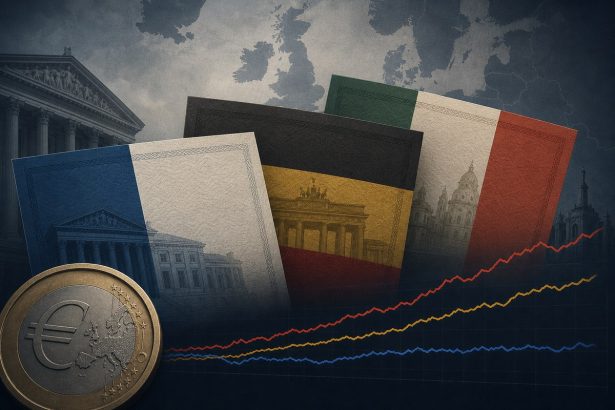
Roosevelt had seen the Venezuela crisis coming for eleven months. It involved a then-familiar situation-failure by a Latin American republic to repay its foreign loans. Venezuela owed about sixty-two million bolivars to an impatient consortium headed by Great Britain and Germany. These powers, acting in alliance, proposed to blockade Venezuela with a multinational armada until the debts were paid off. Both nations scrupulously assured the United States that they were interested in debt collection only; that they had no desire to establish footholds in the Western Hemisphere. TR sympathized with their predicament. He blamed President Cipriano Castro of Venezuela for ignoring honorable obligations. As he robustly advised a German diplomat, "If any South American country misbehaves toward any European country, let the European country spank it." However, he also made it clear that "the punishment should not take the form of acquisition of territory by any non-American power."


BNET TalkbackShare your ideas and expertise on this topic

Please add your comment:

  1. You are currently: a Guest |
  2.  

Basic HTML tags that work in comments are: bold (<b></b>), italic (<i></i>), underline (<u></u>), and hyperlink (<a href></a)

advertisement
Click Here
advertisement
  • Click Here
  • Click Here
  • Click Here
advertisement

Content provided in partnership with Thompson Gale