Timor, Cuba—and the making of a medical superpower: every year Cuba, a majority world country of only 10 million people, sends more than 30,000 volunteer medical workers to 93 countries around the world. Surgeon Katherine Edyvane recounts the little-told story from first-hand experience
New Internationalist, Oct, 2008 by Katherine Edyvane
Although I had met Cuban medical workers in other situations, it was during a recent one-year assignment as surgeon advisor to the Dili National Hospital in Timor-Leste that I learned more about the scope and intent of Cuba's huge international medical aid effort.
In November 2007, I was fortunate to be part of a Timorese Ministry of Health team evaluating the 30-bed district hospital in the remote district of Oecussi (population 57,000). This is an enclave of Timor-Leste, located within Indonesian-governed West Timor--a district so remote that the only access for the average Timorese is via a weekly 12-hour ferry trip from the capital, Dili.
Our team was lucky to fly into Oecussi. We were slightly unsettled to hear from the Kiwi pilot of our small plane that we might have to make several attempts at landing, due to the invariable presence of goats grazing on the grass-and-gravel airstrip. After a relieved but bumpy landing (without a goat in sight), we made our way to the Oecussi district hospital, an old Portuguese-style villa located on a main street lined with beautiful, shady, ancient fig trees.

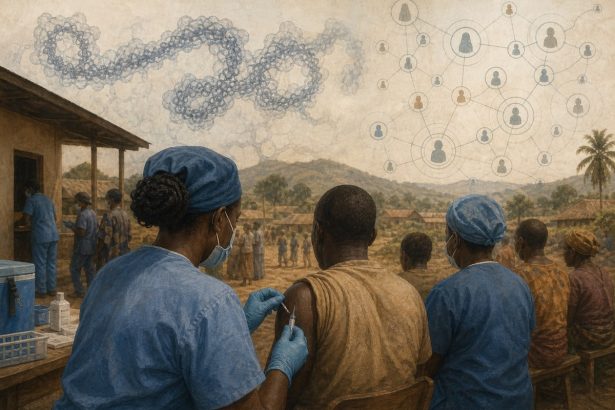
Cubans were the only doctors staffing the hospital and the outlying remote clinics in the mountains. From them I heard, first-hand, of their tremendous work and extreme hardships.
Hardships
One 25-year-old GP had lived and worked for the last two years in a mountain village eight hours' walk from the hospital. He spoke of the unwell patients he had seen, many of them children, suffering from malnutrition, gastroenteritis, pneumonia, TB, hepatitis, malaria and surgical problems like hernias, appendictis, peritonitis, bowel obstruction and advanced malignancies, such as breast cancer. While he was able to treat patients with infectious diseases, he felt helpless with those who needed hospital treatment or surgery, as most were too unwell to walk the eight hours to the hospital. His living conditions were also difficult--but, remarkably, he did not complain. He lived in a small room attached to the clinic, with a single gas-burner stove and electricity for only four hours in the evening--which meant there was no fan or air-conditioning for the oppressive tropical heat overnight, no screens for insects other than a mosquito net over the bed, and no television. For transport there was a single mini-van for the 30 Cuban doctors in the district.
A 50-year-old Cuban intensive-care specialist worked at the Oecussi district hospital. While he had experienced similarly difficult conditions, his only complaints were of cultural isolation and homesickness. He lamented that in the last two years he had not gone to a good party with rum, music and dancing--and he feared for his sanity.
The Cuban doctors are better adapted to the difficult living conditions in Timor-Leste than most Western medical missions would be--a fact which partially reflects conditions back home in Cuba, where the average doctor earns only 400 pesos ($20-30) a month. This is an important motive for Cuban doctors who choose to work overseas. In Timor-Leste they are paid $200 a month by the Cuban Government, and at the completion of a standard two-year term there is also a $4,000 bonus. The Government of Timor-Leste contributes accommodation, transport, phone cards and food rations.
History
The influence of Cuba here dates back to at least 1975, when Indonesia invaded Timor-Leste, nine days after it proclaimed independence from Portugal. During the next 25 years the resistance movement based much of its socialist ideology and guerrilla tactics on Fidel Castro's revolutionary struggle. The influence is most apparent in the famous image of Che Guevara, which remains a symbol for the Fretilin Party. Anyone travelling to Timor today will be amazed at the sheer number of murals and T-shirts depicting Che.
Cuba's physical involvement in Timor-Leste began in 2003, when President Xanana Gusmao met Fidel Castro in Kuala Lumpur at a conference of non-aligned countries. Faced with a critical shortage of doctors in Timor--prior to independence, most doctors had been Indonesian--Castro offered 50 scholarships for study in Cuba. Since then the number of scholarships has risen to 1,000, with an estimated 700-800 Timorese students presently in Cuba. A small number is also being trained in Dili using the 'university without walls' model, a Cuban-devised, community-based training programme.
Cuba first began sending medical teams to Timor in early 2004. Its largest contingent, in 2006, comprised about 300 doctors, numerous nurses and allied health professionals. Given that more than 80 per cent of the population live outside the major cities of Dili and Baucau, by far the most important contribution has been long-term services to the remote areas of the country. No other country has had the personnel to achieve a similar feat.
The history of Cuba's large medical workforce begins in 1959. At the start of Fidel Castro's revolution most of its doctors fled to the US. By necessity it had to train a large number of its own doctors. Since then the Government has focused on developing and maintaining a first-class universal healthcare system, actively encouraging its youth to pursue training in the health sciences and putting no restrictions on the number of doctors it trains. As a consequence, Cuba now has the highest number of doctors per capita in the world: in 2005 it had one doctor for every 159 people.
- 5 Rules for Immediate Annuities
- Death in the Family: 12 Things to Do Now
- Dumbest Things You Do With Your Money
- 6 Online Networking Mistakes to Avoid
- 401(k) Mistakes to Avoid
- 5 Economic Scenarios to Keep You Up at Night
- The Real ‘Best Places to Retire’
- Best Credit Cards for You
- 12 Tough Questions to Ask Your Parents
- The Real ‘Best Colleges’
- Home Buyer Tax Credit: How to Cash In
- Why You Shouldn't Bash Cash
- 8 Phony 'Bargains' and Better Alternatives
- Danger: 3 Debit Card Scams to Avoid
- 6 Myths About Gas Mileage
- 29 Fees We Hate Most
- Quick and Easy Ways to Boost Returns
- Best Stocks to Buy Now
- Lower Your Taxes: 10 Moves to Make Now
- New Jobs: 8 Lessons from Real-Life Career Switchers
- The New Job Market: Who Wins and Who Loses?
- Health Care Reform's Public Option: Everything You Need to Know
- Volunteer Work When Unemployed: Should You Work for Free?
- Whose Recovery Is This?
- Long-Term-Care Insurance: 4 Biggest Risks to Avoid
Content provided in partnership with
Most Recent Reference Articles
Most Recent Reference Publications
Most Popular Reference Articles
- A world without nuclear weapons?
- 9 questions to ask your new lover: what you were afraid to ask, but always wanted to know
- How Tyler Perry rose from homelessness to a $5 million mansion
- Rejoice anyway - Zephaniah 3:14-20, Philippians 4:4-7 - Living by the Word - Column
- BEST HAIR SALONS in DALLAS, The