Health Publications
Topic: RSS FeedChipboard: not all it has chipped up to be - Sustainability
New Life Journal, June-July, 2002 by Denny Haldeman
In the mid 80s, the timber industry ran into the Pacific Ocean on their century long swath of destruction across America. While some blamed a spotted owl, the simple fact remains that over-consumption and industry over-cutting had found them at the end of the frontier. The industries then returned en masse to converge on the recovering forests of the Southeast. The pulp and paper industry now utilizes the forests of the Southeast to meet seventy percent of their demands for product and profit, supplying our nation and international clients with the materials for toilet paper and chipboard from our beautiful and diverse woodlands. The building products industry, now faced with competing for a younger forest being cut faster, has joined in a forest feeding frenzy incomparable to any thus far seen. With current trends, the forests of the South are due to be cut within forty years. The building products industry, seeing the future of immature forests, has invested greatly in engineered building materials like Oriented Strand Board (OSB), Medium Density Fiberboard (MDF), Laminated Veneer Lumber (LVL) and other composite materials. We shall focus on the largest segment, OSB.
OSB is the largest growth segment of this transition with over sixty new mills in the US and Canada, most built in the last decade. OSB production has increased nearly thirty-fold since 1980 and overtook plywood in 2001 as the leading panel board for construction According to the Structural Board Association, OSB will have a sixty percent market share by 2004. [a]
ENVIRONMENTALLY FRIENDLY?
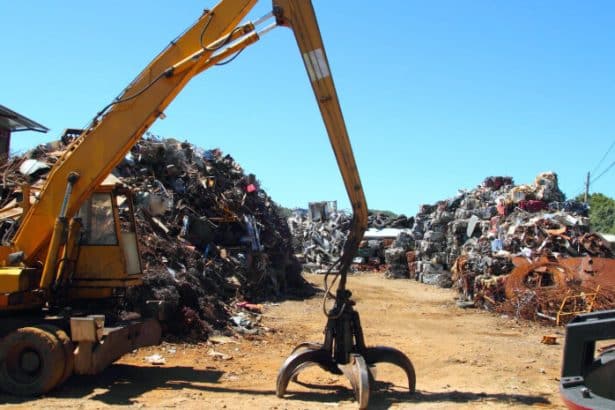
The manufacturers and trade groups rally around the "environmentally friendly" nature of OSB. Claims are made that OSB utilizes waste wood, young trees, and trees unsuitable for other purposes, and can come from plantations of fast growing hybrids or genetically engineered, cloned "frankentrees". The reality is that the vast majority of OSB production is responsible for clearcutting remaining native forests of the Southeastern US, as well as robbing mature public and private forest in Canada, Chile, and nearly everywhere they have established plants. Due to their ability to use even small trees and utilize limbs and `waste' wood in generating some of their energy demands, the clearcutting is becoming more prevalent and severe, leaving virtual deserts where forests once stood. Despite claims of sustainability, virtually none of the industry's cutting practices have ever been shown to be remotely sustainable. The first community health impacts of OSB manifest themselves in polluted waters downstream from clear cuts, contributions to global warming from deforestation, and increasing flood damages. Additional assaults to communities near OSB clear cuts include adverse health effects from applications of toxic herbicides and fertilizers used in replacement plantations. Over a quarter of the South's remaining native forests are slated to be destroyed and converted to chemically intensive fiber farms by 2040, or far earlier by some estimates. [b]



The resulting increase in industrial scale clearcutting is adversely affecting many species of plants, animals, and birds that depend on mature forested landscapes. Increased sedimentation and erosion from logging is damaging water quality, impacting aquatic species as well as drinking supplies. In addition to providing clean drinking water, forests moderate hydrological functions (preventing floods and droughts), filter air pollutants, give off oxygen, support and maintain genetic and biodiversity, and provide a unique place to recreate and seek spiritual renewal. In addition to ecological effects, clearcutting for chipboard has long-term negative implications for our region's economy, impacting overall community economic well-being as well as forest-dependent businesses such as outdoor recreation, tourism, and solid wood manufacturing. All of these values are destroyed when a forest is clear cut.
OSB HEALTH DANGERS
Because we can no longer find enough mature forests that can be milled to meet demands, the building industry is focused on gluing together chopped up pieces of remaining and young forests using urea-formldehyde (U-F) phenol formaldehyde (P-F) and methylene-diisocyanate (MDI).
Workers are now facing far more toxic workplaces in manufacture and building trades, communities are dealing with toxic releases of these chemical into their air, land and water, and consumers are seeing elevated levels of toxins within their homes. While MDI is far more toxic acutely to workers in manufacturing, the more widely used formadehyde based building products out-gas into homes of consumers for years. U-F is an order of magnitude more potent than P-F. According to studies published in the Journal of Occupational and Environmental Medicine [1], OSB (oriented strand board) workers were more likely to have increased incidences of asthma and other airway dysfunction. Other studies show high exposures can produce pulmonary edema and death [4]. The EPA considers formaldehyde to be a probable human carcinogen in nasal passages, larynx, and lungs [2], and animal studies [3] show them to be carcinogenic. Menstrual disorders and pregnancy problems have also been reported in female workers exposed to formadehyde. Cyanide-based MDI is a suspected human carcinogen [5], and isocyanates have also been shown to cause respiratory distress and death in humans and cancers in lab animals. (An MDI release in Bhopal, India killed 2000 people.)
- 5 Rules for Immediate Annuities
- Death in the Family: 12 Things to Do Now
- Dumbest Things You Do With Your Money
- 6 Online Networking Mistakes to Avoid
- 401(k) Mistakes to Avoid
- 5 Economic Scenarios to Keep You Up at Night
- The Real ‘Best Places to Retire’
- Best Credit Cards for You
- 12 Tough Questions to Ask Your Parents
- The Real ‘Best Colleges’
- Home Buyer Tax Credit: How to Cash In
- Why You Shouldn't Bash Cash
- 8 Phony 'Bargains' and Better Alternatives
- Danger: 3 Debit Card Scams to Avoid
- 6 Myths About Gas Mileage
- 29 Fees We Hate Most
- Quick and Easy Ways to Boost Returns
- Best Stocks to Buy Now
- Lower Your Taxes: 10 Moves to Make Now
- New Jobs: 8 Lessons from Real-Life Career Switchers
- The New Job Market: Who Wins and Who Loses?
- Health Care Reform's Public Option: Everything You Need to Know
- Volunteer Work When Unemployed: Should You Work for Free?
- Whose Recovery Is This?
- Long-Term-Care Insurance: 4 Biggest Risks to Avoid
Content provided in partnership with
Most Recent Health Articles
Most Recent Health Publications
Most Popular Health Articles
- Make running easier: with this unique 'pose running' technique, you'll learn to actually enjoy your fat-burning sessions
- 50 home remedies that work: these safe, fast, and effective fixes will relieve what ails you - Cover Story
- Detox in 7 days: a detoux diet can help you shed up to 10 pounds and leave you feeling terrific. Our weeklong plan shows you how to lose the weight and keep it off - Cover story
- Treat sinusitis naturally: breath easy and relieve sinus pressure with these remedies - Quick Fixes and Long-Term Solutions
- All about nightshades: explore the hidden hazards of your favorite food with macrobiotic nutritionist Lino Stanchich