A nurse speaks out … preventable back injuries and nursing - Commentary

ABNF Journal, The, Sept-Oct, 2003 by Deborah X. Brown

There is a lot of bantering about the nursing shortage these days. Hospitals are restructuring their nursing staff, grants are being issued, research studies are being conducted and presented. What surprises me is that very little is being said about the epidemic of preventable back injuries to nurses. Back injuries are occurring within the nursing population at an alarming rate. William Charney (2001), Department of Health, states that, "Every day in the USA, 9,000 health care workers sustain a disabling injury while on the job." In evaluating studies related to back injury, Bernice Owens, RN, (2000), reports that "thirty-eight percent of 503 respondents had suffered back pain severe enough to require leave from work." Registered Nurses and nurses aides are the number one back injured group in most states of the USA. Ms. Owens (2000) also refers to another study in England that found "that twelve percent of all nurses intending to leave nursing permanently cited back pain as either a main or contributing factor." Given the epidemic of nursing back in juries and other factors leading to a projected nursing shortage in America of up to 500,000 too few nurses, patients might never see a Registered Nurs while in the hospital. An unbelievable catastrophe.

Nurses are lifting up to thousands of pounds every day. How many 150 pound patients does one nurse lift in one day? Lifting patients up in bed, transfers from bed to wheelchair, wheelchair to bed, et cetera, is estimated at 1.8 tons per day. Here's a news flash. Three is no ergonomically safe way to manually lift patients. All that we have been taught about squatting, not bending our backs, and moving objects closer to us I s useless in preventing back injuries. The experts have known this for more than ten years.



The weight of an adult patient exceeds tolerance limits set by the National Institute for Occupational Safety and health (NIOSH) for compressive forces to the lumbar spine. Since the nucleus of spinal discs do not possess nociceptors, a nurse may not feet that the discs are being damaged from repetitive lifting. When the damage finally extends to the annulus of the disc, pain will then occur. Of course, then it is too late.

Besides our injuries (if that were not enough), what injuries are occurring to our patients as we "1-2-3 heave-ho" them: nerve damage, shearing abrasions, dislocated shoulders, etc. We are inadvertently injuring those who are placed in our charge by continuing to use this archaic method of patient handling. One-two-three gives them a swing, one-two-three drags their bodies up in bed, and one-two-three plops them in a chair.

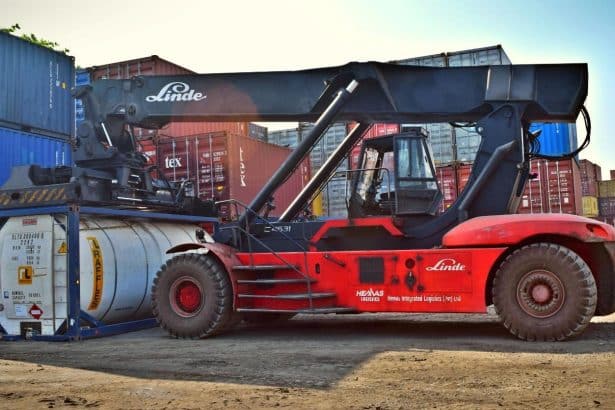
Most of us would gladly continue lifting our patients and sacrificing our backs if there were no alternative. But, my most dear fellow nurses, there is no need for us to lift. Efficient equipment is widely available and implementation of lift teams has been proven successful at reducing back injuries. Entire European countries have adopted no-manual lift policies, yet the nursing staff of America behaves as if we are stevedores on a dock (in fact, due to proper equipment, dock workers are less injured than nurses). There is a joke going around. Three dock workers are faced with lifting a two ton box. One worker asks the others to go get a fork lift. One of them pipes up and says, "There is a nurse over there, let's get her to lift it. Why should we wear out our fork lift."

Moreover, it is economically feasible for hospitals to establish no-manual lift policies. Using appropriate patient lift equipment and lift teams has proven to pay for itself over-and-above the initial investment by reducing injuries and related medical and compensation costs.

Recently, I read about the American Nurses Association (ANA) 2002 Convention and Exposition being held in Philadelphia, Pennsylvania. One of the sessions was titled, "Disposable Nurses--Don't Allow Yourself to Become A Dying Breed." I was excited about the topic and about the speakers until I read the abstract. The content of the class focused on what to do after an injury. More rhetoric about what we are entitled to after we are injured: American Disabilities Act; Family Medical Leave Act; and Occupational Safety and health Act. None of these Acts or agencies really provide any definitive help and they certainly don't rejuvenate permanently injured bodies. I know whereof I speak as do many, too many, nurses. This is tired, patronizing, and out-dated data. Why are we wasting time talking about "after injury;" let us really be novel and talk about ending the injuries and then let us act to end the preventable back injuries to nursing staff. I challenge the ANA faculty and the ANA to re-think the entire paradigm of patient handling. It is knowledge and use of safer patient handling methods, no-manual lift equipment, and lift teams that will prevent nursing back injuries.

The nursing shortage could be seriously curtailed simply by reducing back injuries and keeping our force of experienced nurses working. I welcome your comments. Thank you.


BNET TalkbackShare your ideas and expertise on this topic

Please add your comment:

  1. You are currently: a Guest |
  2.  

Basic HTML tags that work in comments are: bold (<b></b>), italic (<i></i>), underline (<u></u>), and hyperlink (<a href></a)

advertisement
Click Here
advertisement
  • Click Here
  • Click Here
  • Click Here
advertisement

Content provided in partnership with Thompson Gale