Post-abortion research startling
Catholic New Times, May 4, 2003 by Jane Ubertino
Women's Health after Abortion: The Medical and Psychological Evidence by Elizabegt Ring-Cassidy and Ian Gentles. DeVeber Institute for Bioethics and Social Research, 2002. 333 pp.
In 1994, I sat in a Toronto courtroom listening as one of the country's most prominent lawyers, Clayton Ruby, stated in response to a question from the judge, that "there should be no freedom of speech outside of abortion clinics."
This morning, as I was migrating to our local donut shop to write this review, my car lodged itself in the snow. There were exhaust fumes, noise and spinning wheels, but no movement, until all of the rocking back and forth finally caused the car to glide back onto the well-travelled street.
Related Results
I thought about that moment, when grinding turns into gliding. Women's Health after Abortion: The Medical and Psychological Evidence does just that for the abortion debate, turns grinding into gliding. And it does so elegantly.
The book, 333 pages long, provides references from almost 500 medical studies about abortion and its consequences. It reveals the physical, medical and psychological consequences of abortion. It discusses, in detail, the myriad methodological challenges associated with reporting on abortion in North America, and concludes with an exploration of the concept of informed consent and its legal implications. The book is necessarily technical, but comes with a glossary of medical terms and point-form summaries of each chapter, so it is eminently readable. It is written, primarily, for the woman contemplating abortion, as well as for medical personnel involved in counselling her.
Nowhere in the book does one find heavy rhetoric, attempts at persuasion, the claiming of moral high ground of exaggeration. Ii is polite and understated. (Published in Canada, eh?). It attempts to scrutinize a medical procedure undergone by approximately 120,000 women in Canada each year.
Intense debate over the morality of abortion has muzzled public discourse about its actual consequences. Since informed consent is so crucial in abortion decisions, this is unfortunate. We would not tolerate withholding information from women abortion any other medical procedure.
It would be tempting to call this phenomenon a conspiracy. However, Women's Health After Abortion is too intelligent for that. It gives the reader the facts. For example, the Royal College of Obstetricians and Gynecologists has calculated, in a recent study, the short term physical complication rate for induced abortion is at least 11 per cent. If true, this means that over 13,000 Canadians women each year suffer from a medical condition associated with their abortions. In North America, medical literature consistently minimizes its own research results on the negative results of abortion. This is not true of research being done in Europe, Australia and New Zealand.

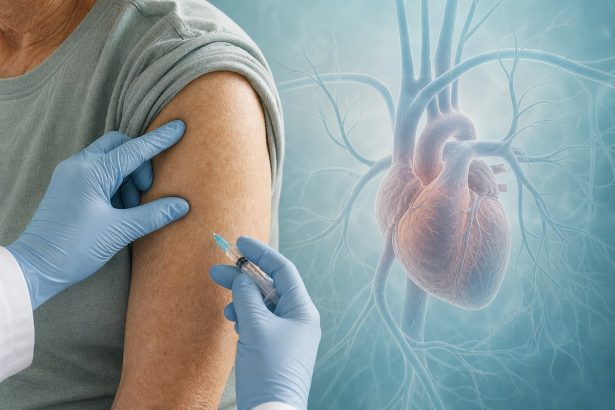

A doctor in Canada was successfully sued for not informing a patient about the risk of a stroke or paralysis from neck manipulation. The risk here is one in 200,000. What information is given to women about the risks of induced abortion?
Every health-care professional involved in counselling women about abortion should read Women's Health after Abortion. Its conclusions should appear on the front page of every major newspaper. Every public library should have a copy of it. This is not a book for the converted; ii is for anyone truly concerned about the welfare of women.
Jane Ubertino is a teacher and student midwife who belongs to the John the Compassionate Community in Toronto.
- 5 Rules for Immediate Annuities
- Death in the Family: 12 Things to Do Now
- Dumbest Things You Do With Your Money
- 6 Online Networking Mistakes to Avoid
- 401(k) Mistakes to Avoid
- 5 Economic Scenarios to Keep You Up at Night
- The Real ‘Best Places to Retire’
- Best Credit Cards for You
- 12 Tough Questions to Ask Your Parents
- The Real ‘Best Colleges’
- Home Buyer Tax Credit: How to Cash In
- Why You Shouldn't Bash Cash
- 8 Phony 'Bargains' and Better Alternatives
- Danger: 3 Debit Card Scams to Avoid
- 6 Myths About Gas Mileage
- 29 Fees We Hate Most
- Quick and Easy Ways to Boost Returns
- Best Stocks to Buy Now
- Lower Your Taxes: 10 Moves to Make Now
- New Jobs: 8 Lessons from Real-Life Career Switchers
- The New Job Market: Who Wins and Who Loses?
- Health Care Reform's Public Option: Everything You Need to Know
- Volunteer Work When Unemployed: Should You Work for Free?
- Whose Recovery Is This?
- Long-Term-Care Insurance: 4 Biggest Risks to Avoid
Content provided in partnership with
Most Recent Reference Articles
Most Recent Reference Publications
Most Popular Reference Articles
- 9 questions to ask your new lover: what you were afraid to ask, but always wanted to know
- A world without nuclear weapons?
- How Tyler Perry rose from homelessness to a $5 million mansion
- Rejoice anyway - Zephaniah 3:14-20, Philippians 4:4-7 - Living by the Word - Column
- Medical education's dirtiest secret - use of medical residents