Cyberspace as a domain in which the Air Force flies and fights
Air Force Speeches, Nov 2, 2006 by Michael W. Wynne
Thank you, Barry [Barry Rosenberg, Director, Defense News Media Group Conferences], for the introduction and thank you to the Defense News Media Group
I have long worked on Command and Control issues, and watched how the technology has diffused, in the drive for more Jointness. We see how weapons now fly so far that there is ever increasing need to be able to trust the data we use to guide them.


This I understand is your Sixth gathering. This annual event has a great future.
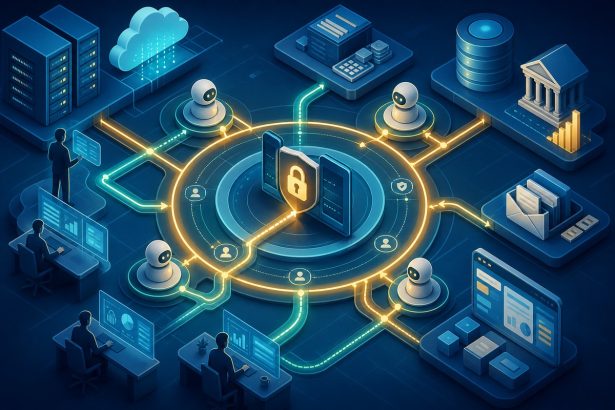
I want to discuss with you today a subject I regard as extremely critical: the Freedom of Cyberspace.
Just last week Deputy Secretary of Defense Gordon England, speaking before a major network warfare audience, listed the attempts of hackers, "Cyber-vigilantes", terrorists, and even hostile nation-states to degrade our Fighting Networks as the single issue that he spends "more time thinking about in the middle of the night, than any other."
Before addressing Cyberspace directly, I want to set some context, first as to the Mission of the Air Force, then as to the topics of this Conference, and also as to what we are learning from current combat.
I. The Mission of the Air Force is to deliver sovereign options for the defense of the United States of America and its global interests--to fly and fight in Air, Space and Cyberspace. This was defined a year ago, and then codified a month later, on December 5, 2005.
* "Delivering Sovereign Options" means operating across the Joint Spectrum so that we provide to the President scalable choices that are unlimited by distance and time, and span the entire range from humanitarian assistance to nuclear strike, kinetic and non-kinetic.
* In Short: Global Reach, Global Vigilance, Global Power.
* This includes the powerful option to use timely information to deter and to avoid use of kinetic weaponry. General Curtis LeMay emphasized this when he said, "Peace is our Profession," making it the slogan of the Strategic Air Command.
* All these options have one common foundation--persistent, lethal, overwhelming Air, Space and Cyberspace power massed and brought to bear anywhere, anytime.
* Thus, the Air Force serves by being prepared to set Strategic, and then, if needed, also Tactical, Conditions for deterrence, dissuasion, or defeat, and in this way offer to our Commanders options throughout the spectrum of conflict.
* Air Force Chief of Staff General Moseley likes to say, "the soul of an Air Force is Range and Payload." I would salt and pepper Persistence in there as well. That is why after 53 years we are again seeking 21st Century parallel Strategic Assets in the form of new tankers and global strike to meet our responsibilities in the Air Domain, emphasizing expeditionary, as well as persistent Strategic options, to ensure the robustness of the Nation's Global Power; and recognizing that the replacement of our Satellite Constellation is at hand, to fulfill our Global Vigilance task.
II. Now, consider how Cyberspace stands in relation to the topic of this Conference. The topic is "C41SR." For many in the military and certainly for others in the daily walk of life, it helps to take a moment and parse the elements of the acronym.
There are four "C's"--"Command", Control"; "Computers", and Communication", then, "Intelligence", "Surveillance" and "Reconnaissance".
It started with "Command and Control", an old military studies term. Nowadays the two words are separated as being two individual items, subject to debate. There was even sometimes confusion as to whether the "I" is "Intelligence" or "Information."
Here are some things to notice. First, the whole term C41SR has the mantle of familiarity--we don't step back and pick it apart.
Second, each component is a function--not a Battle Domain, but a function--a form of activity or service.
Third, the six functions are a grab-bag, bundled over the years. While connected in a sense as functions that move data, they are disparate as to physics. But by common assent, we group them for conversation. This facilitates research in the varied areas of Sensors, Electronic attack, and Access and Compiling of Commander-level Information extracted from gathered data.
Finally, the functions all are vital flows within each of the Battle Domains of Land, Sea, Air, Space, and, as we shall see, in Cyberspace.
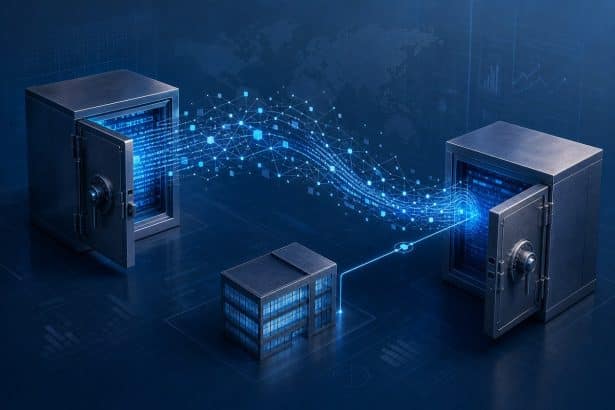
III. I have brought a Video that illustrates the flows of C41SR functions--that means, the flow of data--in battle, today. As you watch the Video I ask you to consider two questions:
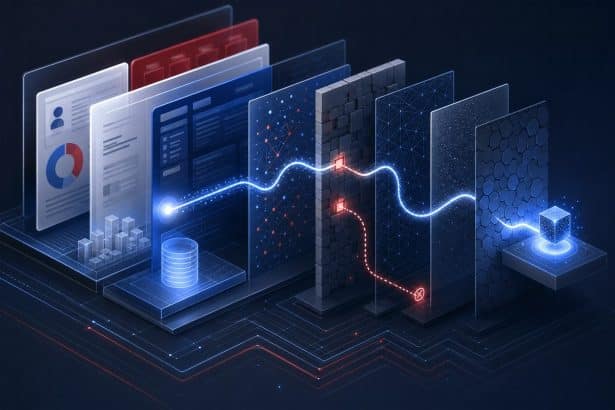
* First, now that we have enhanced the application space for Networked Operations; and really moved communications trust and reliability to a prominent position in our concept of operations; how do we defend the net on which all our capabilities depend?
* Second, what new Habits of Thought do we need to adopt in order to create the capacity to deter, guard, rescue, strike, and assess in what will probably be the Cyberfight of the 21st Century?