Watching from the boat - Mark 6:30-34; 53-56 - Living by the Word - Column

Christian Century, June 29, 1994 by Martin B. Copenhaver

Mark 6:30-34; 53-56

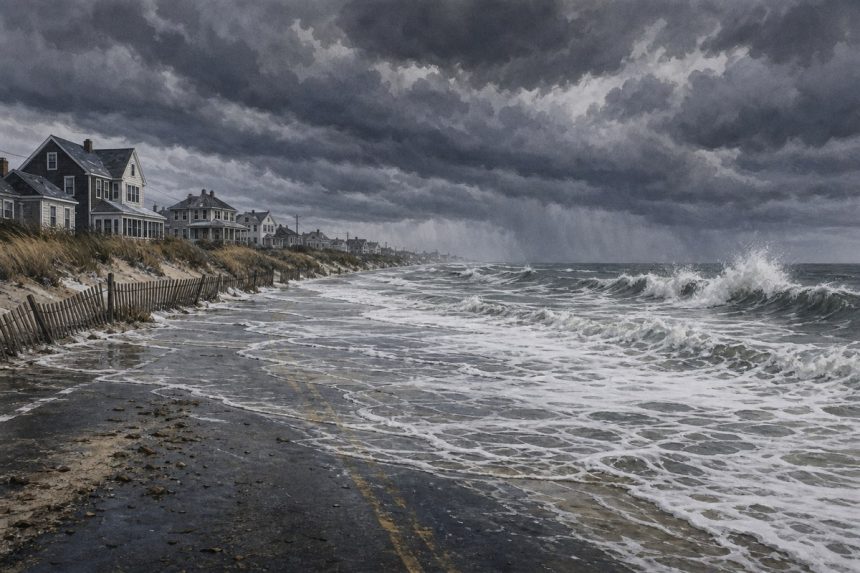
A COLLEAGUE of mine recently resigned from a suburban parish where relentless demands on his time and energy were beginning to wear him down. He left to become a missionary on the coast of Maine. In his new position he visits small clusters of Christians in remote locations. He reports that in many ways his ministry is the same as it always has been: he preaches, teaches, visits the sick. But there is this difference: between ports of call he travels long distances by boat. Between sermons he can listen to the wind. Before teaching another class he can study the horizon. After visiting the sick he is anointed with sea spray. Interspersed with his demanding pastoral duties he takes a watery road less traveled by, and that has made all the difference.


In Mark's Gospel, Jesus and his disciples cross the Sea of Galilee so many times that it is hard to discern the pattern and motive behind the itinerary. Until the sixth chapter, that is, when the reason for the crossings is clear: the disciples need a break.

The Twelve had just returned from their first mission. On that mission they discovered, perhaps to their surprise, that they could do much of what they had observed Jesus do. They were empowered to teach, preach and heal. They left on the mission as disciples, but when they returned, flushed with. success, Mark refers to them as apostles for the first time. It was a new title signifying a new relationship with Jesus. No longer were they disciples with mere "learner's permits," unable to do anything on their own. They had been sent forth with the authority of a commission. They were apostles.

When the apostles returned to Jesus they had stories to tell and victories to savor. But they were also exhausted, so Jesus suggested that they get in a boat and seek a deserted place. When they reached the shore, however, they discovered that a crowd had followed them. The people waiting for them looked like a huge gathering of baby birds, their hunger so constant that their mouths were always opened wide. It was enough to overwhelm a mere apostle. But Jesus had compassion on the crowd and began once again to feed them with his words.

Sensing the apostles' fatigue, Jesus told them to wait for him in the boat, much as a parent might tell tired children to wait in the car while she does one more errand. But when Jesus and the Twelve crossed the sea again, the sick had run, hobbled or been carried to meet Jesus, and he began to heal them. It is worth noting that the disciples are not mentioned again until a full chapter later. It is as if they were taking a much-needed break, a chapter-long sabbatical.

The sociologists call it compassion fatigue. All of us are capable of compassion on occasion. But when we've seen too many emotional television appeals for hunger relief or walked down too many streets crowded with human sorrow, we discover that our compassion is limited.

Even when the apostles were empowered to teach, preach and heal as Jesus did, they still could not reflect the constancy of his compassion. It is immediately after their greatest success that the apostles encounter this most persistent human limitation. The apostles were able to offer care, but not constantly. Only God can extend constant compassion. God is the only one who never suffers from "compassion fatigue." In the constancy of Jesus' compassion, his kinship with this God is revealed.

Ministry in the name of Christ is an exhausting business. It seems to demand a constancy that is not in us. In the movie Groundhog Day the character played by Bill Murray lives a single day over and over again. During one incarnation of that day he happens to catch a young boy falling out of a tree. From then on, when that moment in the day comes around again, he feels compelled to leave whatever he is doing to catch the boy once more. With each succeeding day he becomes more and more annoyed at the boys continual need for his help, and eventually the relentlessness of the need wears his compassion thin.

When a friend of mine resigned from his pastorate he told his parish, "I can no longer meet all the needs of this parish, any more than I can chase down all the crickets on an August night." Which made me wonder: Who had told him that he could meet all the needs of his parish? John Westerhoff has remarked that atheism in the modern world is characterized by this affirmation: "If I don't do it, it won't happen." The apostles--even after their newfound success as teachers, preachers and healers--knew better. They waited in the boat.

I have another friend, a person of considerable power and influence, who hikes in the mountains for a week every year. While he is gone he asks his wife to save all the newspapers delivered during the week. After his return he reads every one just to remind himself that it all happened without him.

Those who are empowered by the gospel and act under the influence of Christ's spirit need that reminder too. The apostles learned two lessons: that the power of God can be at work through them, and that God can be at work without them. When their compassion was spent and their ability to respond to need exhausted, people were fed anyway, as if with manna from heaven, while the apostles could only watch from the boat.


BNET TalkbackShare your ideas and expertise on this topic

Please add your comment:

  1. You are currently: a Guest |
  2.  

Basic HTML tags that work in comments are: bold (<b></b>), italic (<i></i>), underline (<u></u>), and hyperlink (<a href></a)

advertisement
advertisement
  • Click Here
  • Click Here
  • Click Here
advertisement

Content provided in partnership with Thompson Gale