The Front Cottage Garden

Flower & Garden Magazine, March, 2000 by Rhonda Lee Mitchell

A cottage garden is a blend of happy containment and wandering passion.

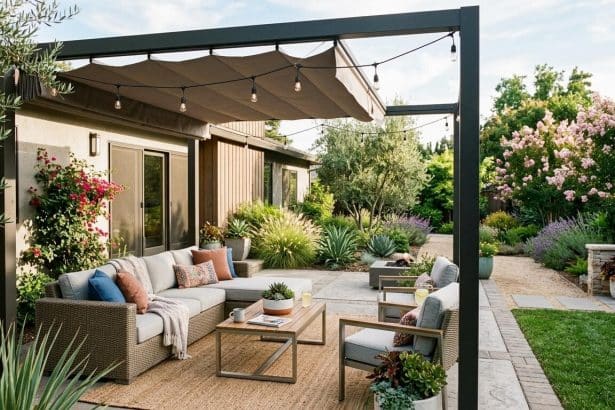
I didn't realize I'd created a cottage garden at the front of my house until after I did, which is perfectly fine. I like the cottage look: layers of foliage, blooms, staggering sways and wandering vines. Set up a nice picket fence, some winsome doo-dads, birdbaths and houses, an impressive arch, tiny paths from here to there. Nothing seems uniformed, not actually arranged. Yet, as any gardener knows who has assembled the cottage look--a lot of thinking, digging and placement made it happen.


Easier said than done I often hear, but let me explain. Creating a cottage garden is a matter of time, an eye for detail and a generous attitude. Couple that with the "how" and "why" of what makes the look, and creating a cottage garden may become a reality.

First, survey the existing plot. That straight row of Japanese hollies across the front just needs companionship. The path to the porch would do nicely outlined in a low fence. And curves--cottage gardens have lots of curves, all of which are plotted as you go. Think unconventional, yet plan it carefully.

Okay, remember what I said about everything falling in place just right. Well that's true. So during the foundation step, it's important to set the stage. This is the time to set up structures that invoke a sense of containment. A cottage garden has several layers of planting, yet it's the picket fence, the arch above the gate or the bench beneath the arbor that makes us want to stay. The cottage garden is a blend of happy containment and wandering passion. And so, build a fence, erect an arch, and place a bench.

One word of advice though--build the fence low, no taller than three-and-a-half feet, but not much shorter. Give it a wide berth from the outer line of the sidewalk. This is important because once you start layering plants, there needs to be at least a three-to-four-foot wide bed, maybe more. The fence can be stained white (I discovered that stain is better than paint as it ages nicely and doesn't have to be touched up nearly as often), or the fence can be allowed to age naturally. Most times that choice depends on what looks best against the house. My house is white, so I opted for the white fence. Details are important; use the eye and think ahead.

Just about any kind of arch or arbor will do. It can be plain or fancy, just as long as there's at least one. It can be over the gate or placed inside. The same goes for the bench. Be it wood or iron or concrete, what really matters is where the bench is placed. Choose a spot that draws the eye down a tiny path, a place where there's possibly some shade, and plants will gracefully grow in. A bench also looks nice beneath some towering vines or near an airy, tall shrub.

With fixtures in place, it's time to dig on; by this I mean the strategic placement of the colors and heights inside. Layering plants and flowers is the key to the wandering appearance found in the cottage garden. Sometimes it's trial and error, so be patient about digging up what doesn't work and searching for what turns out great. Layering plants is a lot less difficult than it looks. You basically want taller plantings in the back, plants of various mid-heights in the center and shorter or groundcover plants in the front. Combine that with some old-time blooms, such as hollyhocks and Jupiter's-beard; add disease-resistance roses, bulbs and sensual herbs. And use curves: plant semi-circles, flowing lines, woven threads. In other words, use like plants in massive numbers, but not in any one straight line.

For instance, I used lots of daylilies which I staggered in a sweeping curve. On the inside of the curve, I wove in irregular lines of flowers like Verbena `Purple Homestead,' aster and veronica. Then along the outer side of the daylilies (nearer the fence) I tucked in butterfly bushes and roses. And in all those semi-circle spots left within the curves, I placed favorites such as oregano, iris, pineapple sage, liatris, Shasta daisies, rosemary, lavender and lilies.

Once the plantings mature, you'll be able to see how each plant flows, bends, sways and differs from its companion. And if something doesn't quite work, dig it up. Part of getting the cottage look just right is keeping an eye open for what feels right. For bare patches in the garden, tuck in stepping stones or add a dwarf tree if the site allows. Of course, there's always another foliage or blooming plant to try.

If there's a row of shrubs along the sidewalk that started out with the house, that's okay. Beneath the shrubs, plant creepers, such as thyme or phlox. A fetching groundcover as one of these softens up the formal line of shrubs, spills over onto the sidewalk and charms us with its flowers in season. And if space permits, bury spring, summer and fall blooming bulbs in informal clusters beneath the groundcover so that the green stalks and colorful blooms peek out and look as if they really shouldn't be there, but delight us nonetheless.


BNET TalkbackShare your ideas and expertise on this topic

Please add your comment:

  1. You are currently: a Guest |
  2.  

Basic HTML tags that work in comments are: bold (<b></b>), italic (<i></i>), underline (<u></u>), and hyperlink (<a href></a)