Haiti dances to a different drummer: a country in turmoil turns to ancient folk religion, with rich results for dance - includes article on dancer Katherine Dunham's continuing dance and political activities

Dance Magazine, August, 1994 by Elizabeth Barad

"Max can't come to the phone now; he's possessed," said the wife of Max Beauvoir, a voudon priest near Port-au-Prince, Haiti. If I had been in the States, I would have laughed. But, contrary to Hollywood movies in which voudon is depicted only as black magic--and always referred to as voodoo--the voudon faith is an ethical, sacred belief Possession by a spirit is a manifestation of God and is not funny or evil. (When I arrived at Beauvoir's temple, he appeared to be possessed by Ogoun, the god of warriors whose symbol is fire; the participants at the ceremony knew which god had possessed him because of the dance he was performing.) Voudon is a "danced religion." Beauvoir, the president of the National Body of Voudonists, explained that "in voudon we sacrifice to the gods, but the top sacrifice is dance. The greatest gift is one's entire being."

This danced religion not only inspired the choreography of the American anthropologist Katherine Dunham [see box, page 40] and her disciples, such as Syvilla Fort and Joan Peters, it is also an integral part of the political fiber of Haiti. For politically oppressed Haitians the danced joy of their ceremonies keeps hope alive. The spirited movements of a ceremony also inspired Haiti's revolt in the early nineteenth century against its colonial rulers, making the country the first black republic in the Western hemisphere. But it appears that only evil spirits danced thereafter, for years of dictatorships followed. And the most dreaded despot of all, Dr. Francois ("Papa Doc") Duvalier, claiming to be a voudon priest, used the religion to control the people. He performed "black magic" rites in the palace and bribed corruptible clergy with promises of power. After his death, however, his son, President-for-life Jean-Claude Duvalier, tiring of the spiritual lackeys, summoned Beauvoir to the palace for guidance. Beauvoir studied the dances of his gods in special ceremonies. He interpreted them for the ruler and offered this advice: "The spirits are annoyed and angry. They want you to leave." When the dictator was forced to go, peasants did voudon dances in the streets to celebrate.

They performed these dances again to rejoice in the free election of their candidate, the Reverend Jean-Bertrand Aristide, in December 1990. They continue to dance even though Aristide has been ousted by a military regime that kills and tortures his supporters; ceremonial dances have always stilled the fear caused by political persecution and oppression.

Dunham has incorporated the inspirational ritual dance steps used in voudon ceremonies into her technique and choreography. One of the movements that Dunham says she uses is the yanvalou, the dance "sacrifice" performed to invoke the spirits. "It involves all of the body, and it produces a state of ecstasy in a ceremony," Dunham said.
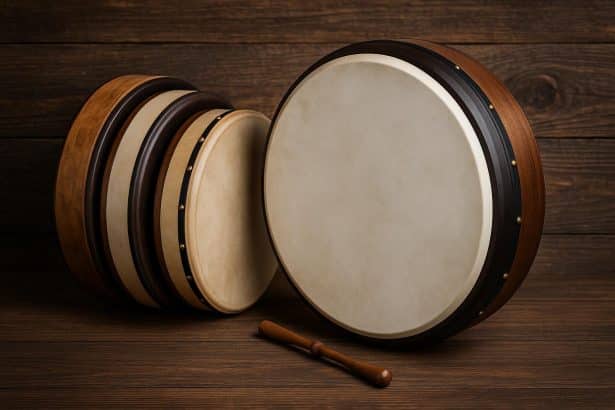
The first time I saw this step was at a twenty-four-hour ceremony of the Three Kings, held annually in January. I entered a large, open, concrete structure in the slums of Port-au-Prince, crowded with initiates, drummers, and a congregation of some fifty people. The initiates--dressed in white, heads wrapped in white kerchiefs--were moving like white waves: Their knees were bent, their hands on their knees, their backs constantly undulating, and their shoulders rhythmically rising and rolling away from their bodies. They moved to the beat of the drums, which started slowly and burst into a feverish pitch.


Nobody, not even the most skeptical, could resist the energy of the movements and the beat of the drums. After first checking that it wasn't disrespectful, I tried to imitate the yanvalou with the priest who officiated at the ceremony. Our bodies were so low to the ground that we were constantly squatting while swaying our backs and quickly moving our feet. My untrained quadriceps should have hurt, but I felt no pain as I danced on and on. It made me wonder whether it might not be a divine force that gave me such extraordinary stamina.

The yanvalou, the dance to the spirits, can go on from sundown to dawn. It did, in fact, in a three-day ceremony I attended in a small mud peristyle (part of a temple) off a dirt road outside the capital. As the congregation crowded into the teeming, thatched-roof temple, the drums pounded over and over, more and more intensely. Suddenly there was a break in the music. A man in front of me fell backward in a jerking motion, trampling on my foot.

The drums continued in a syncopated rhythm, and the man spun around the peristyle out of control. Then all the congregants were silent and the man stood still, eyes glazed. This was a sign that the loa (spirit) had arrived and possessed his body.

Dunham, who owned property in Haiti and lived there part of the year until the coup, has written that she, too, has experienced possession by the spirits and has felt that moment preceding it when the drums stop and the body is no longer one's. own. She portrays this moment and the subsequent possession in a piece titled Shango, which was performed by the Alvin Ailey American Dance Theater in 1987 as part of "The Magic of Katherine Dunham," a program of her works. April Berry, who danced in the piece, was dressed in white, like a voudon high priestess. When the break in the music came, she fell back in disarray, as though possessed by Shango, the spirit of lightning.


BNET TalkbackShare your ideas and expertise on this topic

Please add your comment:

  1. You are currently: a Guest |
  2.  

Basic HTML tags that work in comments are: bold (<b></b>), italic (<i></i>), underline (<u></u>), and hyperlink (<a href></a)

advertisement
advertisement
  • Click Here
  • Click Here
  • Click Here
advertisement

Content provided in partnership with Thompson Gale