Technology Industry
Industry: Email Alert RSS FeedThe Mental Butler Did It
Science News, Oct 30, 1999 by Bruce Bower
Inner servants may unobtrusively pick up where free will leaves off
The philosopher Alfred North Whitehead, writing in 1911, championed a cause that he knew would strike many people as weird. He urged everyone to cultivate the habit of acting without thinking.
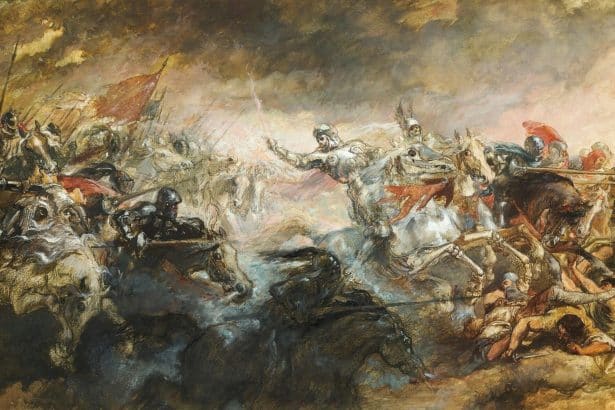
"Civilization advances by extending the number of operations which we can perform without thinking about them," Whitehead contended. "Operations of thought are like cavalry charges in a battle--they are strictly limited in number, they require fresh horses, and must only be made at decisive moments."
Most RecentTechnology Articles
- Google's Buckshot Approach to Mobile Turning Off Game Developers
- Amazon Kindle Good News Is Also Bad News
- News Corp. and the Business of Search; Media Has Little to Lose
- Verizon Ad Campaign Benefits the Carrier, Motorola, Hurts Apple, AT&T
- Android's Fragmented Platform Won't Kill Its Apps Market
- More »
To put it another way, there's no such thing as a free free will. Considering the mental effort required to subject a single unconscious intention to conscious direction, he proposed, it's fortunate that a bevy of ongoing thought processes hum along outside of awareness. Accept it, and try to spend your limited account of free will wisely, Whitehead suggested.


Whitehead's message doesn't have the makings of a best-selling self-help book. Yet nearly 90 years after his rejection of conscious reflection, a growing number of psychological researchers see merit in exploring the implications of the idea. They agree with Whitehead that most behavior stems not from intentional choices but from mental activities triggered outside of awareness by features of the environment. Conscious deliberation primarily interprets feelings and thoughts and shapes the behaviors that bubble up automatically, according to these researchers.
By definition, unconscious operations occur in a dark corner of the mind where they elude appreciation, especially when compared with vivid memories of conscious reactions. The slipperiness of the unconscious feeds into a popular conviction: "I know exactly what I'm doing, and I meant to do it all along."
In contrast, scientists increasingly find that conscious control comes highly overrated. To some folks, unconscious dominion raises the specter of a world inhabited by hollowed-out zombies, incapable of changing for the better or taking responsibility for their actions. It also seems to ratify recurring worries that people can't resist subliminal commands in advertisements to buy everything from popcorn to power tools.
John A. Bargh, a psychologist at New York University and a leading investigator of what he calls "the automaticity of being," views such fears as unfounded. Unconscious mental influences, for the most part, serve people's best interests by orchestrating ingrained behaviors, he argues.
"They are, if anything, `mental butlers,' who know our tendencies and preferences so well that they anticipate and take care of them for us, without having to be asked," Bargh holds. "Conscious direction of behavior is important, but it takes place a small minority of the time."
Over the past century, conscious acts of will have attracted both scientific detractors and promoters. Sigmund Freud proposed that an individual's unconscious conflicts, inspired by biological impulses toward sex and aggression, lie at the root of behavior. Behaviorists, such as John Watson and B.F. Skinner, also emphasized unconscious influences on behavior but located the source of control in environmental events that had acquired reinforcing power
In the 1950s, a humanist movement in psychology focused on the conscious choices and goals that guide behavior. Conscious thought has also grabbed much of researchers' attention in the 1990s. Witness the spate of recent books and investigations addressing the nature of consciousness (SN: 10/10/92, p. 232). Current theories of motivation similarly look at ways that people consciously process information to interpret the world and plan courses of action.
Most researchers today acknowledge that thought consists of conscious and unconscious operations proceeding in tandem. For example, neuroscientists have distinguished brain systems for unconscious, or procedural, knowledge, such as how to drive a car, that are separate from those for conscious, or declarative, knowledge of factual material.
One approach to the unconscious mind examines so-called implicit memory--stored information that can't be brought to mind although it affects behavior (SN: 11/17/90, p. 312). The psychologists exploring implicit memory, however, often regard the power of unconscious processes as fairly crude and limited.
In the July AMERICAN PSYCHOLOGIST, Bargh and several like-minded researchers present the case for far more sophisticated, pervasive unconscious forces.
It's remarkably easy for people in all walks of life to take a big swig of what Bargh calls "thought lite," a label inspired by Harvard psychologist Daniel Gilbert's description of automatic mental processes as "one-third less effort than regular thinking."
Just belly up to the social world with its well-stocked racks of stereotypes.
Bargh and his colleagues, for example, find that they can influence volunteers' behavior noticeably by providing subtle, unrecognized reminders of a group's stereotypical characteristics.
CXO UnpluggedSmart Business interviews on BNET
Brought to you by CBS MoneyWatch.com
- Best- and Worst-Paid College Degrees
- 6 Things You Should Never Do on Twitter or Facebook
- How Much Sleep Do You Really Need?
- 6 Big Myths about Gas Mileage
Most Recent Reference Articles
- ARAB EUROPEAN RELATIONS - Dec 22 - Russia Denies Selling Missile System To Iran
- EGYPT - Dec 29 - Opposition Says Mubarak Blessed Israeli Attacks
- ARAB AFFAIRS - Dec 22 - Syria Will Eventually Move To Direct Talks With Israel
- ARAB AFFAIRS - Dec 30 - GCC Denounces Massacre
- ARAB ISRAELI RELATIONS - Israel Issues An Appeal To Palestinians In Gaza
Most Recent Reference Publications
Most Popular Reference Articles
- The Greek chorus, Jimmy the Greek got it wrong but so did his critics - Jimmy Snyder and his views on pro sports and race
- How Tyler Perry rose from homelessness to a $5 million mansion
- 9 questions to ask your new lover: what you were afraid to ask, but always wanted to know
- Vickie Winans: at home with the gospel star who lost 75 pounds and reenergized her career
- Living by the word: royal choice