Technology Industry
Industry: Email Alert RSS FeedFrom proteins to protolife: was life's emergence random or guided by determined chemical steps
Science News, July 23, 1994 by Richard Lipkin
The notion that life has evolved from lower, unicellular forms to higher, complex organisms is no longer considered a bizarre theory but rather, at least among the scientifically minded, a plausible premise.
Taken a step further, advances in biochemistry and genetics now show quite clearly that living organisms behave fundamentally as chemical machines, both driven by and limited by their molecular natures.

Therefore, given the premise that over millions of years nonliving molecules gave rise to living cells, one inevitably must ask: Did life emerge randomly? Was evolution accidental? Or were the chemical steps along the way constrained by the molecules involved and their inherent tendencies to aggregate in specific ways?
Most RecentTechnology Articles
Could it be that the origin of life was not random at all, but instead a highly ordered, determined, chemical phenomenon?
More than 40 years have passed since Stanley L. Miller and the late Harold C. Urey, then biochemists at the University of Chicago, first showed that amino acids could form out of complex molecules under primordial conditions. In a famous 1953 experiment, Miller subjected the contents of a flask filled with ammonia, methane, hydrogen, and water to repeated cycles of heating, electrification, and cooling. The process produced a crimson-colored primordial soup, rich in amino acids.

In subsequent years, an interdisciplinary field of theoretical and experimental biochemistry, known as origin-of-life research, has itself evolved, driven primarily by biochemists eager to understand the fundamental, chemical mechanisms of prebiological molecules.
The field has orbited a central question: What molecular mechanisms and sequences of chemical steps prompted simple molecules to assemble themselves into living systems?
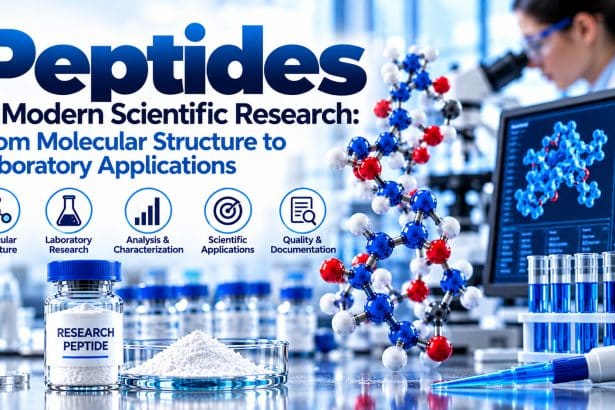
Among those early experimentalists was a protein chemist named Sidney W. Fox In 1958, Fox and Kaoru Harada showed that under primordial conditions, amino acids could assemble themselves into simple proteins. At the time, this was startling news, since proteins serve as core structural components of living cells. In further work, Fox, now at the University of South Alabama in Mobile, and his colleagues observed that such proteins could fashion themselves into tiny cell-like objects called protein microspheres.
These microspheres look somewhat like empty cells, but without the internal machinery that runs a living cell. They even bear a striking resemblance to microfossils found in Precambrian rocks. They also demonstrate intriguing properties, joining together into networks and signaling each other electrically when stimulated by light.
Yet a host of questions has hovered for years around these protein spheres. Did they play a role in life's formation? Could they have led to the development, or served as precursors, of modern cells? Might thermal proteins--those forged from amino acids in a primordial broth by heat reactions--have provided enzymes to help build macromolecules or created a protected environment in which RNA, DNA, or their precursors could have formed?
Fox thinks so. He contends that thermal proteins formed from heated amino acids, assembled themselves into microspheres, and gave rise to protocells in the primordial environment. These protocells led to the subsequent evolution of nucleic acids and ultimately gave rise to self-sustaining cellular life.
The contention that proteins evolved before DNA or RNA is highly controversial. Indeed, Fox's "thermal protein first paradigm" runs counter to a central tenet of cellular biology--namely, that nucleic acids had to exist before any cell could arise that could properly be called living. In fact, most origin-of-life researchers point to the need for molecular mechanisms to store and replicate genetic information before evolution could commence. Scientists such as Stanley Miller and Francis Crick, a codiscoverer of DNA's structure, strongly emphasize RNA and its precursor molecules as necessary ingredients for prebiological systems.
Fox does not deny the importance or significance of DNA or RNA. Rather, he believes that the presence of thermal proteins may have sparked the chemical process that led to the evolution of these macromolecules necessary for true cellular life. Since the two types of molecules best suited for communicating biological information are nucleic acids and proteins, Fox asserts that either could have served as an original source. In essence, thermal proteins, he believes, may have been the active agents that triggered the chemical evolution of life.
The origins and bioactive properties of proteins have been fairly well defined. In addition, experiments by several groups have shown that thermal proteins can self-assemble and behave as enzymes, inhibitors, and precursors of proteins found in contemporary living cells. They have also demonstrated an ability to generate and retain molecular information.
What kind of molecular information? Structure.
Since a biological molecule's function hinges on its physical structure, its ability to perform a task rests on its size, shape, and chemical configuration. Biochemical information is thus stored and transmitted as molecular shape. Fox maintains that thermal protein microspheres could have provided a protected environment in which complex information-rich macromolecules bearing genetic information could have assembled themselves.
CXO UnpluggedSmart Business interviews on BNET
Brought to you by CBS MoneyWatch.com
- Best- and Worst-Paid College Degrees
- 6 Things You Should Never Do on Twitter or Facebook
- How Much Sleep Do You Really Need?
- 6 Big Myths about Gas Mileage
Most Recent Reference Articles
- ARAB EUROPEAN RELATIONS - Dec 22 - Russia Denies Selling Missile System To Iran
- EGYPT - Dec 29 - Opposition Says Mubarak Blessed Israeli Attacks
- ARAB AFFAIRS - Dec 22 - Syria Will Eventually Move To Direct Talks With Israel
- ARAB AFFAIRS - Dec 30 - GCC Denounces Massacre
- ARAB ISRAELI RELATIONS - Israel Issues An Appeal To Palestinians In Gaza
Most Recent Reference Publications
Most Popular Reference Articles
- The Greek chorus, Jimmy the Greek got it wrong but so did his critics - Jimmy Snyder and his views on pro sports and race
- How Tyler Perry rose from homelessness to a $5 million mansion
- 9 questions to ask your new lover: what you were afraid to ask, but always wanted to know
- Vickie Winans: at home with the gospel star who lost 75 pounds and reenergized her career
- Living by the word: royal choice