Wilhelm Sasnal at Anton Kern
Art in America, Jan, 2008 by David Coggins
The Polish artist Wilhelm Sasnal gained prominence in part with deceptively simple paintings and graphic drawings. Their quick execution and intriguing imprecision drew comparisons with the atmospheric mannerism of Luc Tuymans. But in this exhibition, whose centerpiece was a 10-minute silent film, Sasnal moved away from that sphere of influence.


In Let Me Tell You a Film (2007), Sasnal provided original intertitles to an existing black-and-white film from the 1960s shown on Polish television. Loosely based on the true story of a man who finds some industrial alcohol and sells it to the public as vodka, causing illness and even death, it features a Sovietera glorification of factory life.
Near the end, a cloud of liquid appears. This effect is digital, yet it has an immediate physical power, drawing uneasy attention to the surface of the screen. Like the fake vodka, the film is corrupted, and we're aware that boundaries are vulnerable where we would prefer them to be stable.
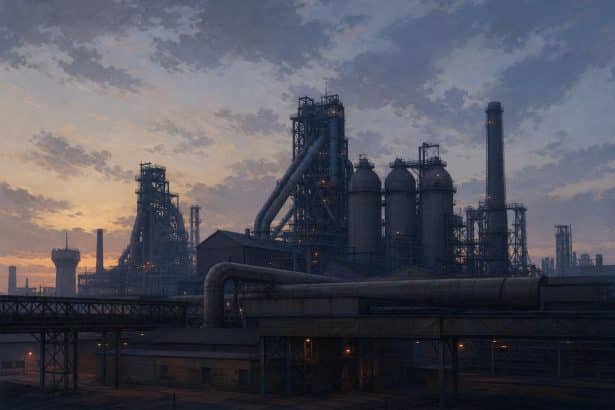
This tale of unreliable appearances serves as the loose basis for the other works in the show, which range from paintings of various sizes on canvas and paper to a few black-and-white ink posters. Yet the connections are tenuous-are we simply supposed to doubt the veracity of what we see? That would be a faint premise, taking Sasnal into dangerously ambiguous territory. Three nondescript gray towers are the faceless subject of one oil painting of 2007. The towers stand, incongruously, in a generic green field--there's not enough detail to establish it as an industrial park. Some sort of black liquid drips down from the top of the image, suggesting we may be staring out of a car window. The liquid mirrors the pollutant in the film--or, perhaps, the creeping ills of corporate capitalism. Here, Sasnal strikes a more satisfying balance between uncertainty and provocation.
In other cases, there's less to settle on. Another untitled oil landscape, this one from 2006, centers on a stark mountain framed by a couple of clusters of what appear to be pine needles, seen up close. Flat and formless, the image doesn't succeed as landscape. If we're supposed to see it in relation to the film, the connections are too peripheral. In the past, Sasnars ink drawings have provided enough information to show us what's at stake. But if this show falls on the obscure side, perhaps that's because Sasnal believes what isn't mysteriously open-ended isn't worth doing.--David Coggins
[ILLUSTRATION OMITTED]
COPYRIGHT 2008 Brant Publications, Inc.
COPYRIGHT 2008 Gale Group