Find Articles in:
All
Business
Reference
Technology
News
Lifestyle

Ugh, Wilderness!: The horror of 'ANWR,' the American elite's favorite hellhole

National Review, August 6, 2001 by Jonah Goldberg

Deadhorse, Alaska

As I stand here looking at what must be the largest selection of porn magazines above the Arctic Circle (and an impressive display by any standards), I can't help thinking of a line from the 1973 film classic Papillon: "Abandon all hope and masturbate as little as possible."

In a sense, that should be the motto of Deadhorse. This "town" has one store and no restaurants. Worse, with the exception of some inaccessible Indian and Eskimo villages, the nearest alcohol is on the other side of a vast mountain range hundreds of miles to the south. Indeed, this fact alone may explain why the general store has every conceivable publication for the man who enjoys drinking a beer and wooing a lady, but can't-because he's in Deadhorse.

Residents of some humble towns boast of their McDonald's or Krispy Kreme franchises, or perhaps the fact that Elvis once passed through. Deadhorse chauvinists are quick to brag that this sprawling, gravel- lined lot of airplane hangars, cargo dumps, and corrugated trailers has a ZIP code; once this postal luxury has been mentioned, the frills drop off dramatically. The next-most-impressive thing is the bumper sticker on the pickup truck that splashed mud on my shoes. It reads, "Where the Hell is Deadhorse, Alaska?"

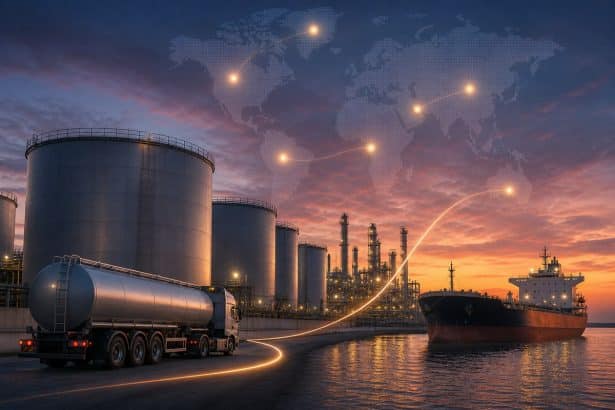
I have come here because if you want to write about oil exploration in the Arctic National Wildlife Refuge, you have to come here. Deadhorse is the central spur for oil activity on the North Slope of Alaska, specifically the area known as Prudhoe Bay. I arrived in Deadhorse together with a hundred or so regular commuters from Anchorage, all of them employed one way or another in the search for what was once called-at least in the opening of The Beverly Hillbillies-black gold, or Texas Tea.

They work in the North Slope, an 89,000-square-mile tract of land roughly the size of Minnesota. If Alaska were Don King, the North Slope would be his afro. More specifically they work in the much smaller area around the coastal plain near Prudhoe Bay, the starting point of the trans-Alaska pipeline and the home of the richest oilfields in North America. And within that space, they work on a comparatively tiny archipelago of parking-lot-sized islands of human activity in a boundless ocean of tundra.

Indeed, before you can appreciate what a small presence human beings have up here, you need to understand how mind-bogglingly huge-and devoid of people-Alaska really is. Alaska has a population not much greater than that of the nation's capital, but you could fit the District of Columbia into it more than 9,000 times. You could squeeze California into it almost four times; New York State, more than eleven times. A former Army Ranger who now works in Prudhoe Bay as a doctor put it to me this way: "We don't even bother trying to put out Connecticut-sized forest fires up here. Maybe we start to worry when they get to be the size of Virginia."

Over 60 percent of the official wilderness areas of the U.S. are in Alaska alone (which is one reason native Alaskans resent bureaucrats four time zones away who try to turn their state into a federally protected theme park). Anchorage, on the southern coast, is Alaska's biggest city, accounting all by itself for more than a third of the state's population.

The Arctic National Wildlife Refuge is way over on the other side of Alaska, past several mountain ranges. ANWR is 19.6 million acres, about the size of South Carolina. And it's beautiful. Well, most of it is. But more about that in a moment. On the very northern cusp of ANWR is what is commonly called the coastal plain, a tract of flat tundra largely indistinguishable from other spots along the coast and throughout the region. This comprises about 8 percent of the refuge-but an even smaller fraction of its pretty scenery. Some of this area is already off-limits to oil exploration, permanently. Nonetheless, the U.S. Geological Survey-seconded by industry experts-believes there could be untold billions of barrels of oil in the swath still legally available. The oil industry says it would need to use only 2,000 acres- an area no bigger than Dulles Airport, outside D.C.-to get that oil. This footprint would be 50 times smaller than the Montana ranch owned by Ted Turner, who helps bankroll efforts to keep ANWR off-limits.

Why do affluent Ted Turner types oppose exploration? Well, there's a simple explanation and a complicated one. The simple one is that it could be bad for the Porcupine River caribou herd, the second smallest of the four major caribou herds that sometimes use the area to calve their young; in turn, a tribe of Indians called the Gwich'in claim this would destroy their way of life because they live off the Porcupine caribou (but nowhere near where the drilling would be). The more complicated explanation is that this is all a convenient and bogus cover for the simple fact that Americans generally-and environmentalists like Turner specifically-are more than a little daft when it comes to ANWR.


BNET TalkbackShare your ideas and expertise on this topic

The following tags are supported in BNET comments:
<b></b> <i></i> <u></u> <pre></pre>

Leave a Reply

  1. You are currently a guest | Login?
advertisement
Go
advertisement
  • Click Here
  • Click Here
advertisement

Content provided in partnership with http://findarticles.com/source//