Michel Serres talks to Francois-Bernard Huyghe
UNESCO Courier, Dec, 1993 by Francois Bernard Huyghe
Michel Serres of the Academie Francaise is an educator and philosopher whose interests range from science and literature to painting and environmental issues and whose self-proclaimed purpose is to establish "the link between the sciences, law and religion". He believes strongly that the philosopher should play a part in the life of the community and is a member of UNESCO's Ad hoc Forum of Reflection, which is seeking to strengthen worldwide intellectual cooperation in identifying and responding to the new challenges facing humanity. He is the author of some twenty books including Le Contrat naturel (1990) and Le Tiers-Instruit (1991). His most recent works are Eclaircissements (Editions Francois Bourin, Paris, 1992), a book of conversations with Bruno Latour, and La Legende des Anges (Flammarion, Paris, 1993). * One of your books is entitled Le contrat naturel (The Natural Contract). Does this mean man can make a contract with Mother Nature?
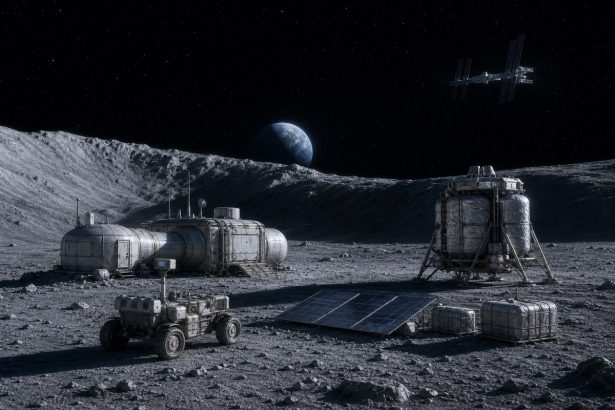
--Mother Nature does not appear in my book. What I describe is a new shift, from earth with a small "e", denoting earth as one of the elements or the earth of farming, to Earth with a capital "E", meaning the planet, and hence a shift from a local perception to a global conception. We have been witnessing the emergence of such a global conception, from the technological, human and scientific points of view, for the past twenty years, which is why I examine both meanings of the word "earth" and hardly ever use the word "Nature". This idea of a new globality is perhaps best symbolized by a photograph taken from space, which arouses a feeling that just about everyone who has seen it must have shared. It shows the whole planet as seen by a human eye. This new perception is an event in the history of mankind. Owing to this globalization of the way the Earth as an object--the planet--is perceived, and by a kind of recoil effect, the unity of humanity is being gradually constructed. Societies can only come into being if they have an object in common; this object, the globalized Earth, is new, and new bonds are thus being established between humanity and the planet.
The "natural contract" (which has echoes of Rousseau's "social contract") applies to this emerging bond. The idea of standing in a legal relationship with the entire planet was foreign to previous generations, but just as human societies cannot be conceived of without the social contract, the construction of the globality and unity of the human race cannot be conceived of without the idea of a natural contract. The Enlightenment philosophers had already worked out a concept of the human Universal and natural law, but no-one before our times could have imagined this construction of the global. The natural contract is thus not a metaphor to describe our relationship with the Earth, but a full-blown philosophical concept.
* Does it not relate back to the discovery of laws--the laws governing our survival, for example?
--No law, in the legal world itself or in the philosophy of law, comes into being unless it is preceded by a contract. Contracts are a prerequisite for all laws. But the same word is used to denote laws in the physical sciences and the laws we humans enact, and until now these two sets did not intersect. The natural contract establishes a relationship between the exact and the human sciences, between the two kinds of laws.
Do you know of a single philosopher worthy of the name who has not at some time been forced to think anew about science and the law, and about the relationship between the two kinds of laws that govern them? The whole problem of Western philosophy resides in this relationship or linkage.
The philosopher's job is to describe the conditions that have to be met in order for laws to be made, not to describe the content of those laws. It is to think about the nature of the bonds on which duties are grounded. In the case of the social contract, the bonds are between human beings only, while physical laws relate exclusively to links between objects. What is the relationship between these two kinds of bond?
A link must be forged between humanity, now in the process of becoming one, and this new object, planet Earth. This relationship, which entails new duties, is what I call the natural contract. We can discuss the duties when cases come to court. We have already seen lawsuits involving the users of a national park and the park itself--which thus becomes a legal entity possessing rights. As cases like these are tried, and judicial precedents are set, the duties involved will gradually be established. The law did not cover these areas. It therefore has to be thought through, first in philosophical terms, then in legal and, lastly, political terms.

* Should the Earth be viewed as a "subject", an entity possessing rights?
--That is the main problem facing the philosopher. How can an object become a subject? All advances in law have consisted of taking things that had been objects and turning them into subjects. Slaves, who were objects, became subjects before the law, and the same is happening with children and embryos. Every time law makes progress, it turns objects into subjects in this way. The planet was an object and I am suggesting it be made a subject. This innovation has met with a certain amount of resistance, but in philosophy one must learn to challenge generally accepted ideas and be ready to accept that an issue has taken on a new form.



- 6 Things You Should Never Reveal on Facebook
- Top 20 Best-Paying College Degrees in 2010
- The Best and Worst College Degrees by Salary
- Consumer Reports Review a Blow for iPhone 4 and Apple Stock
- 20 Worst-Paying College Degrees in 2010
- Top 50 Schools That Produce Science PhDs
- New Cars: Best Deals on 2010 Models
- Four CDs That Protect Against a Bond Bubble
- Treasury Unveils New $100 Bill: Fun Facts About the Benjamins
- 6 Ways to Never Pay an ATM Fee Again
- The Dangers of Using a Debit Card
- Free Stuff All Year Round
- Guess Who's the Dumbest Generation
- Staying on the Job: Older Workers and Stock Market Returns
- The Perfect Car for a Teenager
- 2010 Graduates: How to Become a Millionaire
- Cut My Pay -- Now!
- The Best Colleges You've Never Heard Of
- New Cars 2011: What to Look For in Small SUVs
- 5 Hardest and Easiest College Majors by GPA's
- 15 Best and Worst Jobs of 2010
- 9 Ways to Save on Spas, Gyms, Beauty and More
- 5 Questions That Will Save You Money
- What You Should Know About the "Bond Bubble"
- Can Homeschoolers Do Well in College?
Most Recent Reference Publications
Most Popular Reference Articles
- 9 questions to ask your new lover: what you were afraid to ask, but always wanted to know
- The REAL Story of WHY DO FOOLS FALL IN LOVE
- How Tyler Perry rose from homelessness to a $5 million mansion
- How blacks invented rock and roll: R&B stars created foundations of multibillion-dollar music industry
- Vigilante heaven: in Latin America it used to be 'subversives' who had to worry about the jackboots on the stairs. But in the post-9/11 days of 'zero tolerance' it is the most marginal who must watch for the cruising vans of the social cleansers. Anastasi