Document: Vaclav Havel - Ethics - June 1990 - Interview

UNESCO Courier, Dec, 2001 by Michael Bongiovanni

President of the Republic of Czechoslovakia, is a playwright and a fighter for freedom. It was as a dissident writer that he won the reputation that led to his election as President on 29 December 1989, becoming thereby the symbol of the peaceful revolution that had taken place in his country. * In 1968, after the brutal termination of the "Prague Spring" in which Vaclav Havel had played a leading role, production of his plays was banned in Czechoslovakia, although his trilogy Interview, A Private View and Protest (1975-1976), was staged in many other countries. Because of his human-rights advocacy and resistance to oppression he was arrested several times and spent a total of five years in prison. * The following interview, here published for the first time in its entirety, was conducted on 30 June 1989 in semi-clandestine conditions at Vaclav Havel's home near Prague. We publish it as an exceptional document of its time--the weeks before the banned playwright moved into the centre of the stage.

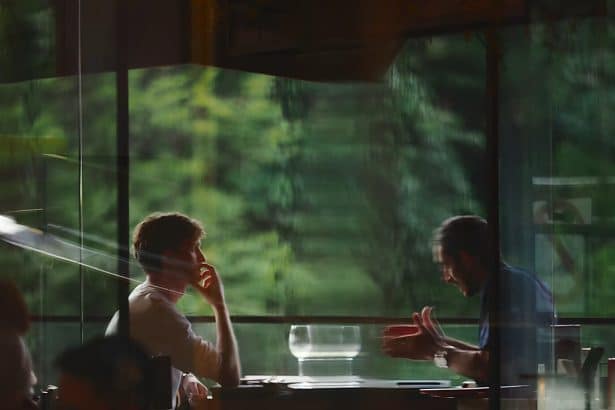
This conversation is taking place in rather a strange atmosphere. You're under observation, and yet you still speak without taking any special precautions.... Are you, or are you not, free to come and go you please?

-- I've been very isolated until the last few years, but not any longer. The isolation was effective during the 1970s, at a time of widespread social inertia. People seemed to have lost heart, seemed not to believe that social change was possible any more. They had stopped taking an interest in public life, which anyway was systematically stifled. People had withdrawn into themselves, with very little communication between individuals.

It was a period when society became fragmented, when everyone was isolated from everyone else. I was particularly isolated because I belonged to the category of people who, in the wake of the Soviet invasion of 1968, were to some extent singled out as enemies of the state. It was dangerous to have anything to do with us. I was a banned writer. I couldn't get work anywhere...

Then, little by little, things started to change. Today, the situation is radically different. Not that the party or government leadership has changed its policy. They're still the same. But society, society's changed. People are perhaps just tired of being tired. They're emerging from their shells again, from their isolation, Something akin to public life is taking shape once more.

New generations are growing up, who have not been stigmatized by the trauma of the Soviet invasion. It's been a gradual, a progressive development--though a significant one all the same. But in my case, I've been able to follow this development quite closely, owing to the fact that I've been arrested and imprisoned a number of times. When you go to prison, you somehow take along with you your awareness of the situation as it is when you're arrested. Afterwards, for a while, you remain outside the development of events and this frozen memory remains in your mind. Then, all of a sudden, you come out of prison. At such times, you're particularly alive to all the changes which may have taken place in the intervening period. At the end of each of my prison terms, I've been surprised by new developments. Each time, society was more alive, the apathy had retreated still further, more and more people had woken up...

Have you at any time had to stop writing?

-- My plays have been banned in Czechoslovakia for twenty years, but I haven't stopped writing. You can't really prevent a writer from writing. His mission is to continue writing, speaking, even under the most difficult circumstances. So I went on publishing things. Where? Abroad, but above all in samizdat, clandestine form.

In the early 1970s, two mutually hostile cultures appeared in this country. One of them official, authorized, the other clandestine, independent. After a modest start, samizdat publishing mushroomed. Today, dozens of samizdat magazines and newspapers are published, as well as hundreds of books and even a current affairs video. In recent years, cracks have started to appear in the barriers between these two cultures. A no-man's-land has developed between them, which has sometimes been called the "grey zone". There has been cross-fertilization--the official and the independent cultures have moved closer together, each of them having realized that it has no monopoly over culture. It is this inner pressure, this growing awareness, which has caused the rapprochement, and not some sort of liberalization of the cultural policy of the authorities.

What in your view is the political and social role of intellectuals?

-- Intellectuals are right to think about the future. They mustn't be afraid to deal with the future, to imagine how it might be. But their primary task, their chief priority is, in my view, to understand the present, to understand its crises and put a name to them. That is how true awareness of perspectives is born.

The politicians' role is to build the best of all possible worlds. The intellectuals must watch, warn, put people on their guard. They must to some extent monitor the politicians, remind them how they become divorced from reality when they follow the shams of ideology. When I say this, I'm speaking as someone disillusioned with ideology. A disillusionment which has been experienced by all this part of Europe. We live in conditions which force people to reflect upon the bankruptcy of ideologies.


BNET TalkbackShare your ideas and expertise on this topic

Please add your comment:

  1. You are currently: a Guest |
  2.  

Basic HTML tags that work in comments are: bold (<b></b>), italic (<i></i>), underline (<u></u>), and hyperlink (<a href></a)

advertisement
advertisement
  • Click Here
  • Click Here
  • Click Here

Content provided in partnership with Thompson Gale