Annie, get your Guccis - exploitation of land-use laws by major corporations
Washington Monthly, July-August, 1992 by Brigid Schulte
Land-use laws made for cowboys and small miners have given Anheuser-Busch and Met Life the run of the West
When Congress first debated the law that was to regulate mining on the vast public lands in the West, lawmakers envisioned idylls in which struggling miners would build "little homes [and] raise peach trees and potatoes." By virtually giving miners the land on which they staked their claims and asking for no return on any minerals they found with their pickaxes and mules, lawmakers hoped to attract industrious pioneers who would set down roots and form the backbone of taxpaying communities.

That was 1866. This is today:

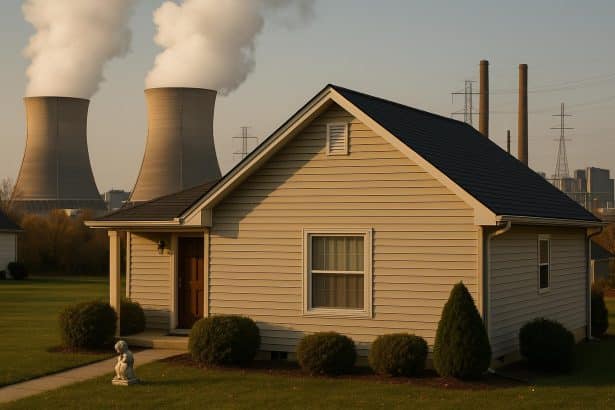
Newmont Mining Corporation used satellites, not pans, to prospect for gold, bulldozed huge pits in the Nevada earth, soaked more than 150 million tons of excavated din with a cyanide solution, extracted 1.68 million ounces of gold in 1990, and walked off with $342 million in net income. European financiers Jacob Rothschild, Sir James Goldsmith, and associates, who own 49 percent of the corporation, paid no royalties to the U.S. government for the gold and no rent on the land--which the federal government sold to them for a filing fee of between $2.50 and $5 an acre.
Pouring cyanide solution over low-grade ore, known as "heap leach" mining, is responsible not only for the resurgence of the mining industry in the United States over the last decade, but also for scarfing the arid western landscape and contaminating its groundwater. So much for little homes and peach trees.
The mining statutes aren't the only federal subsidy helping Newmont bilk America. The company also enjoys the benefits of a below-cost federal grazing program, originally designed to help keep family-owned sheep and cattle ranches in business. Newmont wholly owns the Elko Land and Livestock Co. in Battle Mountain, Nevada, adjacent to its mining lands. The ranch controls 73,347 acres of public rangeland. Last year, Newmont paid the government $24,114 to graze its cattle. Grazing the same head of cattle on subleased private land would have cost Elko anywhere from $85,687 to $118,248, according to various government and independent estimates.
Not only is Elko getting a fat break, but the government is actually losing money on the deal. Just to break even on the grazing fee program, the federal government would need at least $35,000 from Elko, according to conservative Forest Service estimates. That means the government is effectively paying Elko to use public lands.
If Newmont and Elko represent eighties' welfare for the rich at its most outrageous, they have plenty of corporate company. Today, thanks to outdated laws and lax federal oversight, a cozy power elite controls a huge amount of America's valuable natural resources and vanishing open spaces.
Among those benefiting from the grazing laws are Getty Oil, Texaco, Chevron, Anheuser-Busch, Utah Power and Light, John Hancock Life Insurance, Metropolitan Life Insurance, Japanese-owned Zenchiku Land and Livestock, and the Mormon Church. Among the individual owners are George Gillett, who built his broadcasting, beef-packing, and real estate empire with junk bonds; billionaires David Packard and William Hewlett, of Hewlett-Packard computer fame; and J.R. Simplot, an Idaho millionaire who made his fortune supplying McDonald's with potatoes for french fries.
Who are the winners under the mining laws? Eighteen of the top 25 gold mines in the United States are either wholly owned subsidiaries of foreign companies or have at least 40 percent foreign ownership, and none pays royalties or rents on public lands, even though the total value of gold production in the United States in 1990 reached nearly $3.7 billion. Ten large mines now account for 66 percent of U.S. hardrock mineral production and 75 percent of all U.S. mineral reserves.
If the government charged the same 12.5 percent royalty on gross hardrock mineral production that it does on oil, gas, and coal leases, it could have taken in upwards of $500 million last year alone.
Still, in the long run, the greatest damage done by these antiquated laws has to do, not with money, but with quality of life. The current federal policies, while benefiting the few at the expense of the taxpayer, have left a huge percentage of America's public lands strip-mined, blighted by clearcuts, crowded by condominiums--and utterly out of public control.
Mine your own business
Back in the 19th century, when Congress debated how to distribute the country's mineral wealth, lawmakers sounded a little like Jack Kemp extolling the virtues of tenant ownership of public housing. Simply leasing lands attracted an unsavory lot-- "[drawing] into the mining regions a population of vagrants, gamblers, and ruffians, excluding sober and intelligent citizens, and making the establishment of organized civil communities impossible," according to a congressional report. "Their houses were hovels and shanties."
Selling lands to be mined, on the other hand, was associated with attracting "a new class of men... [who] took possession... as the owners of the soil, brought their families with them, laid the foundations of social order, expelled the barbarians who had secured a temporary occupancy, and thus at once promoted their own welfare, the real prosperity of the country, and the financial interest of the government."
- 5 Rules for Immediate Annuities
- Death in the Family: 12 Things to Do Now
- Dumbest Things You Do With Your Money
- 6 Online Networking Mistakes to Avoid
- 401(k) Mistakes to Avoid
- 5 Economic Scenarios to Keep You Up at Night
- The Real ‘Best Places to Retire’
- Best Credit Cards for You
- 12 Tough Questions to Ask Your Parents
- The Real ‘Best Colleges’
- Home Buyer Tax Credit: How to Cash In
- Why You Shouldn't Bash Cash
- 8 Phony 'Bargains' and Better Alternatives
- Danger: 3 Debit Card Scams to Avoid
- 6 Myths About Gas Mileage
- 29 Fees We Hate Most
- Quick and Easy Ways to Boost Returns
- Best Stocks to Buy Now
- Lower Your Taxes: 10 Moves to Make Now
- New Jobs: 8 Lessons from Real-Life Career Switchers
- The New Job Market: Who Wins and Who Loses?
- Health Care Reform's Public Option: Everything You Need to Know
- Volunteer Work When Unemployed: Should You Work for Free?
- Whose Recovery Is This?
- Long-Term-Care Insurance: 4 Biggest Risks to Avoid
Content provided in partnership with
Most Recent Reference Articles
- A Maryland state trooper gave Erik Bonstrom an $80 ticket for driving too slowly
- In California, postal worker Dean Hudson has been found guilty
- Alec Loorz, the 15-year-old founder of Kids vs. Global Warming and recent Brower Youth Award recipient, went to Congress in November for a press conference with Senators Barbara Boxer and John Kerry, who are championing legislation to stabilize US greenho
- Foreign exchange
- The buzz on bees
Most Recent Reference Publications
Most Popular Reference Articles
- Credit card debt on college campuses: causes, consequences, and solutions
- 9 questions to ask your new lover: what you were afraid to ask, but always wanted to know
- How Tyler Perry rose from homelessness to a $5 million mansion
- Rejoice anyway - Zephaniah 3:14-20, Philippians 4:4-7 - Living by the Word - Column
- Living by the word