What your wallet says about you

Kiplinger's Personal Finance Magazine, July, 1998 by Robert Frick

While demolishing he old Apollo Theater near Times Square in New York City a couple of years ago, workers made a discovery that, in its own way, was as critical to interpreting the civilization of its day as the Rosetta Stone. Between 1959 and 1961 thieves had apparently been stealing theatergoers' wallets, stripping them of cash and ditching them in an air shaft. The discarded wallets recovered by the workers were remarkably thin.

Cut to an episode of Seinfeld in which George Costanza tries to cram a slip of paper the size of a fortune-cookie fortune into his corpulent wallet. Strained past the breaking point, the wallet explodes all over a busy street, blowing its contents like ticker-tape confetti.

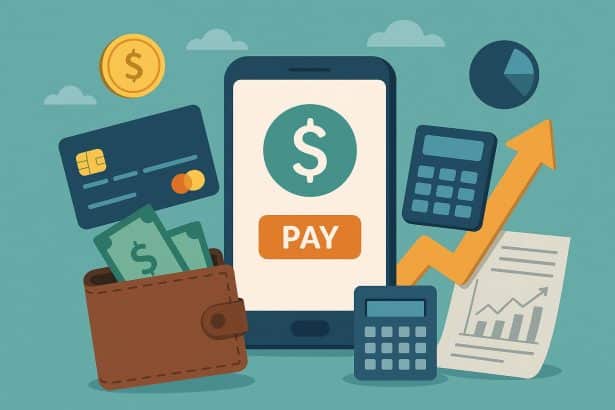
It's a paradox of modern times that as more transactions can be handled electronically, using neither cash nor paper nor plastic, our wallets are bulging with all three. Like a modern version of the clunky chatelaine--an ornamental clasp that women once wore around their waists, to which they attached knives, keys, scissors and other household goods--our wallets are crammed full of credit cards, debit cards, ID cards, frequent-buyer cards, frequent--buyer cards--and the receipts that go with them--not to mention pictures of the kids and the dog. Increasingly, they hold our financial and personal identities; they are leather mirrors of ourselves. Or, as Costanza observed of his wallet, "This is an organizer, a secretary and a friend."

And, as in our choice of friends, there's no accounting for taste and personal style. Mike Ellmann, a stock analyst with Schroder & Co., carries a no-nonsense black bifold wallet. But while his cash compartment is divided into two sections, he puts all his bills and receipts in one section, reserving the other side for a single "cheesy trinket"--a metal Japanese good-luck charm in the shape of a stork and tortoise, wrapped in clear plastic. It was given to him by a friend after Ellmann was in an auto accident.
Rummaging through her wallet, Christine Eldred, a homemaker in Glendale, Cal., discovers a romantic poem given to her by her husband and a memorial card from her grandmother's funeral. "I never thought of my wallet as a personal memento before," says Eldred. When Matt Leipzig, a Hollywood literary agent, bought a new wallet, he removed the clear plastic insert commonly used for family pictures. As much as he loves his family, Leipzig says,"I hate it when people pull out wallet pictures. I don't want to inflict mine on anybody."

Lamentably (in the wallet industry's view), we don't take as much care in selecting our wallets as we do in deciding what goes into them. Experts in the trade argue that the best-selling styles for both men and women are neither the most convenient nor the most efficient. Men, they say, should be carrying bifold wallets (trifolds are woefully un-hip). And women should trade in seveninch checkbook--change-purse combinations for several smaller pieces that can be tucked into an evening bag. But the wallet cognoscenti appear to be fighting an uphill battle.

CLINGING TO TRADITION

At the the 1998 International Travelgoods, Leather & Accessories trade show, the stereo smell of two floors of leather luggage enfolds you like the front seat of a new luxury car. Although no one keeps exact statistics, most wallets are made of leather (even the makers of nylon and cloth billfolds admit that their goods represent a fraction of the industry's output). We track down Jeff Frank, regional sales vice-president for Bosca, one of the oldest wallet manufacturers in the U.S. (founder Hugo Bosca was making purses in Ohio in the early 1900s).

Frank offers two pieces of advice to owners of today's overstuffed wallets: "Thinner means longer," and "Wider means thinner." Translation: A thinner wallet puts less strain on stitching and other vulnerable wallet parts that may crack or burst, so it will last longer. And a wider wallet, by definition, spreads the wallet contents over a larger area, making it thinner.

For men, that means a bifold wallet. Leather experts insist that trifolds are anachronisms, harking back to the days when billfolds held nothing but folded bills. Young men start out buying trifolds because of their narrow profile--and because they have little else to carry besides a driver's license and date money. A 1996 survey showed that men under age 20 buy three times as many trifolds as bifolds.

So a trifold wallet becomes a habit, even after it has expanded to the size and shape of a jumbo bar of soap. "The problem with men," says Frank, "is that they are the hardest animals on the planet to change." They do tend to wise up as they get older, but even men over 60 buy more trifolds than bifolds. And women, who buy most of the wallets men use, perpetuate the habit by sticking to whatever style their significant others already own. (Editor's note: Finally convinced of his folly, the author of this story broke his personal cycle by switching to a bifold. He reports that for the first time his wallet fits comfortably into the hip pocket of his jeans.)


BNET TalkbackShare your ideas and expertise on this topic

Please add your comment:

  1. You are currently: a Guest |
  2.  

Basic HTML tags that work in comments are: bold (<b></b>), italic (<i></i>), underline (<u></u>), and hyperlink (<a href></a)

advertisement
advertisement
  • Click Here
  • Click Here
  • Click Here
advertisement
Click Here

Content provided in partnership with Thompson Gale