Find Articles in:
All
Business
Reference
Technology
News
Lifestyle

Cybergifts - using the Internet in library fund-raising

Library Trends, Wntr, 2000 by Adam Corson-Finnerty

ABSTRACT

THE INTERNET PROVIDES A VALUABLE NEW fund-raising tool for libraries and other non-profit organizations. However, simply putting a "give now" button on your home page will not bring new gifts. Development directors should use the concept of "Permission Marketing" to structure an approach to building the constituency for your institution. And while the Web may attract visitors, it is e-mail that can be your most powerful fundraising ally.

INTRODUCTION

Sometimes I find myself driving on an out-of-the way suburban street only to come across a scene straight out of Peanuts. Two children are sitting behind a makeshift lemonade stand with paper cups and a change box at the ready. Their mother is usually perched in a lawn chair behind them, both protecting and encouraging her little ones in what has to be their first foray into retail commerce. After Dad and a few neighbors have purchased their obligatory cup of lemonade, one wonders who else stops to make a purchase. There is little evidence that this is a thriving business.

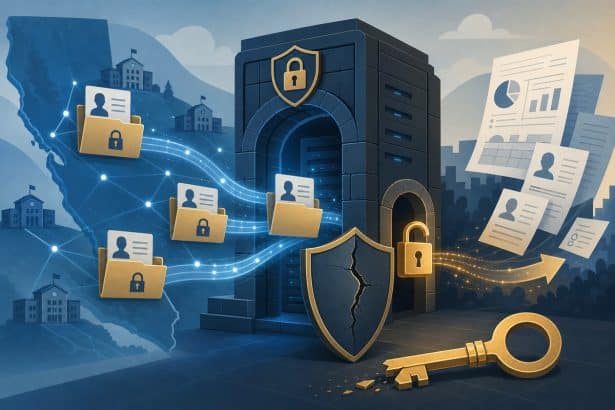
It is astonishing that nonprofit organizations, making their first foray into online giving, often set up the equivalent of a lemonade stand in a suburban cul-de-sac. They create an uninteresting online donation form, bury it levels down on their Web sites, and wonder why nobody makes a gift in response. Thus there are sites intended to solicit donors that have been up for a year or more and that have received less than twenty-five gifts. Is cyber-giving therefore a failure? Of course not. The only failure is a failure of imagination.

BEYOND BROCHUREWARE

The first stage of any invention is to think of it in terms of one's current frame of reference. Thus the automobile was the "horseless carriage," electronic message delivery is "e-mail," and Web sites have a "home page." Not surprisingly, then, most early pioneers of the World Wide Web thought in terms of print format. Their first impulse was to put their various brochures, press releases, annual reports, and newsletters online.

When it came to gifts, memberships, and purchases, most non-profit organizations started with what might be found on any brochure: a mailing address, an "800" number, and a "form" that readers were encouraged to "print out and mail." Or, for institutions that were really progressive, "print out and fax." These early efforts were the equivalent of the suburban lemonade stand--institutions built them, but nobody came.

The next level of innovation began to capture the power of e-mail. Web sites peppered their pages with "mail tos" allowing readers to easily click and send comments in a freeform box. Next were simple "cgi" scripts that allowed the creation of online forms. Now our visitors could fill in the blanks, click on "send," and communicate substantively with the library. That message could be a pledge in any amount. It could be a membership application with a "bill me" checkbox. It could even be a credit card number, expiration date, and gift designation. Voila! Cybergiving is born.

Currently, libraries have the capacity to accept credit card gifts online with varying levels of security. Those who are willing to pay the extra cost can also have real-time validation, direct transfer to a merchant account, full integration with accounting and donor-tracking systems, and automatically generated and personalized acknowledgments.

FUTURE THINKING

As we invent the future together, here are three "science fiction" ideas to ponder, each of which has vast implications for fund-raising.

The first idea is micropayments. One way or another, we will soon be able to spend small amounts of money online--perhaps 15 cents for a transaction. Whether this payment is made through digital cash or through micro-debit is immaterial. Think about how an institution might be able to raise hundreds of thousands of dollars through micropayments--even millions!

The second concept is convergence. While admittedly a stale buzzword, however it is finally tagged, one must consider the possibilities when voice, text, and image all flow smoothly through an individual's information appliance. Prospects will be able to scan the library's site and, if desired, "click-up" a real-time conversation online. Virtual donor-initiated visits become possible. And,just to add an interesting twist, imagine that people cannot only speak to each other in real-time and see each other in real-time, but that speech can be translated into any of forty languages and dialects in real-time and vice versa. English becomes Parisian-accented French; French becomes Peter Jennings-style Canadian. Oh, and the computer smoothly renders mouths so that it appears that the speaker is actually speaking the translated language.

The final concept is identity. Imagine this: A surgeon receives an e-mail saying "Doctor, I understand that my son's survival depends on a lung transplant. You have my permission to operate." What surgeon in his right mind would proceed? Yet some day such identification mechanisms will be so rock-solid, the law will have caught up with the technology, and legally-binding decisions "online" will be commonplace. Enter a binding pledge through e-mail? No problem. Buy a house online? You bet. Transfer $10 million? Just say where you want it to go.


BNET TalkbackShare your ideas and expertise on this topic

The following tags are supported in BNET comments:
<b></b> <i></i> <u></u> <pre></pre>

Leave a Reply

  1. You are currently a guest | Login?