How Safe Is Soy Infant Formula?

0 Comments | Insight on the News, June 25, 2001 | by David Goodman

New research suggests high concentrations of manganese found in soybean-based baby formula can lead to brain damage in infants and altered behaviors in adolescents.

Jonathon Ericson, an environmental-health scientist at the University of California-Irvine, faced a typical planner's task when he was called upon to set up a symposium on toxic metals last fall. How would he frame the topics? What should be included? Whom would he invite to speak? It didn't seem that difficult: He would focus on pollutants the internal-combustion engine spews into the air.

Day one would be devoted to the tetraethyl-lead compound in antiknock gasolines that discharges metallic wastes out of the tailpipe. An easy one. Day two he would devote to MMT, the antiknock compound of the future, based not upon lead but manganese. Here his thoughts moved to likely speakers to detail the dangers to the brain structure of manganese miners in Europe, Asia, South America and Australia, who after a few years on the job have been shown to run an increased risk for Parkinson's disease. The miners inhale manganese particles that, after being breathed into the lungs, are transported to the brain.

Then it occurred to him: Miners aren't the only people at risk from too much manganese. Ericson remembered the dangers of the toxic metal in a consumer product that has been popular for about 30 years -- that standby of busy mothers the world over, soybean-based infant formula.

Ericson's use of the image of soy-based formula as a toxic threat comparable to a gasoline additive kept the audience captivated. The two speakers, Dr. Francis Crinella, clinical professor of pediatrics at UC-Irvine, and Trinh Tran, a graduate researcher at the UC-Davis Department of Animal Studies, explained how the soybean plant lifts up manganese in the soil and concentrates it so that its use in soy-based infant formula can result in as many as 200 times the level found in natural breast milk. These and other experts believe that such high concentrations could pose a threat to the immature metabolic systems of babies up to 6 months of age.

The size of the market for soy-based infant formula is held closely, and none of the producers contacted by Insight would reveal sales figures. An independent expert estimates the market for all infant formula to be about $3 billion, with soy-based formula accounting for about $750 million of that, having doubled in the last 10 years. The best-selling brand is Isomil (Ross Products Division of Abbott Laboratories), followed by Enfamil ProSobee (Mead Johnson), Nursoy (Wyeth-Ayerst) and Alsoy (Carnation).

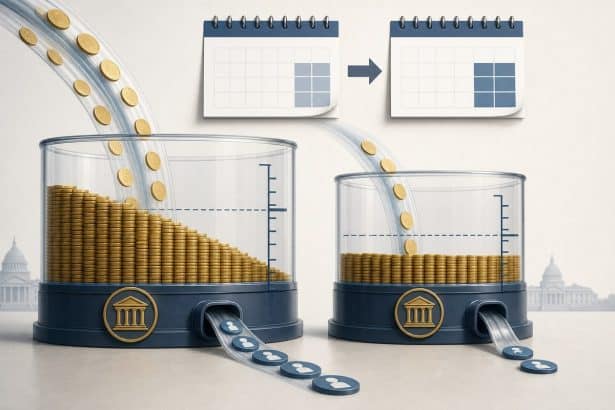
According to Crinella and Tran, the discovery of potential harm from such products began in 1980 when a federal agency then called the Food and Nutrition Board established safe and acceptable values for manganese in adults, toddlers and infants. Permissible levels for the three age groups ranged from 2.5 to 3 mg per day for adults, 1 to 1.5 mg per day for toddlers and 0.5 to 1 mg per day for infants under 6 months. This job now is handled by the Food and Drug Administration (FDA), which today permits 0.6 mg per day for infants, 120 times the amount found in mother's milk.

The FDA tells Insight that in the next few months it will lower the guidelines. Ruth Welch, an FDA spokeswoman, confirms that a report will recommend a minimum of only 0.005 mg of manganese a day and no maximum for infants up to age 6 months.

Dr. Barbara J. Stoecker of the Human Environmental Sciences Center at Oklahoma State University served on the FDA's Dietary Recommendations for Infants Committee. She tells Insight the committee was given instructions to limit the target to breastfed infants only. Since they were told the FDA lacked data on the need of infants 0-6 months old for manganese, they employed data from the 7-12 months age group, which in turn was extrapolated from adult values according to a body/weight equation. The result was the current recommendation, as compared with the 0.005 mg in human mother's milk. Stoecker says she was puzzled by the absence of guidelines for maximum amounts of manganese permitted.

Despite government assurances of safety at the recommended levels, the professional literature shows that in 1983 Phillip Collipp, a pediatric physician at Nassau County [N.Y.] Medical Center, tested infant formula for manganese in popular soy brands, including Isomil, ProSobee and Nursoy, purchased locally. He published data showing that they contained from 0.2 mg to 1 mg per quart. Later that year, Drs. Bo Lonnerdal and Carl Keen of the UC-Davis Department of Nutrition tested formula taken from pharmacy shelves worldwide. They found higher manganese concentrations in soy formulas, ranging from 0.4 mg to 2.2 mg; the mean value of 1.2 mg vastly exceeded the infinitesimal 0.005 mg found in mother's breast milk.

After the research by Collipp, Lonnerdal and Keen, nutritional scientists worldwide reported that newborn babies, in symbiosis with their mothers during the first weeks, absorbed most of the manganese in breast milk. The tiny amounts the baby suckles a dozen times a day appear to function as a catalyst for more than 50 biochemical reactions. This suggests a newborn's digestive system is superbly attuned to absorb the infinitesimal levels of manganese in mother's milk, and that, in fact, it is essential to the development process.


BNET TalkbackShare your ideas and expertise on this topic

Please add your comment:

  1. You are currently: a Guest |
  2.  

Basic HTML tags that work in comments are: bold (<b></b>), italic (<i></i>), underline (<u></u>), and hyperlink (<a href></a)