Invisible Death
Science World, May 10, 1999 by Nicole Dyer
The threat of Germ Warfare
Imagine a terrorist attack with weapons you can't see, hear, or smell!
When President Clinton admits he stays awake at night worrying about the risk of germ warfare, or biological weapons, the world stops and listens: It's "highly likely" that a terrorist group will threaten to unleash a germ or chemical attack somewhere in the U.S. in the next few years, Clinton told The New York Times in January.
But he cautioned Americans not to be afraid and asked the U.S. Congress to spend $2.8 billion to beef up security and research technology to combat germ and chemical warfare.
Germ warfare hasn't touched U.S. soil yet, though in the last year American citizens with grudges to settle made over 100 false threats to use anthrax, a livestock disease that can be turned into a lethal germ weapon. In March 1995, thousands of Tokyo subway commuters collapsed and 12 died when a Japanese cult dispersed sarin gas, a toxic chemical, in a subway station. Though police quickly arrested more than 200 cult members, the subway terror was a wake-up call to governments around the world.
What is this new arsenal of invisible weapons? How real is the threat to the U.S.? Read on.
Q. What are germ and chemical weapons?
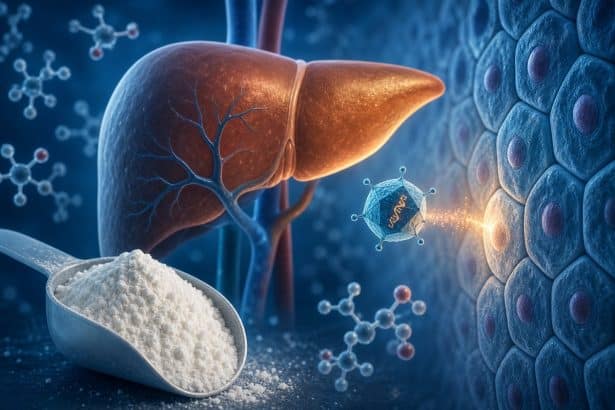
A. Biological weapons are made with deadly bacteria and viruses (disease-causing microorganisms). They make people sick or kill them. Germs such as the anthrax bacteria and smallpox virus (see p. 11) are grown in laboratories. Then, germs are released into the air. Unlike missiles, germ weapons are relatively cheap to make, easy to obtain, and hard to detect in busy hubs like subways or airports.
Chemical weapons are poisonous gases that can kill within minutes or hours after contact. The gases can be loaded into bombs, artillery shells, and land mines. The most common type of chemical weapons are nerve agents, which can poison the body's central nervous system. Mustard or blistering agents make up another class of chemical weapons.


U.S. experts suspect at least 17 countries of having developed these weapons--though they're banned by international law.
Q. Why does germ warfare pose a crisis now?
A. In their natural state, most germs are fragile--killed easily by heat, sunlight, and the body's immune system. But today, scientists are armed with technology to produce stronger bacteria and viruses. Genetic engineering lets scientists control germs' genes, information that instructs organisms how to grow (see SW 1/11/99). Scientists can transplant genes from one germ into another, creating "super strains."
When such technology falls into the wrong hands, the result is frightening. "Germ scientists in Russia have tried to combine the smallpox and ebola viruses using genetic engineering," says biological weapons expert Dr. Thomas Inglesby of Johns Hopkins School of Medicine in Baltimore, Maryland.
Q. Can anyone make biological weapons?
A. Fortunately, no. "Bacteria and viruses need very specific conditions in order to thrive, like the right amount of light and heat," says Dr. Ali Khan, a bioterrorism expert at the Centers for Disease Control and Prevention (CDC) in Atlanta, Georgia.
To isolate the anthrax bacteria, for example, one would have to locate an animal infected with the rare lethal strain of anthrax. The bacteria would have to undergo an elaborate lab process to turn anthrax into a powder of the exact particle size necessary to lodge in human lungs. Then, one would need a device (like an unmanned airplane or crop sprayer) that is capable of dispersing enough anthrax to injure or kill many people.
Q. What is the most dangerous biological weapon?
A. Smallpox, according to Khan. "It has a high death rate, is wildly contagious, and there's no treatment for it." Smallpox is transmitted from person to person through personal contact or sneezing, for example. But since the disease was wiped out by the 1970s, many people haven't been vaccinated for smallpox; those who've been vaccinated may have lost their immunity, or natural protection.
Q. What is the U.S. doing to strike back?
A. The President has recommended a number of strategies:
[check] Complete the Human Genome Project, a massive government research effort to identify every human gene, including those of microbes like anthrax and smallpox (see SW 3/22/99). Scientists can then develop new vaccines to combat viruses, and antibiotics, drugs to fight bacterial infections.
[check] Produce and store enough antibiotics and vaccines in medical centers to treat and protect citizens from germ warfare.
[check] Vaccinate police and public health officials. Since a smallpox vaccine can actually make people sick, health officials would probably limit the vaccine to those at greatest risk of exposure.
[check] Raise awareness about the signs and symptoms of germ warfare. Most germ agents don't kill instantly.
[check] Develop protective clothing for soldiers, police, and others at highest risk.
[check] Develop devices similar to metal detectors to detect germ agents transported through airports and public transportation systems.
Most Recent Reference Articles
- Not Part of the Public: Non-indigenous policies and the health of indigenous South Australians 1836-1973
- Homophobia: An Australian History
- Social inclusion and sport: culturally diverse women's perspectives
- Who to serve? The ethical dilemma of employment consultants in nonprofit disability employment network organisations
- Vocational education, self-employment and burnout among Australian workers