Towering inferno: from a 40-story apartment building in Houston to the World Trade Center in New York City, firefighters wield high-tech tools to battle monster flames

Science World, Jan 21, 2002 by Nicole Dyer

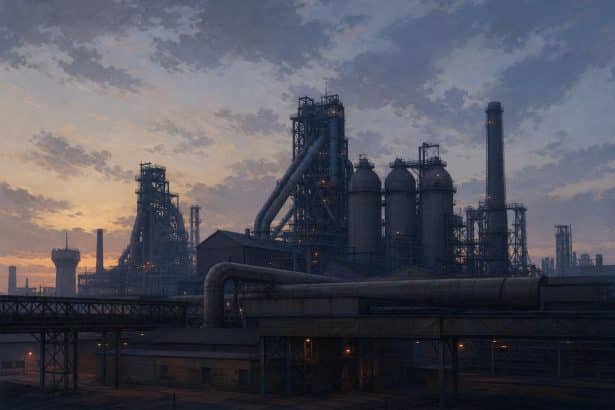
At 4:15 a.m. on October 13, giant flames burst through a fourth-floor window in Four Leaf Towers, a 40-story residential high-rise in Houston, Texas. Within minutes, the blaze spread uncontrollably, devouring furniture, ceilings, and walls. Clouds of suffocating black smoke filled stairwells and hallways. Visibility was zero, and the high-rise became a 427 [degrees] C (800 [degrees] F) inferno.

"There was glass and fire just pouring out," says resident Georgann Sievert, who escaped down 19 flights of stairs. It took more than 175 firefighters to extinguish the blaze, and Captain Jay Jhanke of the Houston Fire Department lost his life while helping the building's occupants. The cause of the fire is still under investigation.

Fire kills one American every 40 minutes. Last year, structural or building fires claimed 4,125 lives, including 64 volunteer and 38 career firefighters. Over 30,000 people were injured. More than 400 firefighter fatalities will be reported in 2001 due in large part to the World Trade Center tragedy, which killed 343 firefighters in a single day. Still, thanks to an armory of new high-tech tools, firefighting has become significantly safer and more successful than ever.


RED-HOT CITY

Jack Williams, district fire chief of the Houston Fire Department, has battled fires for 27 years. "Some people want to be doctors or lawyers," says Williams. "Not me--I've always wanted to fight fires."

Firefighters like Williams work in 24-hour shifts, ready at a moment's notice to respond to an emergency fire call--even a 4:15 a.m. call, like the one from Four Leaf Towers. A fire call automatically kicks on the lights in the firehouse and sounds an alarm. "As soon as I hear that `boop' noise, my heart jumps," says Williams. He has less than two minutes to suit up into "bunker gear": protective trousers and a jacket coated with Kevlar, a lightweight, fire-resistant fiber made of plastic. It's 60 times stronger than steel and is also used in bulletproof vests and spacesuits.

On the way to the fire, Williams straps on an air tank, otherwise known as an SCBA, or self-contained breathing apparatus (see diagram, right). In a smoke-filled building, the SCBA supplies a lifesaving 30 or 60 minutes of air pumped through a "positive pressure" mask. That means that the pressure--the force exerted on a unit of surface area--inside the mask is higher than it is outside the mask. According to Pascal's law of fluid pressure, air molecules travel from areas of high pressure, where they are tightly packed, to areas of lower pressure, where they can flow more freely. So if the mask springs a leak, high-pressure air rushes out and blocks incoming smoke.

SCBAs also come equipped with an alarm that blares when less than five minutes of air is left in the tank, as well as a two-way radio tucked inside the mask. "It's similar to those found in a pro quarterback's helmet," says SCBA specialist Gary Henkel at SCBA Safety Check, Inc. "All you have to do is start talking and you reach the command post."

Once on the scene, Williams and his crew always try to combat a blaze from the inside out: "Anytime you stick a hose in a window, you're pushing fire and smoke back into the building--where people may be trapped." Williams's top priority: to get inside and search for victims, and then keep fire from spreading to unburned areas. "Time is of the essence because of the possibility of losing lives," he says. If the "seat" or heart of the fire blazes on the 20th floor, for example, a firefighter has to be fit enough to sprint up the stairwell. And that grueling task doesn't get easier with a hose in tow, which "adds another 100 pounds," Williams says.

THE PRESSURE IS ON

Once a firefighter reaches the fire floor, the next challenge is to pump up water. The dilemma is that elevation decreases water pressure. For every 0.3 meters (1 foot) in elevation, the pressure pushing water through a hose decreases by 0.434 pounds per square inch (psi). Pumping water to a building's second floor, for example, results in a pressure loss of 4.3 psi; to the 51st floor the pressure loss is 271 psi; and on the 101st floor you lose 434 psi!

To offset pressure loss, firefighters use "standpipes," or a system of water pipes usually tucked behind the stairwells--they are designed to provide a three-hour refuge area from the flames. To access the pipes' water, a firefighter totes up a "high-rise pack"--a shoulder bag filled with 30 m (100 ft) of hose, an adapter to attach to other hoses, and a hose nozzle--then plugs the apparatus into a standpipe valve to crank out water.

But too much water pressure also creates problems. A typical hose nozzle can spray up to 1,893 liters (500 gallons) of water per minute. But at that rate, the gushing water would create enough reaction force, or backward pushing force, on the hose to lift a 113 kg (250 lb)-man clear off the ground! Newer nozzles, like the Blitzfire, come equipped with an acceleratometer, a device that detects sudden hose movement and shuts off water supply within 0.3 seconds.


BNET TalkbackShare your ideas and expertise on this topic

Please add your comment:

  1. You are currently: a Guest |
  2.  

Basic HTML tags that work in comments are: bold (<b></b>), italic (<i></i>), underline (<u></u>), and hyperlink (<a href></a)