Translating Maize into Corn: The Transformation of America's Native Grain

Social Research, Spring, 1999 by Betty Fussell

With our first infant wail, we establish that intimate link between food and language on which our lives depend. You could say that ingesting food is our primary act of translation, in which the mouth is a portal for both eating and speaking, for ingesting the world of things and articulating the world of ideas. That we have but the one orifice for these opposite actions is a curious fact of human engineering that may cause some to dismay,(1) but this fact helps explain why the foods of a particular culture cannot be separated from the language of that culture. The simple act of translating the name of a food from one language to another transforms not just our response to that food but often the substance of the food itself. Food, then, is a good medium in which to demonstrate how much language preconditions perception and how often we eat first with our heads and then with our stomachs, so that we can no more taste with an innocent palate than we can look with an innocent eye.


Among the world's major foods, corn is a prime example in both its botanical nature and its cultural history of the ways in which language shapes perception and history genetics. As long as we view corn as a typical domesticated wild grass, a cereal grouped with wheat and rice as one of the world's three basic staple crops, corn is appropriate for a case history of food change. But the moment we translate "corn" back into "maize" and examine this language shift and its meanings, we find that maize/corn is in no way typical. No other human food plant has undergone such extraordinary changes with such far-reaching results, most of them within the last two hundred years as a result of the clash between indigenous and European languages that began with Columbus' arrival in the Americas.

To say the word "corn" is to plunge into the tragi-farcical mistranslations of language and history. If only the British had followed Columbus in phoneticizing the Taino word mahiz, which the Arawaks named their staple grain, we wouldn't be in the same linguistic pickle we're in today, where I have to explain to someone every year that when Biblical Ruth "stood in tears amid the alien corn" she was standing in a wheat field. But it was a near thing even with the Spaniards, when we read in Columbus' Journals that the grain "which the Indians called maiz ... the Spanish called panizo." The Spanish term was generic for the cereal grains they knew--wheat, millet, barley, oats--as was the Italian term polenta, from Latin puls. As was the English term "corn," which covered grains of all kinds, including grains of salt, as in "corned beef."

French linguistic imperialism, by way of a Parisian botanist in 1536, provided the term Turcicum frumentum, which the British quickly translated into "Turkey wheat," "Turkey corn," and "Indian corn." By Turkey or Indian, they meant not a place but a condition, a savage rather than a civilized grain, with which the Turks concurred, calling it kukuruz, meaning barbaric. Wherever this barbaric grain was carried, and it went quickly around the world in the sixteenth century on the ships of Portuguese explorers, it was given different names. When Linnaeus tried to establish a universal plant language in the seventeenth century by giving plants Latin names, he called it redundantly Zea mays, adding Greek zea, meaning "life-giving," to Latinized mahiz, which in Taino meant "life-giving seed."

Maybe we're lucky that the English language ended up with two different words for the same thing, because the connotative difference between maize and corn names the juncture and division between two different worlds, the Old one and the New. Rather than a case history of change, the subject maize/corn furnishes a nexus study of the conflict between these worlds that we can view only from the perspective of our own culture and the inherited predispositions of our own palates.

The Nature of Maize

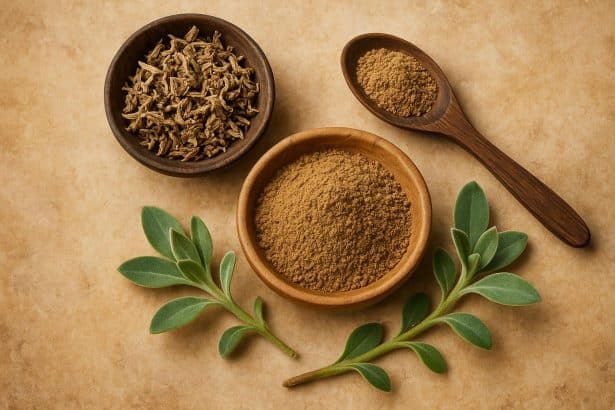
Whenever food is the subject, like poetry or music or art, we should begin with the concrete and particular reality of the foodstuff, on the plate, in the hand, in the mouth. As a subject for the mind, food should not be divorced from its sensate existence and our sensuous experience of it--sight, smell, touch, taste, and even sound, as in the sizzle of bacon or the pop-pop-pop of one of our favorite kinds of corn. Let's begin, then, with the translation of the raw foodstuff into two culinary artifacts, a loaf of bread and a disk, which the Spanish called tortilla, or "little cake," to name the commonest form of bread in Mexico, the place where maize began. But when we say "bread," what most of us European descendants understand as bread is a risen loaf, not a flat disk. We mean dried grain, ground into flour, made into a dough with water, and leavened by yeast. Yeasted bread is the model by which we read other breads.

The tortilla, in contrast, presents us with dried grain that has been processed before it is even ground. The kernels have been boiled with an alkali (cal, or slaked lime from limestone) that removes the skins of the kernels, which makes the grain easier to grind, adds a slightly different flavor, and changes its nutritive substance. While still wet, these boiled kernels (nixtamal) are ground and shaped into a dough (masa) to cook flat on a griddle (comal) or hearthstone. But the dough stays flat. It doesn't rise even if we add yeast because maize has no gluten to respond to the chemical changes wrought by yeast. Corn bread is by nature flat and has symbolic value as such. Mexicans call the Zocalo, that vast central square in the heart of Mexico City, "el gran tortilla."


BNET TalkbackShare your ideas and expertise on this topic

Please add your comment:

  1. You are currently: a Guest |
  2.  

Basic HTML tags that work in comments are: bold (<b></b>), italic (<i></i>), underline (<u></u>), and hyperlink (<a href></a)