Automotive Industry
Industry: Email Alert RSS FeedThe Power Brokers
Automotive Industries, Sept, 2001 by John Shea
There's $60 billion in the pot for the worldwide engine game. But the rules are changing, the game hoard is changing -- and GM and Honda both intend to win.
Currently, a $60 billion pot is up for grabs in the engine game. But getting a seat at the table is expensive. For starters, you need up to $1 billion in development costs and five to seven years to design a new engine from scratch.
With these stakes, automakers are searching for ways to improve their returns. In the process, old rules are being broken and new opportunities are being found.
- Most Popular Articles in Autos
- Service Slants
- 2007 utility vehicle buyer's guide: Side-By-Sides are popular; here's who ...
- Transmission considerations: beyond the manual gearbox
- Buell Motorcycle engineering, innovation, & dedication: in an industry ...
- 100 + 10: America's oldest automotive magazine celebrates its 110th year ...
- More »
No two companies are rolling the dice more than General Motors Corp. and Honda Two years ago, they broke the rule about never buying an engine from a direct competitor. In a provocative engine-sharing agreement Honda will provide Saturn with a ULEV V-6 for the new Saturn Vue. In return, GM ally Isuzu will give Honda a 1.7L turbo diesel for its 2002 Civic program in Europe. Production for the Civic begins in November, with approximately 5,000 engines to be provided during the next six months.
Ten years ago, this deal would have been unthinkable. Today--with engines becoming less of a concern to customers (see chart, pg. 24) and with fast-to-market pressure so great -- it goes from thought to deed because it makes good sense. With the Isuzu engine, Honda bolsters its European small-car diesel market competitiveness immediately. Saturn, meanwhile, urgently needs to freshen its portfolio to revitalize its competitiveness in North America Honda's engine helped Saturn cut years off its development time. For both, cost is dramatically reduced.
But neither GM nor Honda want to make a habit out of selling and buying engines they need in their own portfolios. Honda. for one, is speeding development work on its 2.0L diesel so it will no longer be in a "need position" with Isuzu. Honda President and CEO Hiroyuki Yoshino says the company plans to have the engine ready for the 2003 European Accord.
However, the activity indicates how GM, Honda and other OEMs are building partnerships with alliance partners and outside companies to reach new automotive markets while minimizing costs.
Non-Automotive Opportunities
GM and Honda, like other OEMs, are actively looking to sell engines to non-automotive applications because the profit potential is enormous.
The profit margin on the sale of an off-highway engine (for anything above 30 hp) can be upwards of 40 percent, or more than four times the margins for the same engine going into an automobile, according to Birmingham, Mich.-based Power Research Marketing.
Capacity gives automotive OEMs a major advantage in realizing these profits. "The marine industry doesn't tool up for their own motors for the same reason we like to share ours: It's so capital intense," says Rick Dunagan, GM Powertrain director of outside sales and brand management. "GM makes about 80,000 engines and transmission worldwide everyday. The marine industry only needs about 100,000 engines every year. If you're in the marine business, you can't tool for a new motor like that. So we need to look for opportunities to capitalize on that business."
By 2004, GM'S Powertrain group is seeking to triple its current profits from the $1 billion in outside sales it already generates annually, says Dunagan. For GM, this market includes the sale of transmissions to other OEMs, as well as its non-automotive ventures in the marine and industrial markets.
While declining to provide specific financial or volume goals by market, Dunagan says GM will be especially active in the performance automotive, performance marine and generator markets. In the latter, GM soon expects to announce an agreement with a major fast food chain in Califomia in which GM will initially provide 300 commercial generators for auxiliary power. GM is also designing generators intended for home use, with units that will generate up to 125kW of power.
"We believe there's an untapped market for residential stand by power, and this closely compliments GM'S announcement of using fuel cells for the same application, Dunagan says.
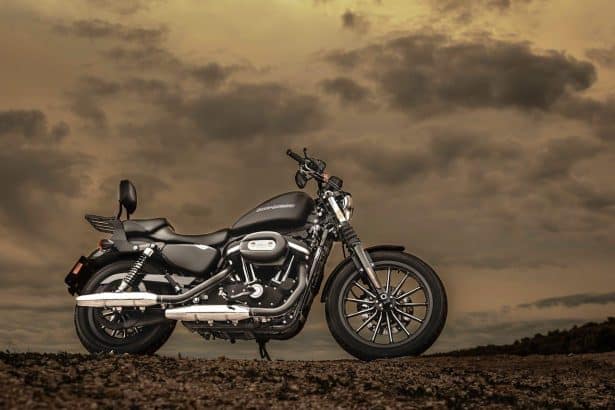
Honda, meanwhile, sold nearly 11 million motorcycles, automobiles and power products last year, a record for the company, with its worldwide engine production at almost 11.5 million units. Just over 20 percent of these engines were built for the automotive market. The balance were for motorcycles (43 percent) and power products (35 percent).
Honda's Yoshino has set an aggressive growth target for all three product lines. With this target, the company seeks to sell 16 million units by the end of fiscal year 2004. And while Yoshino's growth expectations for automobiles (up 20 percent) are high, his expectations for the motorcycle (40 percent) and power product (50 percent) markets are even higher.
Yoshino says 70 percent of Honda's motorcycle sales last year came from developing countries, where that mode of transportation remains the most popular form of getting around. "Significantly there is still roam for growth in huge potential markets such as China and India due to the size of the population and prospects for economic growth," Yoshino says.