Health Care Industry
Industry: Email Alert RSS FeedCHIN provides vital healthcare linkages
Healthcare Financial Management, Jan, 1994 by James J. Moynihan, Kathryn Norman
When the term "electronic data interchange" (EDI) was first introduced, it referred to purchase orders, electronic claims, and electronic remittance processing. Those EDI applications are becoming commonplace now, however, and new applications for EDI technology are being developed. Healthcare financial managers should expect that the electronic data highways used for claims traffic eventually will transport both financial and clinical information. These electronic exchanges will not only be between payers and providers but also between hospitals, laboratories, physicians, and allied health professionals. The name commonly given to this view of an electronically linked healthcare world is the community healthcare information network (CHIN).


Most RecentHealth Care Articles
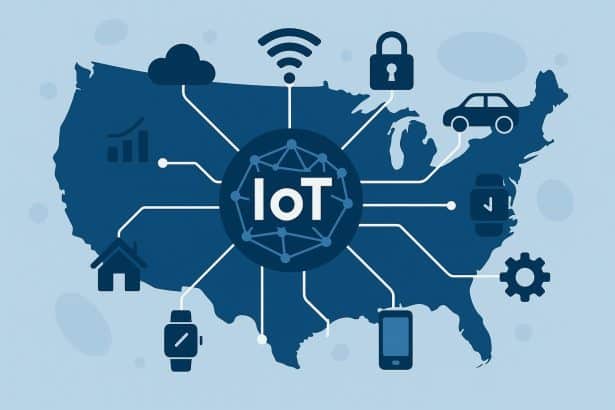
The community healthcare information network (CHIN) means different things to different people. But all agree that to create such networks every provider will have to have computers linked to other providers' computers via telephone lines. CHINs will thus form healthcare systems that will allow the transmission of information among multiple healthcare provider and payer organizations. Some see a future where information will be transferred among providers as easily as making a telephone call. Others see a central mainframe computer playing a new role as an "information utility." A mainframe central databank could provide a repository for information about insurance eligibility and solve coordination of benefits issues. It also could store the patient records of individuals in a particular region.
Some healthcare professionals prefer the decentralized maintenance of information version of CHIN, while others prefer the central databank version. All, however, agree that either version will be an improvement over the existing system where information is maintained in many separate locations and the primary means of information exchange is the U.S. mail or a facsimile machine.
CHINs are a solution for a healthcare system that is anything but a "system." One reason health care is so expensive is that it is delivered through a fragmented, $800 billion cottage industry. For the healthcare industry to be more efficient, information must be easily accessible and transferable. For example, when a physician refers a patient to another physician or to a hospital, that patient's medical record should be immediately accessible by the other physician or hospital.
If the administration of the healthcare system were patient-focused, transferring a patient's medical record would be simple. Currently, however, the administration of the healthcare system is payment-focused, with a vast workforce employed processing claims data. This focus on claims data has been required to maintain cash flow. No provider has ever been denied a payment because of a lack of a computer-based patient record or inability to transfer a record electronically. To date, providers have had little incentive to develop methods for electronically sharing data with each other.
Users and uses
Who will use CHINs? Employers and other plan sponsors; claims adjudicators, including insurance companies, health maintenance organizations (HMOs), and third-party administrators (TPAs); review organizations, such as preferred provider organizations (PPOs), utilization review, and case management companies; and providers. These participants and some of the transactions that can be exchanged are illustrated in Exhibit 1.
CHINs, as envisioned by most of its advocates, also are utilities to move, and perhaps store, clinical as well as financial data. In contrast to EDI initiatives that only seek to automate transaction flows between payers and providers, CHINs should link providers with one another. As illustrated in Exhibit 2, financial, demographic, and clinical data need to be exchanged in the following transactions:
* The referral of a patient from a primary-care physician to a specialist,
* The discharge of a patient from a hospital and subsequent admission to a nursing home or a visiting nurse service,
* The transmission of laboratory reports to physicians and physician orders to a hospital, and
* The transmission of prescription information by a physician to a pharmacy or home healthcare supplier.
How will CHINS become reality?
It is exciting to think about an electronically linked future, but there are many questions that must be answered before that future becomes reality. Will healthcare financial managers who invest today in the capacity to do business electronically be entering the market prematurely? Is the technology mature? How will physicians be convinced to participate in such a future? When and how will changes required occur?
Most experts recognize that the implementation of a CHIN is inevitable because of two related developments: electronic claims processing and the computer-based patient record. The initiative for electronic claims processing has tremendous momentum. Some providers, of course, will do only the bare minimum to be in compliance with Medicare mandates. Others will use the investment needed to comply with Medicare rules as a foundation on which to expand their electronic data interchange (EDI) capabilities. Those hospitals that develop an organizational structure, nurture vendor relationships, and train their employees to do business electronically will be the first to link with other providers in the CHIN model. If a hospital is seeking closer relations with key physician groups, the ability of its systems to communicate is of critical importance.
Brought to you by CBS MoneyWatch.com
- Best- and Worst-Paid College Degrees
- 6 Things You Should Never Do on Twitter or Facebook
- How Much Sleep Do You Really Need?
- 6 Big Myths about Gas Mileage
- 5 Rules for Immediate Annuities
- Death in the Family: 12 Things to Do Now
- Dumbest Things You Do With Your Money
- 6 Online Networking Mistakes to Avoid
- 401(k) Mistakes to Avoid
- 5 Economic Scenarios to Keep You Up at Night
- The Real ‘Best Places to Retire’
- Best Credit Cards for You
- 12 Tough Questions to Ask Your Parents
- The Real ‘Best Colleges’
- Home Buyer Tax Credit: How to Cash In
- Why You Shouldn't Bash Cash
- 8 Phony 'Bargains' and Better Alternatives
- Danger: 3 Debit Card Scams to Avoid
- 6 Myths About Gas Mileage
- 29 Fees We Hate Most
- Quick and Easy Ways to Boost Returns
- Best Stocks to Buy Now
- Lower Your Taxes: 10 Moves to Make Now
- New Jobs: 8 Lessons from Real-Life Career Switchers
- The New Job Market: Who Wins and Who Loses?
- Health Care Reform's Public Option: Everything You Need to Know
- Volunteer Work When Unemployed: Should You Work for Free?
- Whose Recovery Is This?
- Long-Term-Care Insurance: 4 Biggest Risks to Avoid
Content provided in partnership with
Most Recent Health Articles
Most Recent Health Publications
Most Popular Health Articles
- Make running easier: with this unique 'pose running' technique, you'll learn to actually enjoy your fat-burning sessions
- 50 home remedies that work: these safe, fast, and effective fixes will relieve what ails you - Cover Story
- Detox in 7 days: a detoux diet can help you shed up to 10 pounds and leave you feeling terrific. Our weeklong plan shows you how to lose the weight and keep it off - Cover story
- Treat sinusitis naturally: breath easy and relieve sinus pressure with these remedies - Quick Fixes and Long-Term Solutions
- All about nightshades: explore the hidden hazards of your favorite food with macrobiotic nutritionist Lino Stanchich