Business Services Industry
The Contingent Workforce - independent contractors or temporary workers
Internal Auditor, April, 2001 by William G. Mister, Diana M. Rose, Beverly J. Rowe, Sally K. Widener
In the U.S. workplace, a growing number of employees are being classified as independent contractors or temporary workers. Although the emergence of the "contingent workforce" has been acclaimed on many fronts, no organization can afford to overlook the huge financial risks associated with misclassification.
FOR MOST OF THE 20TH CENTURY, THE U.S. WORKFORCE was primarily composed of full-time employees who received long-term benefits. During the last decade, however, a contingent workforce of independent contractors; leased employees; and part-time, seasonal, and temporary workers has emerged.

Management has embraced the concept of a contingent workforce largely because of perceived cost savings. In addition, a contingent workforce can offer flexibility in workforce size, decreases in contributions to employment taxes and employee benefit plans, and reductions in obligations and expenses related to labor law.

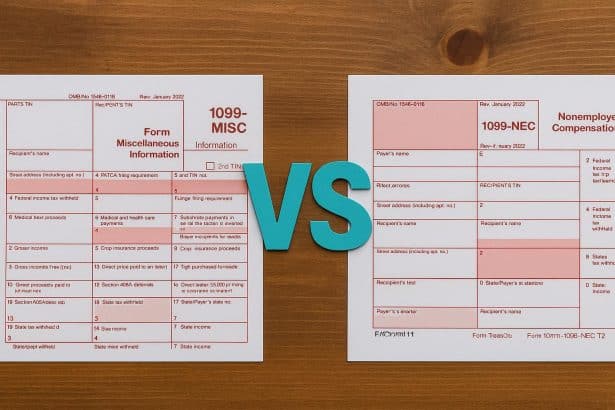
Despite the potential benefits, however, the contingent workforce can create significant exposures through misclassification of employees. Although many internal auditors are aware that misclassification might result in increased tax liabilities, what they may not know is that tax liabilities are likely to be only the tip of the iceberg. Liabilities for unpaid benefits and a host of other related problems can be daunting. Internal auditors provide real value by helping their organizations to understand and mitigate risks involved in misclassification of workers.
DEFINITIONS AND CLASSIFICATIONS
No single legal definition exists for classifying all workers. Most of the statutory definitions are circular, in that they include language such as "any individual employed by an employer." Because the application and the interpretation of tests by the courts have varied, the employer cannot rely on a definitive guideline for classifying a worker. Nevertheless, three tests have been widely used in determining proper classifications: the Common Law Test, based on a 1992 Supreme Court decision; the Economic Realities Test, based on the Fair Labor Standards Act; and the Right to Control Test from the National Labor Relations Board. A fourth classification test, the Internal Revenue Service's 20 Common Law Factors Test, builds on the Supreme Court decision by including eight additional factors. The principle criteria used to classify a worker as an employee or as an independent contractor are shown in the sidebar on the facing page, "Four Tests for Determining Worker Classifications."
The basis of classification generally centers around who controls the work process and their authority to involve others in the work, whether specialized skills are required, and the worker's level of investment and return from the work process. To further complicate matters, the question of the employer-employee relationship is vague with respect to temporary workers. Temporary workers are hired and paid by a staffing firm such as an employment agency or contract firm, but the employment agency clients to whom the workers are assigned control their working conditions in whole or in part. The temporary employment agency is generally responsible for the personnel functions and the associated employment taxes and benefits related to the workers. The client controls the working conditions of the worker, supervises the worker, and determines the length of the assignment.
POTENTIAL LIABILITIES
As many organizations have discovered, the cost of misclassifying workers can be staggering. In December 2000, Microsoft agreed to settle a suit in this arena for $97 million (see "Microsoft and Misclassification," page 45). In 1992, the city of Seattle agreed to a $2 million settlement in benefits due workers they had misclassified as temporary, substitute, and part time. In 1997, King County in Washington settled a lawsuit filed by long-term temporary employees who were denied benefits. The settlement included $24 million in back pay, future benefits of $18 million, and placement of 500 long-term temporary employees in jobs with fill benefits. The total costs of such settlements often include tax liabilities, benefit liabilities, liabilities from labor law infractions, and related issues.
TAX LIABILITIES. Independent contractors are responsible for their own withholding and Federal Insurance Contributions Act (FICA) contributions. For the temporary worker, the employment agency is responsible for withholding and the employer's portion of FICA and employment taxes -- Federal Unemployment Tax Act or FUTA -- contributions. Therefore, if the Internal Revenue Service (IRS) determines that an employer has misclassified a worker as an independent contractor, the employer's liability includes the employer's portion of FICA taxes, employment taxes, and employment tax withholding, along with any associated penalties and interest. Depending on the number of individuals involved, the dollar amount can exceed 35 percent of the payments made to independent contractors, plus the potential for employee benefit liability.
Most Recent Business Articles
- Multiple criteria evaluation and optimization of transportation systems
- Multi-criteria analysis procedure for sustainable mobility evaluation in urban areas
- A two-leveled multi-objective symbiotic evolutionary algorithm for the hub and spoke location problem
- Multi-criteria analysis for evaluating the impacts of intelligent speed adaptation
- The development of Taiwan arterial traffic-adaptive signal control system and its field test: a Taiwan experience
Most Recent Business Publications
Most Popular Business Articles
- 7 tips for effective listening: productive listening does not occur naturally. It requires hard work and practice - Back To Basics - effective listening is a crucial skill for internal auditors
- FAS 109: a primer for non-accountants - Financial Accounting Standards Board's "Statement 109: Accounting for Income Taxes"
- Design a commission plan that drives sales - Sales Commissions
- Too Young to Rent a Car? - 25-years-old the minimum age for car renting - Brief Article
- LIFO vs. FIFO: a return to the basics