advertisement
On TV.com: ONE TREE HILL season 5
Find Articles in:
all
Business
Reference
Technology
News
Sports
Health
Autos
Arts
Home & Garden
advertisement

Content provided in partnership with
ProQuest

New Marriages, New Families: U.S. Racial and Hispanic Intermarriage

Population Bulletin,  Jun 2005  by Lee, Sharon M,  Edmonston, Barry

Multiracial Americans have always been a part of the U.S. population. In colonial times, multiple-race children were born of unions between American Indians, Europeans, and Africans. Early U.S. population censuses included multiple-race categories such as mulatto and "mixed-blood" Indians. The 2000 Census also acknowledged interracial Americans by allowing U.S. residents to choose more than one race, and about 7 million people did so.

Most Popular Articles in Reference
The importance of understanding organizational culture
Credit card attitudes and behaviors of college students
What factors attract foreign direct investment?
Libraries Need Relationship Marketing - mutual interest marketing concept, ...
How to set performance goals: employee reviews are more than annual critiques
More »
advertisement

Social acceptance of multiple-race Americans and of marriages across racial boundaries has varied over the country's history, but prejudice and discrimination have been constants. The last few decades, however, have witnessed an apparent sea change in Americans' racial attitudes. Many articles on multiracial Americans, interracial couples, and multiracial families appeared in the mass media, some generated by the new 2000 Census option to choose more than one race.1 New surveys of racial attitudes suggested dramatic improvements in American race relations. According to a Gallup poll conducted at the end of 2003, 86 percent of black, 79 percent of Hispanic, and 66 percent of white respondents would accept a child or grandchild marrying someone of a different race.2 The percentage of whites who favored laws against marriages between blacks and whites declined from 35 percent in the 1970s to 10 percent in the 2000s.3 And in another survey conducted in 2003, 77 percent of respondents agreed that it was all right for blacks and whites to date each other.4



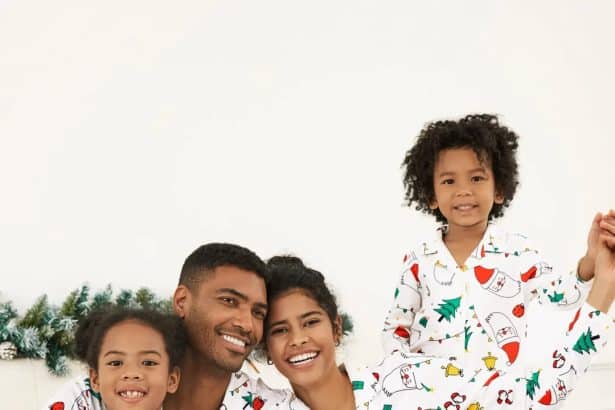
Interracial marriage has increased across most racial groups and, although they are still the exception to the norm, these interracial marriages are generating a growing population of multiracial Americans.5 Marriage between Hispanics and non-Hispanics, already quite common, has further contributed to changing racial and ethnic boundaries in America. The shift to allow Americans to identify with more than one race in the 2000 Census was both a reflection of and response to these trends.

Of the 281 million people enumerated in the 2000 Census, more than 2.4 percent, or 7 million people, reported more than one race.6 Several observers believe that these figures underestimate the number of Americans who come from multiracial backgrounds. Some people may not be aware of their multiracial backgrounds, while others choose to identify with just one race even when they are aware of their multiple origins. Many minority advocacy groups advised their members to report only one race (the minority race) in the 2000 Census because these groups feared a loss of political clout if their population total was eroded by people choosing more than one race.7

Parents were less hesitant to report their children as multiracial, reflecting recent increases in racial intermarriages as well as the greater acceptance of multiracial identities. In the 2000 Census, 42 percent of persons who reported more than one race were under age 18, compared with 25 percent of those reporting a single race.8

Significance of Intermarriage

People have a tendency to marry within their social group or to marry someone who is close to them in social status. This tendency is termed homogamy, and intermarriage runs counter to homogamy. Race is just one of many characteristics-including social class, ethnicity, religionthat affect the choice of a spouse; but race has always been a major dividing line in America. In this Population Bulletin, we focus on racial and ethnic intermarriage because such intermarriage is a particularly significant indicator of the assimilation or integration of racial and ethnic minorities.9

People often are identified with racial and ethnic groups that define their social status and restrict their opportunities.10 Easily observed physical characteristics such as skin color and facial features become markers to categorize individuals by race, while cultural traits such as religion and language often distinguish ethnicity. Social scientists generally agree that races and ethnic groups are social constructions resulting from history, culture, politics, and other social processes.11 However, once racial or ethnic groups are formed, they often lead to racial or ethnic stratification or inequality. In the United States, for example, unequal rights and unequal access to society's resources have long marked the historical racial divide between whites and nonwhites.

Social norms governing marriage play critical roles in preserving the racial or ethnic status quo in racially or ethnically stratified societies. For example, marriage between people of the same race (racial homogamy or endogamy) reflects and maintains rules about race and racial boundaries. When individuals marry someone of the same race, they guarantee racial similarities within families across generations and the stability of racial groups in society. Racial endogamy is especially important when an individual's and group's racial membership defines access to resources, power, and rewards. In the past, social norms against marriage between whites and nonwhites in the United States were formalized into laws known as antimiscegenation laws (see Box 1).