Find Articles in:
All
Business
Reference
Technology
News
Lifestyle

Sport Specialization in Youth: A Literature Review

Journal of the American Chiropractic Association, Apr 2004 by Hecimovich, Mark

Abstract

Objective: Youth participation in sport is reviewed to include its history, current growth patterns, reasons behind sport specialization, and the implications of sport specialization. The effects of early skill acquisition, and the sociological, psychological, and physical/physiological aspects to help develop safeguards to meet the needs of young athletes are discussed.

Study Design and Selection: A review of the research and scholarly literature related to the youth population in the United States was performed. This included accessing the Mayo Clinic Library database, MANTIS, and Index Medicus.

Results and Discussion: Specialization in a single sport, although not new to society, has become increasingly popular. Sport specialization training can begin as early as at the age of 5 or 6. The training is throughout the year and may take up to four hours every day.

Some in the sports community find sport specialization to be a reflection of a highly developed society and see the skill acquisition and enhancement as beneficial to success in a given sport; the potential for a collegiate athletic scholarship; or making a varsity, elite, or even professional-level team.

Regular physical activity and sport, together with a balanced diet, are essential to promote optimal growth and maturation, sufficient physical fitness and mental vigor, as well as psychological and social benefits that help in coping with stress and anxiety. Too much or too specific involvement with a sport or activity, however, can be potentially dangerous, involving physiological/physical, psychological, and sociological risks to youth.

Despite the importance of this topic, a substantial reference base, pertaining specifically to sport specialization is lacking. The results were often limited to a nonspecific age range within the youth population primarily in the United States, as opposed to a worldwide population. Also, a majority of the references contained more physiological results, as opposed to psychological and sociological findings. The results and conclusions drawn from this sampling cannot be generalized to all sports or athletes as a whole.

Conclusion: Sport specialization by youth is a contentious issue that needs to be fully understood by all involved in sport. The potential health, psychological, and sociological risks must be weighed against the benefits of obtaining sharper skills, which may enhance playing time, possibly bringing scholarship opportunities, or reaching to an elite level of play.

Key Indexing Terms: sport specialization, sport injury

INTRODUCTION

Sports participation can provide youth with a prosocial environment that fosters fair play, competitiveness, and achievement. The psychological and social benefits of regular physical activity help in coping with stress and anxiety, counterbalance the burden and symptoms of excessive quiet sitting and mental concentration, and have a favorable influence on developing a positive self-image and functional social relationships.1 Sports may also help protect participants against negative influences that can lead to delinquency and drug abuse. Also, because team rules and guidelines often promote health-enhancing behaviors-such as proper nutrition and avoidance of smoking-sports participation may promote healthy lifestyles via social environment pathways.2,3

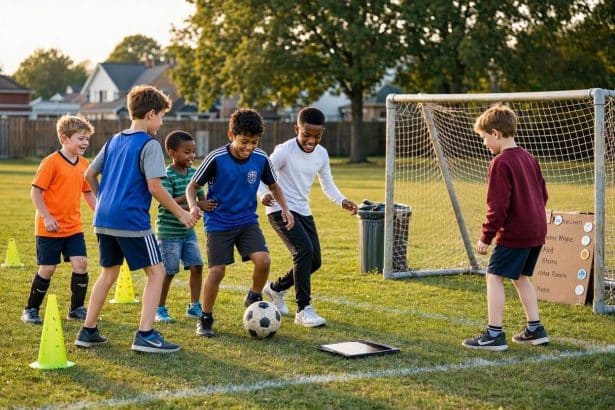
Participation in sports is considered a rite of passage for children and adolescents in contemporary American society. Over the past five decades, however, a fundamental shift has occurred-from spontaneous, fun-oriented, youth-organized activities to highly structured competitions and programs organized by adults.4,5 An offshoot of this shift is sport specialization, defined as students who limit their participation to one sport on a year-round basis.6

An interesting dichotomy in the literature recognizes the importance of specialization to optimize pediatric performance while admitting that specialization exposes these athletes to physical, psychological, and social damage. For instance, Hill and Simons6 state that a certain degree of specialization is necessary for optimal individual and team performance in sport. Additionally, Ericsson et al.7 found that an athlete who practices a skill with increased frequency and duration could become more proficient at that skill. There are, however, concerns about youth sport specialization such as withdrawal/burnout and the over-involvement and expectations of parents and adults in youth sport programs.8 Adverse physiological consequences following excessive training have also been found.9

A recent policy statement from the American Academy of Pediatrics10 concluded that youngsters should be discouraged from specialization in a single sport before adolescence to avoid physical and psychological damage. The risks range from overuse injuries such as stress fractures to delayed menstruation, eating disorders, emotional stress, and burnout. Waiting to specialize until the age of 12 or 13, when children are more emotionally and physically mature, helps ensure that they are pursuing an activity that really interests them, rather than trying to fulfill a parent's or coach's dream. Critics, however, contend that this could hamper or handicap talented youngsters and change the face of elite-level sports.11


BNET TalkbackShare your ideas and expertise on this topic

The following tags are supported in BNET comments:
<b></b> <i></i> <u></u> <pre></pre>

Leave a Reply

  1. You are currently a guest | Login?
advertisement
Go
advertisement
  • Click Here
  • Click Here
advertisement