Money, elections, and democracy in Brazil
Latin American Politics and Society, Summer 2001 by Samuels, David
ABSTRACT
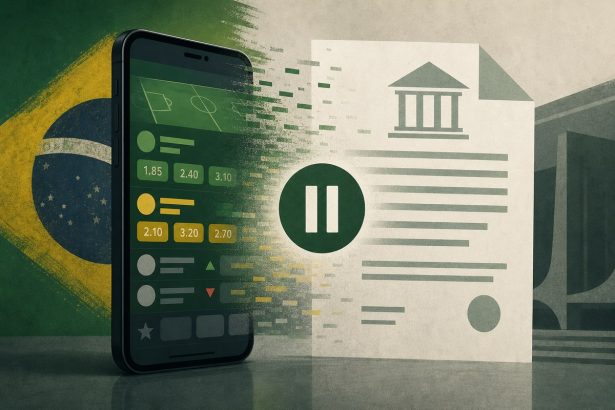
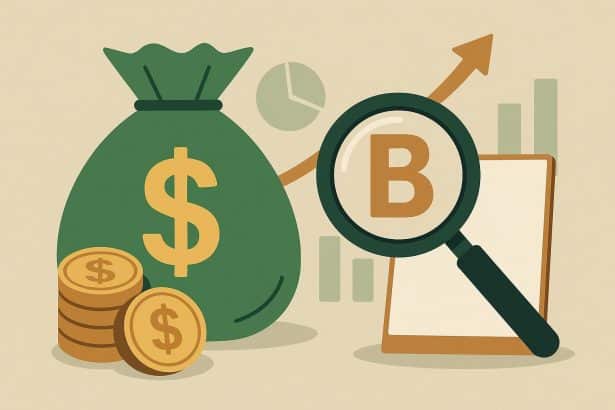
Brazil's 1993 law requiring candidates to report their campaign contributions has generated a new source of data to explore the supposition that Brazilian elections are extraordinarily expensive. An examination of these data from Brazil's 1994 and 1998 general elections reveals that most money for Brazilian electoral campaigns comes from business sources and that leftist candidates have extremely limited access to such financing. The effect on democracy is that Brazil's largely unregulated campaign finance system tends to decrease the scope of interest representation.
This paper begins to address these questions by exploring the impact of money on Brazilian elections. Scholars have claimed that Brazilian elections are among the most expensive in the world (see, for example, Aguiar 1994; Ames 1995; Mainwaring 1999), but only anecdotal evidence currently supports this claim. In 1993, Brazil's Congress passed a law requiring candidates for all offices to report all campaign contributions for subsequent elections. The Brazilian Tribunal Superior Electoral (TSE) has compiled candidates' information for the 1994 and 1998 elections, providing the basis for reliable analysis of the variation in campaign funding across candidates, parties, and offices. Because the data identify the donors, moreover, candidates can also be connected to the sources of their campaign funds. This paper is the first to explore these new data. Doing so not only provides empirical support for the claim that Brazilian elections are expensive, but also allows investigation into a wide range of issues relating campaign finance to the practice and quality of Brazilian democracy.


Following a description of Brazil's electoral system, its campaign finance laws, and the data, this study explains why we have good reason to expect campaigns to be costly in Brazil, and then verifies this prediction. It goes on to explore the sources of campaign finance in Brazil, separating individual from corporate contributions for each level of election, disaggregating corporate contributions by type of firm, and comparing average receipts across candidates from different parties. This reveals the preponderance of corporate over individual contributions and the relative incapacity of leftist candidates to raise money. Regression analyses will then show that money strongly affects vote outcomes for Brazil's federal deputy elections. These findings have particular implications for Brazilian democracy.
BRAZIL'S CAMPAIGN FINANCE DATA
Before 1994, campaign contributions to candidates were ostensibly prohibited in Brazil. Since that year, candidates for all offices have been required to submit a prestacao de contas, a register of campaign contributions (but not expenditures), after each election. (For purposes of this study, we assume that candidates spend as much as they receive; candidates must report how much of their own money they "contribute" to their campaign.) Congress mandated this following two campaign finance scandals in 1992-93. One resulted in the impeachment of the country's first democratically elected president in nearly 30 years, Fernando Collor de Mello; and the second emerged when Congress turned its investigative skills on itself and eventually expelled six sitting members (several others resigned).
The law permits direct contributions to candidates for all offices and places a very generous limit on the amounts contributed: an individual can donate 10 percent of gross yearly income, and a corporation can donate two percent of its gross yearly income. Candidates can spend as much of their own money as they please. Each candidate-- and not the party-must prepare a prestacao de contas within two months following the election (except for presidential candidacies, where the national party must present the accounts). Candidates send the information to their state's electoral court (tribunal regional eleitoral), which sends all records from the state to the national electoral court. Violations of the law can result in fines, candidacy revocation, or even loss of position after the election (Congresso Nacional 1993, 1995). Several state electoral courts have imposed penalties on candidates (Veja 1998), and Brazil's current president, Fernando Henrique Cardoso, has refused to invalidate hefty fines imposed on several sitting members of Congress (New York Times 2000).
In contrast to Federal Election Commission (FEC) regulations in the United States, there is no minimum reporting requirement in Brazil; even the smallest contributions are reported. Each database entry includes the candidate's party and electoral code number, the contributor's name, and the amount contributed. The two databases contain more than two hundred thousand records of contributions to presidential, gubernatorial, senatorial, and federal and state deputy candidates.
Can we trust these data? Skeptics might argue no, given Brazil's reputation for corruption. This is a crucial question, for if the data lack validity, then we cannot learn much about campaign finance in Brazil from them. As this study will show, the data conform to common-sense expectations regarding cross-candidate, cross-office, and cross-partisan differences, and the patterns in the data also hold up over time. Of course, if the declared contributions were wholly false, we would expect no patterns to emerge.1
- 5 Rules for Immediate Annuities
- Death in the Family: 12 Things to Do Now
- Dumbest Things You Do With Your Money
- 6 Online Networking Mistakes to Avoid
- 401(k) Mistakes to Avoid
- 5 Economic Scenarios to Keep You Up at Night
- The Real ‘Best Places to Retire’
- Best Credit Cards for You
- 12 Tough Questions to Ask Your Parents
- The Real ‘Best Colleges’
- Home Buyer Tax Credit: How to Cash In
- Why You Shouldn't Bash Cash
- 8 Phony 'Bargains' and Better Alternatives
- Danger: 3 Debit Card Scams to Avoid
- 6 Myths About Gas Mileage
- 29 Fees We Hate Most
- Quick and Easy Ways to Boost Returns
- Best Stocks to Buy Now
- Lower Your Taxes: 10 Moves to Make Now
- New Jobs: 8 Lessons from Real-Life Career Switchers
- The New Job Market: Who Wins and Who Loses?
- Health Care Reform's Public Option: Everything You Need to Know
- Volunteer Work When Unemployed: Should You Work for Free?
- Whose Recovery Is This?
- Long-Term-Care Insurance: 4 Biggest Risks to Avoid
Content provided in partnership with
Most Recent Reference Articles
- A Maryland state trooper gave Erik Bonstrom an $80 ticket for driving too slowly
- In California, postal worker Dean Hudson has been found guilty
- Alec Loorz, the 15-year-old founder of Kids vs. Global Warming and recent Brower Youth Award recipient, went to Congress in November for a press conference with Senators Barbara Boxer and John Kerry, who are championing legislation to stabilize US greenho
- Foreign exchange
- The buzz on bees
Most Recent Reference Publications
Most Popular Reference Articles
- Credit card debt on college campuses: causes, consequences, and solutions
- 9 questions to ask your new lover: what you were afraid to ask, but always wanted to know
- How Tyler Perry rose from homelessness to a $5 million mansion
- Rejoice anyway - Zephaniah 3:14-20, Philippians 4:4-7 - Living by the Word - Column
- Living by the word