Technology Industry
Industry: Email Alert RSS Feedultimate ocean ranch, The
Sea Technology, Aug 1999 by Matsuda, Fujio, Szyper, James, Takahashi, Patrick, Vadus, Joseph R
Artificial Upwelling of Deep-Ocean Nutrients in the Open-Sea Enhances Biological Food Productivity Unencumbered by Land-Based Aquaculture Limitations
Ocean ranches will someday feature the enhancement of open-sea biological productivity through artificial upwelling of deep-ocean nutrients by means of ocean thermal energy conversion (OTEC) and other induced-flow mechanisms. Food products will be derived by the management of integrated "floating grazing platforms," which could also enhance atmospheric carbon dioxide sequestration. Some of the required technologies exist, while others must be developed. Commercialization of the concept will be enhanced by the fullest possible integration of value-generating activities. While conservative ecological parameters and assumptions result in only about $3.3 million in aquatic food products produced annually from a hypothetical 10 megawatt (MW) OTEC plant, more optimistic calculations for a 1,000 MW facility suggest a figure exceeding $1 billion a year from seafood alone. The urgency of the food problem and the lack of nullifying obstacles indicate the need for further evaluation of this concept.
Most RecentTechnology Articles
World capture fishery landings increased through the 1980s, but have since leveled near 90 million metric tons per year, the long-forecast maximum sustainable yield. Catches have thus failed to increase with population and demand and have declined on a per capita basis. As would be expected, seafood prices have dramatically increased relative to beef, chicken, and other high-protein foods. Worse yet, approximately two-thirds of the 200 important commercially fished stocks are fully or over-exploited. Many marine fisheries have been depleted, some to the point of economic extinction, while others have been closed in hope of recovery. It appears that conservation of present stocks and harvest potentials must for the present outweigh expansion of harvests, even if that were possible, despite the world food problem.
Aquaculture now contributes more than 20 percent to global aquatic food production, with more than two-thirds of the harvest derived from fresh waters in Asia. Total annual production of fish and shellfish is slightly in excess of 100 million tons1. The expansion of aquaculture, however, remains dependent on feeds containing fish-meal protein derived from fully exploited capture fisheries. The attraction of the ultimate ocean ranch is that the system will feed itself. The substantial increases of recent decades in aquaculture production have not been sufficient to outpace population growth and demand, nor thus to prevent declining total (capture plus culture) per capita production of aquatic food products and consequent price increases. Success in attaining a selfsupporting marine system would thus also leapfrog over current energyintensive farming practices.
Advancements similar to the Green Revolution and the ongoing expansion of aquaculture will be required if the food problem is to be solved. However, land use for terrestrial food production competes with maintenance of forests and natural ecosystems, with potential consequences to global climate change. A Blue Revolution can both provide increased protein production and enhance the environment.
Even with a presumption of future consensus on global food policy, there remains a limit to the potential for production of food protein on Earth. Maximizing the conventional production rate would require rapid and efficient recycling of limiting nutrient elements. This condition cannot be attained because natural systems, both forests and the open sea, sequester organic matter in detrital pools (forest litter and soil, deep-sea detritus) having long residence times and absolute regeneration rates insufficient for significant expansion of production. Accessing the nutrients of the deep sea, on the other hand, is a potential means of expanding production of food protein with neutral or favorable impact on oxygen and carbon cycles, and a longer term of sustainability exceeding millennia, whereas on land, trees die after decades or centuries, returning the carbon dioxide to the atmosphere.

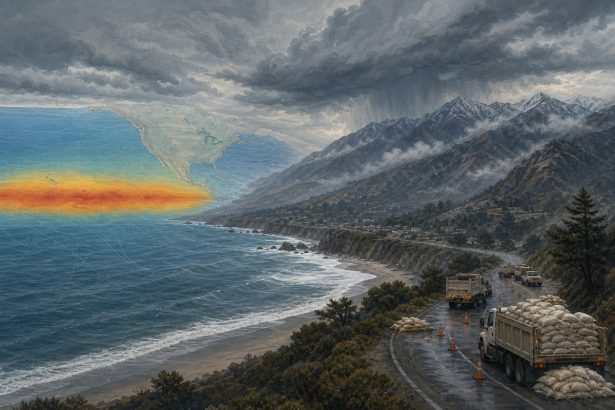
In next-generation ocean ranches, biological productivity of open-sea areas will be enhanced through artificial upwelling of nutrient-rich subsurface seawater into the photic zone. Early experiments could use surge pumps or other marine systems to move 500-meter deep fluid into this productive region. Seafood and other products will be derived by integrated management of the nutrient-enriched ocean. At the final stage, OTEC can bring into use the cold deep water underlying the unproductive but vast subtropical seas1. Ancillary benefits include potentially enhanced carbon dioxide sequestration2, net oxygen production in the photic zone, and cooling of the ocean surface over significant geographical areas that could mollify storm formation34. Although the information base required for critical evaluation of the complete concept does not now exist, intermediate stages will yield useful increments of food from untapped nutrient resources and generate the information base.
CXO UnpluggedSmart Business interviews on BNET
Brought to you by CBS MoneyWatch.com
- Best- and Worst-Paid College Degrees
- 6 Things You Should Never Do on Twitter or Facebook
- How Much Sleep Do You Really Need?
- 6 Big Myths about Gas Mileage
Most Recent Business Articles
- Multiple criteria evaluation and optimization of transportation systems
- Multi-criteria analysis procedure for sustainable mobility evaluation in urban areas
- A two-leveled multi-objective symbiotic evolutionary algorithm for the hub and spoke location problem
- Multi-criteria analysis for evaluating the impacts of intelligent speed adaptation
- The development of Taiwan arterial traffic-adaptive signal control system and its field test: a Taiwan experience
Most Recent Business Publications
Most Popular Business Articles
- 7 tips for effective listening: productive listening does not occur naturally. It requires hard work and practice - Back To Basics - effective listening is a crucial skill for internal auditors
- FAS 109: a primer for non-accountants - Financial Accounting Standards Board's "Statement 109: Accounting for Income Taxes"
- Design a commission plan that drives sales - Sales Commissions
- Too Young to Rent a Car? - 25-years-old the minimum age for car renting - Brief Article
- LIFO vs. FIFO: a return to the basics