Find Articles in:
All
Business
Reference
Technology
News
Lifestyle

How America ran, and still runs, the Congo war

New African, Sep 2001

... America's covert activities in the Great Lakes Region exposed!

Last September, New African reported: "...America has a military base in Rwanda, and top American marine officers are involved in intense training of the Rwandan military elite. The US has also offered substantial military supplies to Kigali."

Last December, New African reported the US Congresswoman, Cynthia Mckinney, as saying: "The whole world knows that Uganda and Rwanda are allies of the United States and that they have been given a carte blanche for whatever reason to wreck havoc in the Congo."

This March, New African reported (quoting the British daily, The Independent): "Secretly funded by the CIA, Rwanda has military operations [in Congo] far above its means. [It] has 10,000 troops in [Congo]."

This May, New African reported (Baffour's Beep): "...The interests of America, Britain and their allies are being served by the Ugandan and Rwandan activities in Congo... We also know that America has a military base in the Bugesera district of Rwanda. So what are the Americans doing there? To train the Rwandans to fight in Congo? In, or for, whose interest?"

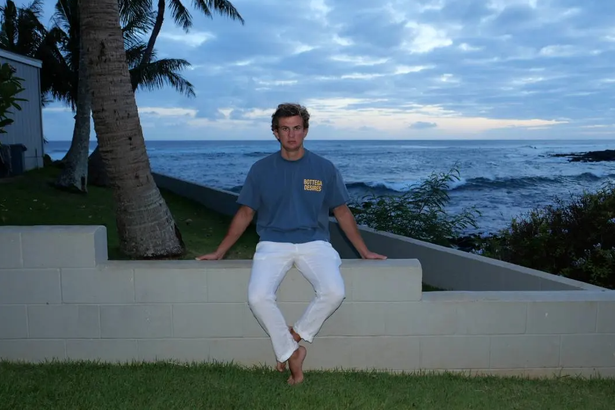
On 17 May, New African's reports were confirmed when the American investigative journalist and author of the book, "Genocide and Covert Operations in Africa 1993-1999", Wayne Madsen (photo, right), testified before the Congressional Subcommittee on International Operations and Human Rights Committee on International Relations.

Madsen's "prepared testimony and statement for the record" was so revealing that the mainstream Western media, supposedly famed for their "press freedom", have refused to print it.

We print it here in full. Madsen tells how America, right from 1996, ran, and still runs, the Congo war - "destabilisation for profit" is how he puts it.

For legal reasons, we have withheld certain names of people and companies in Madsen's original. Please sit back and treat yourself to some of the reasons why Africa is still on its knees.

"My name is Wayne Madsen. I am the author of `Genocide and Covert Operations in Africa 1993-1999, a work that involved some three years worth of research and countless interviews in Rwanda, Uganda, France, the United Kingdom, United States, Belgium, Canada, and the Netherlands.

I am an investigative journalist who specialises on intelligence and privacy issues. I am grateful to appear before the Committee today.

I am also appreciative of the Committee's interest in holding this hearing on the present situation in the Democratic Republic of the Congo [DRC].

I wish to discuss the record of American policy in the DRC over most of the past decade, particularly involving the eastern Congo region.

It is a policy that has rested, in my opinion, on the twin pillars of military aid and questionable trade. The military aid programmes of the United States, largely planned and administered by the US Special Operations Command and the Defence Intelligence Agency (DIA), have been both overt and covert.

1996: Rebellion against Mobutu

Prior to the first Rwandan invasion of Zaire/DRC in 1996, a phalanx of US intelligence operatives converged on Zaire. Their actions suggested a strong interest in Zaire's eastern defences.

The No.2 person at the US embassy in Kigali, [Rwanda], travelled from Kigali to eastern Zaire to initiate intelligence contacts with the Alliance of Democratic Forces for the Liberation of Congo-Zaire (AFDL-CZ) rebels under the command of the late President Laurent Kabila. The Rwandan embassy official met with rebel leaders at least 12 times.

A former US ambassador to Uganda - acting on behalf of the US Agency for International Development (USAID) -- gathered intelligence on the movement of Hutu refugees through eastern Zaire.

The DIA's second ranking Africa hand, who also served as the US military attache in Kigali, reconnoitred the Rwandan border towns of Cyangugu and Gisenyi, gathering intelligence on the cross-border movements of anti-Mobutu Tutsis from Rwanda.

The DIA's African bureau chief established a close personal relationship with an ethnic Rwandan [name withheld,] who would later become the foreign minister in the Laurent Kabila government. Moreover, the DIA's Africa division had close ties with an Alexandria, Virginia, private military company whose vice president for operations is a former director of the DIA.

The political officer of the US embassy in Kinshasa, [Congo], accompanied by a CIA operative, travelled with AFDL-CZ rebels through the eastern Zaire [forests] for weeks after the 1996 Rwandan invasion of Zaire.

In addition, it was reported that the Kinshasa embassy official and three US intelligence agents regularly briefed Bill Richardson, Clinton's special African envoy, during the rebels' steady advance towards Kinshasa.

The US embassy official conceded that he was in Goma to do more than meet rebel leaders for lunch. Explaining his presence, he said: 'What I am here to do is to acknowledge them [the rebels] as a very significant military and political power on the scene, and, of course, to represent American interests.'


BNET TalkbackShare your ideas and expertise on this topic

The following tags are supported in BNET comments:
<b></b> <i></i> <u></u> <pre></pre>

Leave a Reply

  1. You are currently a guest | Login?
advertisement
Go
advertisement
  • Click Here
  • Click Here
advertisement