- Breaking News San Mateo County ninth-graders struggle to stay fit
- Breaking News Food and wine events
- Breaking News Ask Amy: What To Do When the Doctor Isn t in the House
- Breaking News Ed Blonz: Keep your diet normal pre-surgery
Hard lines
0 Comments | Sunday Herald, The, May 13, 2001 | by Words: Neil Mackay
Knife wounds? Sectarianism? Colourful language? It must be the return of Peter McDougall, chronicler-in-chief of Scotland's violent underbelly. Meet the Glasgow writer who talks a good fight
IF YOU'VE ever drunk the afternoon away, you'll know that by eight at night people feel like punching each other's lamps out. The craic has long since been exhausted and you're probably staring into an empty glass having a deadly serious conversation about something grim when you could be at home with some chips and the telly. At this stage, it's time to go as tempers can fray.
Most Popular Articles
Most Recent Articles
Most Popular Publications
Most Recent Publications
After a day spent with Peter McDougall, I haven't gone home - primarily because he is good craic. In fact I quite liked him until he insulted me by calling me something that ended in "unt". And actually, I still quite like him, but what else can you expect after an eight hour drinking session? Anyway, I insult him back, which makes us even, so I shouldn't grumble.
Another reason I haven't gone home is that the subject of the serious conversation is morality, of all things. Now, I've heard that morality exists, I'm just not very clued-up about it, so I'm labouring after two or so bottles of wine to make either head or tail of McDougall's peculiar moral code.


McDougall is, of course, one of Scotland's greatest screenwriters. He pulled down the Prix Italia aged just 25 for his television play Just Another Saturday about Scottish sectarianism; then stumbled across three Baftas, wrote the movie A Sense Of Freedom, about the life and times of the Glasgow gangster Jimmy Boyle, and polished off a series of critically acclaimed screenplays including Billy Connolly's tour de force Down Among The Big Boys, the brilliant tale of a gangland heist gone wrong, which has inspired the likes of Guy Ritchie and Martin Scorsese.
I visit him at his home in Glasgow's west end, which he shares with his partner of ten years, Morag Fullerton, the highly successful television and stage director, to talk about his "comeback". Not a comeback in the sense of someone like Andrew Ridgeley would have a comeback. There was never a question of McDougall's talent fading or the powers-that-be turning their backs on him; he just hadn't been writing his guts out over the last few years the way he had been since the Seventies. Now, he's decided to get back to writing his guts out. And I want to hear what he's planning.
McDougall came to be seen as Scotland's answer to Brendan Behan - the archetypal drinker with a writing problem. He was punching producers, waking up in gutters and saying "f**k" on TV in the days when the Sex Pistols were just a glimmer in Malcolm McLaren's eye. Like most gentlemen of the saloon with a taste for the pen, he's obsessed with morality - what makes a man a man, and more importantly what makes a man a good man. The name-calling incident arises when I ask McDougall what point he is trying to make in his latest movie script, Come The Time.
Movie gossips are calling it a parable, a morality play - a modern- day western, even. And it's rumoured that the film, which is being made by Muriel Gray's Ideal World production company, is going to be big. The gist is this: there's a small Scottish town plagued with young hoodlums whose violence is getting out of hand. The townsfolk manage to secure the services of a mysterious gangland figure to sort the town out. A bit like Clint Eastwood in A Fistful Of Dollars. But once he starts there is no stopping him - and the question posed is "which violence is better - his or theirs?" Alongside such worthy metaphysical dilemmas come great scenes, primarily involving terrified neds tied to chairs in basements while the Clint character threatens to cut up their kids.
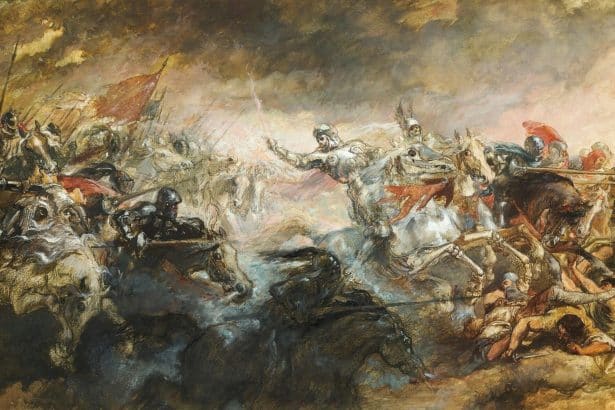
So I ask McDougall what type of violence is acceptable. He tells me the tale of the first razor fight he saw - in the playground of his school when he was about 13. "Two boys just went at it. It was almost medieval in the way they faced up to each other all alone," he says. "No one else stepped in or interfered.
"It was like they were sword fighting. It was so calculated. I'm not glamourising it and I'm not saying what they did was acceptable, but the way they faced up to each other was almost a form of bravery - and decency. It wasn't mindless."
So I ask him if the morality of Come The Time is like that. Does the movie fall down on the side of the "square go" code: the idea that it's honourable if two guys rip lumps out of each other to clear the air? Sort of, he says. Even with knives or baseball bats? I ask. "Don't be a stupid c***," he says.
I return the compliment. After all, his story of the two lads fighting in the playground implied that as long as the sides are even then all's fair in war and war.
By this time, one of McDougall's movieland pals has joined us. People tend to come and go from the table in the far corner of Hubbard's bar on Great Western Road, which he calls his office. Hubbard's is one of those bars where lads who used to be bad boys drink and the staff call you pal, not sir. McDougall is a regular - and obviously much loved and over-indulged - punter here.
- Getting to the root of beautiful hair: shiny, silky hair begins with a healthy scalp - includes list of resources and a recipe for an herbal scalp tonic
- Made from scratch: When Honda built a plant in Alabama it also built a workforce-using local workers who had no experience in making cars - Recruitment & Hiring
- Portfolio forecasting tools: what you need to know
- SAS #82: sword or shield?
- Personality and organizational citizenship behavior
- Fighting financial reporting fraud
- The Middle Management Challenge: Moving From Crisis to Empowerment. - book reviews
- HR is mission critical at the FBI: thirty years of corporate HR experience helps the FBI's new HR chief revamp an organization that is changing to meet the challenges of the post-Sept. 11