Find Articles in:
All
Business
Reference
Technology
News
Lifestyle

A small patch of green where land and water meet

Milwaukee Journal, The, Apr 2, 1995 by John Gurda

In a city known for its public green spaces, Kaszube's Park is hardly a standout. One picnic table, two willow trees and an old anchor are its only features, and all have seen better days. But the park, a narrow city lot on the western edge of Jones Island, is the last trace of a Milwaukee fishing village that was once unique in urban America.

"The Island" actually a peninsula was named for Capt. James Monroe Jones, an Ohio farmer's's son who turned to the Great Lakes for his livelihood. In 1854, Jones built a shipyard on the present site of Milwaukee's sewage treatment plant. It prospered until 1858, when a violent storm literally washed the business away.

Ten years later, fishing families had begun to colonize the wasteland near the river's mouth. There were perhaps a dozen houses on Jones Island in 1875. By 1900 the number had swelled to 300, and the settlement's population reached a peak of at least 1,500.

Like mainland Milwaukee, Jones Island was ethnically diverse. The community had hundreds of German-speaking Pomeranians and a handful of Scandinavians, but both groups were outnumbered by the Kaszubs (kah-shoobs), a people who emigrated from the Baltic seacoast of Poland.

The Kaszubs' dialect and customs set them apart from their fellow Poles, in both the Old World and the New. Their primary occupation was just as distinctive. As their counterparts on the South Side adjusted to jobs in Milwaukee's factories, the Kaszubs of Jones Island continued a way of life they had known for centuries: fishing.

The Kaszubs and their neighbors made Jones Island the center of commercial fishing in southeastern Wisconsin. First in sailboats and later in steam tugs, they set out each morning in search of trout, whitefish, perch, herring and sturgeon. Nearly 175 men hoisted nets for a living, and their catch totaled 2 million pounds in a good year. Most of it came to market through wholesalers, but a sizable crew of Jones Islanders peddled fish, both fresh and smoked, from door to door on the mainland.

The community's landscape was just as unique as its economy. Jones Island's street "system" was a chaotic maze that disoriented even frequent visitors, and its houses ranged from scrap-lumber shacks to sizable Victorian homes. Along the margins of the settlement were backyard boat docks, weather-beaten fish sheds and scores of oversized net reels. Barely a mile from downtown, Jones Island offered some of the most picturesque scenery in the region, and it attracted scores of artists and art students, among them a young Carl Sandburg.

Another type of tourism was crucial to the local economy. There were at least eleven saloons on the Island at the turn of the century, and many offered fish fries and crab boils that drew crowds of visitors from the mainland. In 1903, Charles Plambeck, the Island's unofficial "governor," began regular launch service from the Wisconsin Ave. bridge to the dock of his saloon and restaurant.

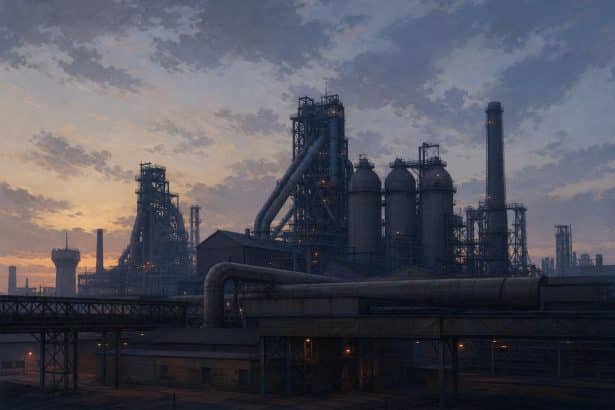
This colorful chapter in Milwaukee's history closed somewhat prematurely. Most of the Islanders occupied their land without benefit of title, and their position at the river mouth made them vulnerable. When the Illinois Steel Co., which operated a gigantic steel mill in adjoining Bay View, wanted better docking facilities, its leaders looked north to Jones Island. In 1896, claiming prior title to the land, they sued to evict the Islanders, one by one. The Kaszubs and their neighbors resisted, claiming the legal privilege of "adverse occupancy" or, in plain English, squatter's rights.

The City of Milwaukee, in the meantime, developed an urgent need for both an outer harbor and sewage treatment facilities. Local officials had long treated the Islanders with a blend of indifference and scorn. When the Sewerage Commission submitted its final report in 1911, its members recommended Jones Island as a plant site "because of its isolation and especially its remoteness from residential districts." The Island's potential for harbor development was even more obvious. In 1914, while the Illinois Steel cases were still dragging through the courts, the City of Milwaukee began condemnation proceedings.


Squeezed between local government on one side and the steel company on the other, the Islanders had little choice but to hoist their anchors. By 1920, only 25 families remained in the community, and their numbers dwindled steadily.

A handful of holdouts lingered on the western edge of the settlement, the present site of Kaszube's Park. Their leader was Capt. Felix Struck, a tavernkeeper who happened to be the first child born on the Island. He was also the last to leave. Struck stood his ground until 1943, when authorities removed the 74-year-old Kaszub for reasons of "port security." Less than six months later, Capt. Struck was dead.

Jones Island today is an urban wilderness, a place where no one lives and few people visit. My kids and I are among the visitors, biking down from our home in Bay View on occasional summer evenings. We pedal through a landscape that has become pure geometry: under the graceful arch of the Hoan Bridge, past the squat cylinders of petroleum tanks, the oblong freight containers stacked on the docks, and massive mounds of tarp-covered road salt.


BNET TalkbackShare your ideas and expertise on this topic

The following tags are supported in BNET comments:
<b></b> <i></i> <u></u> <pre></pre>

Leave a Reply

  1. You are currently a guest | Login?
advertisement
Go
advertisement
  • Click Here
  • Click Here
advertisement